


 Play store


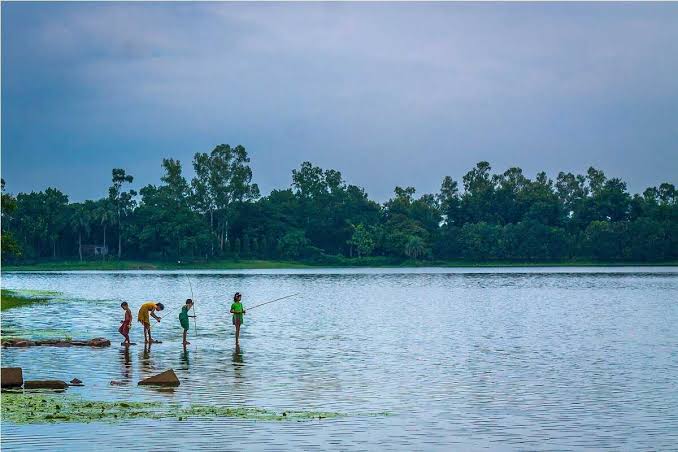
The government’s initiative to open nearly 9,000 public jalmahals, or state-owned water bodies, to local beneficiaries is, in principle, important and timely. For decades, a fundamental flaw in the management of khas land and public water bodies has been the tendency to view them primarily as sources of government revenue. Yet rivers, beels, haors, oxbow lakes, wetlands and agricultural khas land are not merely revenue-generating assets.
They are the foundations of livelihoods, food security, biodiversity, local economies and ecological balance for millions of people. The relevant question, therefore, should not be only how much revenue the government earns, but also who gets to use these resources, who is excluded, how much damage is done to Nature, and how much is preserved for future generations.
In my view, the first policy shift should be to treat khas land and natural water bodies not as marketable privileges of the state, but as shared natural assets held by the state in trust for people and Nature. The state may be the legal owner, but its moral role should be that of a trustee. Its duty cannot simply be to transfer user rights to the highest bidder. Rather, it must ensure a system in which the legitimate rights of genuine fishers, landless people, local communities and the ecological integrity of the water body itself are all protected.
The most important warning here is that open access does not automatically mean fair access. If a water body is released from leasing and simply declared “open to everyone”, it can quickly become vulnerable to a new form of capture. Groups with more boats, more fishing nets, greater financial resources or stronger political influence can rapidly dominate the supposedly open resource. In that case, the old leaseholder would merely be replaced by a powerful new group. Therefore, the principle of “the water body belongs to those who actually fish it” cannot be treated simply as a right to harvest fish. It must be accompanied by responsibility, limits, regeneration and community stewardship.
The first claim over khas land or public water bodies should belong to those whose lives and livelihoods are directly dependent on them. Genuine fishers, landless households, female-headed families, people displaced by river erosion or climate impacts, Indigenous communities and traditionally resource-dependent groups should receive priority. The ability to pay more in the market can never create a greater moral right over a natural resource. A person who has supported a family for generations by fishing in a beel cannot have fewer rights merely because an outside businessman or politically connected individual can offer a higher payment.
This is where market value and the value of justice diverge. If the state removes the natural livelihood opportunity of a poor fisher and transfers it to the highest bidder, and then provides the same fisher with a social safety net allowance, that is not justice. It is a system in which rights are taken away with one hand and welfare is offered with the other. Protecting people’s natural rights to livelihood is far more dignified and sustainable than making them dependent on allowances.
But social justice alone is not enough. Justice in the management of jalmahals is not only about distributing benefits among people; it is also a question of Nature Justice. A wetland is not simply a container of water. Fish breeding grounds, aquatic plants, birds, frogs, snails, microorganisms, sediment, seasonal fluctuations in water levels and connectivity with rivers and canals together form a living ecosystem. Therefore, even when a local cooperative or fisher group is granted management rights, those rights cannot be unlimited. They cannot be allowed to drain a wetland to catch fish, use poison, destroy breeding grounds, block connections with rivers, or harvest beyond the ecosystem’s regenerative capacity.
The philosophy of water-body management must therefore move from extraction to regeneration. Every important water body should have an ecological management plan specifying when fishing is permitted and when it must stop, where sanctuaries should be maintained, which species require protection, how much fish may be harvested, how natural flow and breeding cycles will be maintained, and how degraded biodiversity will be restored. No form of use can be sustainable in the long run if Nature’s regenerative capacity is not protected.
Local communities should not be limited to the role of “beneficiaries”. They can become co-stewards of Nature. Management structures could be established for individual water bodies involving genuine local fishers, women, landless families, local government representatives, fisheries officials and, where necessary, environmental experts. Their responsibility would not merely be to catch fish, but to protect the future of fish populations; not merely to use water, but to restore the water body; not merely to receive benefits, but to prevent encroachment, pollution, poisoning, destructive fishing practices and overharvesting.
This is the core philosophy of Community Stewardship. Those whose lives are most closely connected to Nature should be placed at the centre of decision-making. But being local is not enough; stewardship must also be responsible. Local rights and local accountability must operate together. Those entrusted with managing a water body should be evaluated on the basis of ecological performance, recovery of fish stocks, protection of biodiversity and fair participation of local beneficiaries.
The economics of leasing must also change. If the government continues to treat maximum revenue as the principal criterion, wealthy and influential leaseholders will naturally enjoy the advantage. Instead, rights could be allocated on the basis of modest management fees, social and ecological performance, and the degree of local dependence on the resource. A portion of any revenue generated from the water body should be mandatorily reinvested in restoration, protection of breeding grounds, pollution control and local stewardship. Money earned from a water body should help keep that water body alive.
The same philosophy applies to khas land. Allocation should not be determined merely by legal title or political influence; landlessness, livelihood dependence, local needs, food sovereignty and continuity of natural use must also be considered. Khas land may be vital for agriculture, while wetlands may be critical for flood management, water retention or biodiversity. These resources should not be converted or filled in for industrial or residential purposes merely because their market value is high. Public ownership cannot erase Nature’s intrinsic value.
Transparency is indispensable throughout this system. Maps, areas, current users, lease terms, allocation details, actual beneficiaries, records of complaints and the ecological conditions of every khas land parcel and water body should be made publicly available through a digital system. If a businessperson or politically influential individual is financing or controlling a resource behind the name of a cooperative, that information should also be disclosed. Unless secret subleasing, fake cooperatives and proxy control are stopped, any reform can quickly become another form of capture.
The government’s initiative to open around 9,000 public water bodies to local beneficiaries therefore presents a major opportunity. But the objective cannot simply be the abolition of leasing. We must move from lease to rights, from rights to responsibility, from responsibility to community stewardship, and from extraction to regeneration. Genuine fishers and local people must receive priority, but they too must operate within a system that protects Nature’s regenerative capacity, biodiversity and the rights of future generations.
Nature is not a government revenue ledger, nor are local people merely labour for outside leaseholders. Nature is sovereign; people are its partners and stewards; and the responsibility of the state is to ensure their coexistence. Governance of khas land and jalmahals must therefore become an integrated system of fairness, equity, social justice, Nature Justice and community stewardship.
Future decisions on khas land and public water bodies can therefore be guided by five simple but fundamental questions: Who genuinely depends on the resource? Who receives the benefits? Who bears the costs? Can Nature regenerate? And are local people merely users, or are they responsible stewards?
If these questions cannot be answered clearly, changing the form of leasing alone will not deliver justice. But if they can be answered properly, Bangladesh can transform khas land and water-body management from a revenue-centred administrative system into a genuinely justice-based, Nature-compatible and community-led form of governance.
The views expressed in this article are the author’s own and do not necessarily reflect Sarabangla English Edition’s editorial stance.