Play store


Bangladesh received $18.94 billion in workers’ remittances in March-August 2026, up 13.1 percent from $16.74 billion in the same period a year earlier, according to Bangladesh Bank data.
Remittance inflows increased year-on-year in five of the six months, with August recording the strongest growth of 22.3 percent.
In March, remittances rose 13.6 percent year-on-year to $3.75 billion from $3.30 billion. In April, inflows increased 13.8 percent to $3.13 billion from $2.75 billion.
May saw the strongest monthly inflow at $3.43 billion, up 15.5 percent from $2.97 billion a year earlier.
In June, however, remittances were almost unchanged at $2.81 billion, compared with $2.82 billion in the same month of 2025.
Inflows rebounded in July, rising 15.3 percent to $2.86 billion from $2.48 billion. In August, remittances climbed 22.3 percent to $2.96 billion from $2.42 billion.
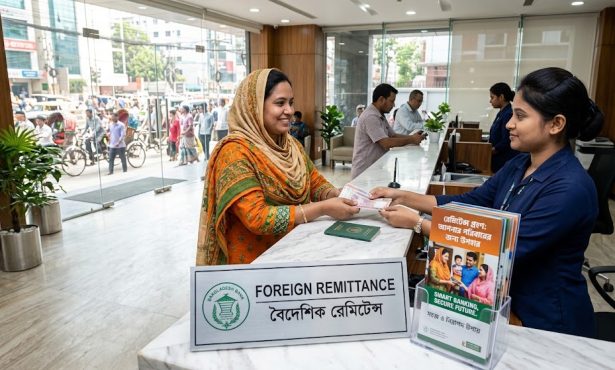
Talking to BSS, Bangladesh Bank Executive Director and spokesperson Arif Hossain Khan said the sustained growth in remittances was a positive sign for the country’s external sector and reflected expatriate Bangladeshis’ growing confidence in formal banking channels.
He said the government and the central bank were working to make formal remittance channels more convenient and attractive while discouraging illegal hundi transactions.
“The rise in remittance is a positive indication of the confidence of our expatriate workers and their families in the formal financial system,” he said.
Khan said initiatives to facilitate remittance transfers, improve banking services and strengthen the formal foreign-exchange market were contributing to the positive trend.
He also highlighted the contribution of migrant workers and expatriates to the economy, saying their remittances were helping strengthen foreign-exchange liquidity and economic stability.
Stronger remittance inflows would help improve the balance of payments, strengthen foreign-exchange reserves and provide greater stability to the external sector, he said.
The government has continued to prioritise migrant workers and expatriate Bangladeshis as a major source of foreign exchange, while seeking to make remittance services faster, safer and more accessible.
The continued rise in inflows is expected to provide further support to Bangladesh’s foreign-exchange position and overall macroeconomic stability, officials said.