


 Play store

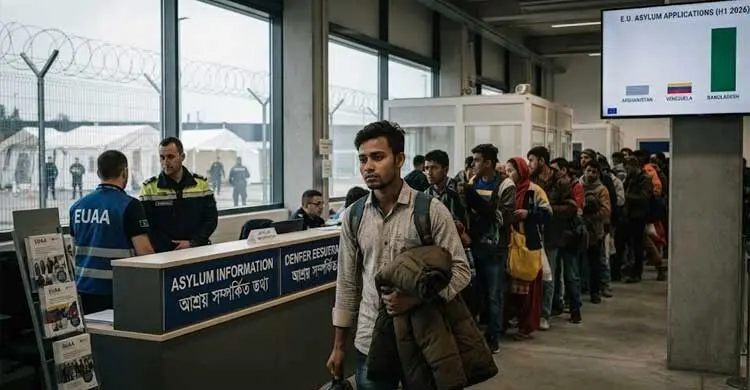
Nearly 20,000 Bangladeshis applied for asylum in the European Union during the first six months of 2026, a 13% increase from the same period last year, according to a report by the European Union Agency for Asylum (EUAA).
Overall, 331,558 applications for international protection were lodged in the EU, Switzerland and Norway during January-June, down 17% from the same period in 2025.
The EUAA said the decline in asylum applications continued amid changes in the profile of applicants following political developments in Syria and the EU’s efforts to strengthen cooperation with countries of origin and transit.
Afghan nationals accounted for the largest number of asylum applications, with around 39,000 applications filed in the first half of the year. The number of Afghan applications has declined in recent years after reaching a peak in 2025.
Venezuelans ranked second, with around 33,000 applications. That was about one-third lower than in the first half of 2025, with almost all of the applications filed in Spain.
Around 20,000 Bangladeshis sought asylum in the EU during the first six months of 2026, marking a 13% rise year-on-year.
However, the increase in applications does not necessarily mean a higher likelihood of receiving protection. Bangladesh has been included among countries designated as safe countries of origin under the EU’s asylum and migration framework, meaning applications from Bangladeshi nationals are generally subject to faster processing.
According to the EUAA, some applicants may also be subject to border procedures if they meet certain criteria.
Only 3% of asylum applications filed by Bangladeshis in the first half of 2026 were accepted, while 97% were rejected, according to the agency.
France, Italy, Spain and Germany received the largest numbers of asylum applications among the EU’s 27 member states, along with Switzerland and Norway.
France received around 69,000 applications, followed by Italy with 66,000, Spain with 55,000 and Germany with 55,000. Together, the four countries accounted for nearly three-quarters of all applications.
The overall recognition rate in the EU stood at 31% in the first half of 2026, up slightly from 29% in 2025. The rate could decline in the second half of the year, according to the report.
The EU’s new asylum and migration pact entered into force on June 12. The rules are designed to speed up the identification and separation of people who are likely to qualify for protection from those who may be required to return to their countries.
Under the new framework, asylum seekers who enter the EU irregularly through its external borders without a visa or valid residence permit will undergo registration, identification, security and health checks in designated areas.
For countries such as Greece, Italy and Spain, these procedures will take place at the EU’s external borders. In other member states, screening will be conducted at international ports and airports.
Applicants considered unlikely to qualify for protection or those deemed to pose a security risk may be placed in accelerated procedures. Such applicants can be kept in border areas while their cases are processed and may not be allowed to enter EU territory during the procedure.
Source: InfoMigrants