Play store

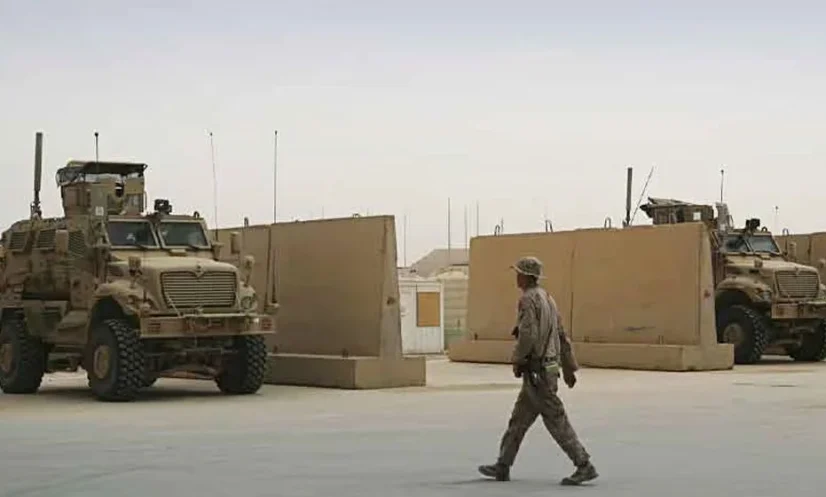
The United States is set to withdraw its troops from the last remaining US military bases in Iraq by Wednesday (September 30). After more than two decades of war and the deaths of around 4,500 US troops, Iran and its allies are portraying the withdrawal as a victory.
Iraqi security analysts, however, warn that the departure could allow Iran and Iran-aligned groups to expand their influence in Iraq. At the same time, groups opposed to the US, including Islamic State (IS), could exploit any security vacuum to regain strength.
An agreement on the withdrawal of US-led coalition forces from Iraq was reached in 2024 under then-US President Joe Biden. The administration of President Donald Trump is now implementing that decision.
Jasim al-Bahadli, an Iraqi security analyst who focuses on Iranian-backed Shia armed groups, said the departure would remove an important military force that had helped balance Tehran’s influence in Iraq.
He said Iran-aligned militias would portray the withdrawal as a victory and could seek to expand their influence over security and political decision-making.
Iran-backed groups call it a ‘historic victory’
Abu Mujtaba al-Yasiri, commander of the Islamic Resistance in Iraq, an alliance of several Iran-backed armed groups, described the US withdrawal as a “historic victory.”
He said September 30 would mark the end of a “dark chapter” in Iraq’s history. According to him, Iraq’s sovereignty cannot be secured through foreign troops but through resistance and the will of the people. Not everyone views the withdrawal positively.
Abdul Rahman al-Jubai, a Sunni tribal leader from Fallujah, said Iraq was not yet fully prepared to manage its own security. While everyone wants full sovereignty, he said, the potential security vacuum created by a sudden departure of US-led coalition forces was the biggest concern.
Why were US troops in Iraq?
The United States invaded Iraq in 2003 and ousted then-President Saddam Hussein. US forces subsequently maintained a long-term presence in the country, helping combat insurgencies and supporting the new government.
US troops withdrew from Iraq at the end of 2011. Less than three years later, they returned following the rise of IS in 2014. From 2014 to 2017, the US-led coalition supported Iraqi forces in their fight against the militant group.
Iraq has maintained close political and military relations with both the US and Iran. At times, Iraqi territory has become an arena for indirect confrontation between the two countries.
In 2020, a US strike near Baghdad airport killed Iran’s top military commander, Qassem Soleimani. Iranian-backed groups subsequently carried out several attacks on US bases in Iraq.
A ‘victory’ for Iran?
Iran has long identified the removal of US troops from the Middle East as one of its objectives. Tehran therefore views the withdrawal from Iraq as a victory for the “axis of resistance” formed by its allied armed groups.
Amir Hayat-Moqaddam, deputy head of the Iranian parliament’s National Security Commission, said lasting security would be established if US troops left Iraq and the wider region.
The United States, however, has accused Iranian-backed Iraqi militias of carrying out attacks in the ongoing regional conflict at Tehran’s direction. The Iraqi government says it is working to limit the influence of such armed groups.
Could IS regain strength?
Several security officials from Iraq’s federal government and the autonomous Kurdistan region have expressed concern that the US withdrawal could give IS an opportunity to rebuild.
Although IS lost its self-declared “caliphate” nearly a decade ago, security officials believe the group still maintains sleeper cells and clandestine networks.
Kurdish commander Sirwan Barzani said reduced access to US intelligence, logistical support and drones could give IS an opportunity to reorganise. He claimed that some activity by IS sleeper cells had been detected over the past two weeks as news of the coalition withdrawal spread.
Iraqi security forces also said a suspected IS cell had been preparing a suicide attack amid the US troop withdrawal.
According to Iraqi security official Colonel Khalid al-Bayati, IS is seeking through such attacks to demonstrate that it remains active and capable of carrying out major, deadly attacks. Source: Agencies.