Play store

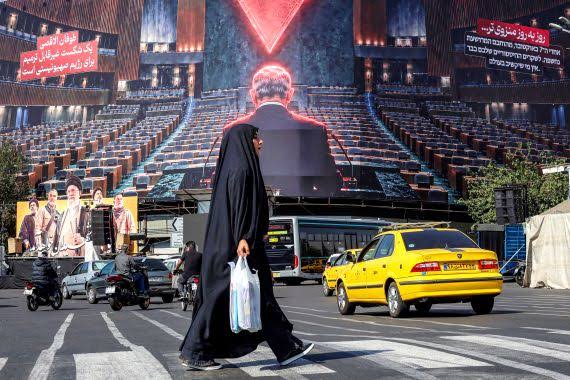
US President Donald Trump has vowed to continue applying intense economic and military pressure on Iran, claiming that American strikes have severely weakened the country’s naval and air defence capabilities as fighting spreads across the Middle East and diplomatic efforts continue.
Trump’s latest remarks come amid renewed confrontations around the strategically vital Strait of Hormuz, escalating violence in Yemen, growing tensions over regional shipping routes and mounting scrutiny in Washington over the financial cost of the war.
Speaking at a rally in Kansas, Trump claimed that Iran’s navy had been largely destroyed and that all 229 of the country’s fighter aircraft had been eliminated. He also asserted that senior Iranian leaders had been killed during the military campaign. The sweeping claims about the destruction of Iran’s military capabilities have not been independently confirmed in full.
Trump also sought to downplay the significance of US requests for assistance from NATO allies, describing them as a test of the alliance rather than an indication that Washington urgently needed military support. He praised Russian President Vladimir Putin for refraining from providing greater assistance to Tehran.
The remarks underscore Washington’s determination to portray the campaign as a success even as Iran continues to demonstrate its ability to threaten maritime traffic and sustain attacks through regional allies.
China, meanwhile, has condemned the US-Israeli military campaign against Iran. Chinese Premier Li Qiang reportedly described the strikes as blatant aggression and criticised the absence of consultation with the United Nations Security Council while diplomatic efforts were under way.
Diplomatic engagement has intensified alongside the fighting. Iranian Foreign Minister Abbas Araghchi held talks in Tehran with his Russian counterpart, Sergey Lavrov, with both sides seeking to strengthen their strategic relationship.
Araghchi described ties between Tehran and Moscow as being at their closest historical level and said discussions covered expanded economic and nuclear cooperation. The meeting highlighted Iran’s efforts to strengthen partnerships with countries opposed to the US-led military campaign and Western sanctions.
Pakistan’s army chief, Field Marshal Asim Munir, was also expected to visit Tehran for talks following the Russian delegation’s arrival, according to the supplied account of the diplomatic developments. The proposed visit would add another regional channel for engagement at a time when the conflict threatens wider security and economic stability.
The diplomatic activity comes against a backdrop of stalled efforts to secure a lasting settlement. Washington and Tehran remain at odds over military operations, sanctions, maritime security and Iran’s nuclear programme.
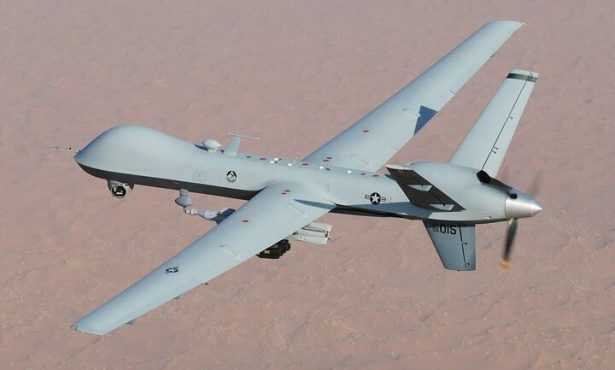
Military tensions have continued around the Strait of Hormuz, a critical route for international oil and gas shipments. Iran’s Islamic Revolutionary Guard Corps claimed that its aerospace defence forces intercepted and shot down a US MQ-9 Reaper drone over the waterway.
The claim could not be independently verified from the information available. Nevertheless, continuing confrontations in and around the strait have heightened concerns about the safety of commercial shipping and the potential for further disruption to global energy supplies.
The waterway has become one of the most consequential fronts in the conflict. Attacks on vessels, threats to shipping and restrictions on maritime movements have forced operators to reassess routes and security risks. Recent reporting has documented a sharp increase in attacks on commercial vessels and a substantial decline in oil shipments through the strait.
The conflict has also intensified in Yemen, where a Houthi ballistic missile attack struck a security training camp in Shabwah province on Monday, killing dozens of recruits.
Shabwah Governor Awad al-Wazir said 58 people had been killed and more than 200 injured in the attack on the Al-Alam camp. Houthi forces claimed responsibility, saying the camp was operated by Saudi forces, although that assertion was not independently established. The attack was among the deadliest reported since fighting escalated following the collapse of a ceasefire in Yemen.
The widening confrontation has placed additional pressure on Saudi Arabia and other regional actors, with attacks on strategic facilities and transport routes raising fears of a broader security crisis.
The supplied account also cited Saudi-led coalition claims that 127 Houthi weapons depots and missile launch sites had been destroyed, alongside the interception of a maritime arms shipment off Yemen’s coast. Those figures and the details of the reported operation require independent confirmation.
Persistent security concerns have also reportedly prompted Saudi Arabia to postpone its 2026 Future Investment Initiative, widely known as ‘Davos in the Desert’, until next year.
Elsewhere, Israeli forces reportedly entered an area near Quneitra in southern Syria and briefly detained a Syrian civilian before releasing him. An Israeli air strike on an apartment in western Gaza City was also reported to have killed a Palestinian couple.
The fighting continues to unsettle energy markets, where traders are balancing the threat of supply disruptions against policy decisions that could increase the availability of Russian oil.
Brent crude futures fell to $109.06 a barrel in early Asian trading on Tuesday as markets assessed Trump’s executive order waiving certain sanctions and duties connected to Russian energy exports. The decline was modest, however, and persistent risks to Middle Eastern supplies continued to support prices.
The US administration’s October 16 order introduced measures under the Lindsey O. Graham Sanctioning Russia and Iran Act of 2026 while providing for certain waivers. The move reflects Washington’s attempt to balance pressure on Russia and Iran with its interest in managing energy-market risks.
Iraq, meanwhile, has continued to rely on oil exports despite the regional turmoil. The supplied account put its exports at 3.4 million barrels per day, including shipments through routes affected by the security situation around the Strait of Hormuz. The figure was not independently verified.
Iran has also sought to maintain economic ties beyond the immediate conflict zone. First Vice-President Mohammad Reza Aref reportedly said bilateral trade with Tajikistan had expanded by 50 per cent, highlighting Tehran’s efforts to sustain commerce despite the pressures of war and sanctions.
The financial burden of the conflict has become an increasingly contentious issue in Washington. Five Democratic senators led by Elizabeth Warren have called on the Pentagon to disclose the full cost of the war, including military operations and damage to American facilities.
The supplied account cited a Department of Defense estimate of $43.6 billion in costs through September 3, excluding some figures relating to physical damage at US bases struck by Iranian fire. The scope and methodology of that estimate require further clarification.
The demand for greater transparency reflects concerns over the war’s impact on federal spending at a time when the administration is also managing domestic economic pressures and uncertainty in global energy markets.
With diplomatic contacts continuing but military confrontations spreading across several fronts, the conflict is increasingly affecting regional security, international shipping and the global economy. The extent to which negotiations can contain the fighting remains uncertain, while further disruption to energy supplies and maritime trade could intensify the economic consequences well beyond the Middle East. Source: Al Jazeera News