Play store

NASA has unveiled a detailed plan for its Artemis III mission, which will test the docking capabilities of two privately developed lunar landers in low Earth orbit ahead of future crewed moon landings.
The agency outlined the mission’s operational plan on October 23 at Kennedy Space Center in Florida, highlighting the complexity of coordinating three powerful rockets and multiple spacecraft.
“We’re launching three of the most powerful rockets in the world, and undertaking what is likely the most complicated launch campaign ever undertaken,” Jeremy Parsons, NASA’s Artemis programme manager, said at the press conference.
The three rockets involved are NASA’s Space Launch System (SLS), SpaceX’s Starship and Blue Origin’s New Glenn. All are scheduled to launch from Florida’s Space Coast as part of the mission.
Under the plan, New Glenn will launch first, carrying Blue Origin’s Blue Moon lunar lander into low Earth orbit. NASA’s SLS rocket will then launch the Artemis III crew aboard the Orion spacecraft.
The crew comprises NASA astronauts Randy Bresnik, Andre Douglas and Frank Rubio, alongside European Space Agency astronaut Luca Parmitano.
After reaching orbit, Orion will manoeuvre into an altitude of about 555 kilometres. The astronauts will spend the first two days checking the spacecraft and its systems before docking with Blue Moon on the third day of the mission, at an altitude of approximately 439 kilometres.
The crew will enter the lander and assess its environmental controls and life-support systems. They will also test atmospheric pressure maintenance, emergency procedures and joint control of the docked spacecraft. Mission Control teams will participate in simulations and operational exercises.
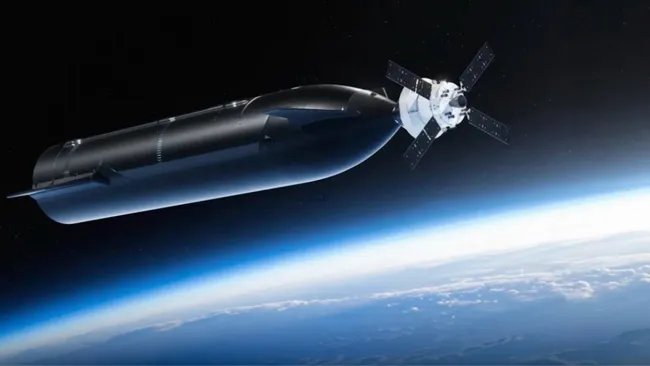
Following the Blue Moon tests, SpaceX’s Starship will launch with a specially designed docking adapter. The spacecraft, measuring about 52 metres in height, is expected to rendezvous with Orion on the eighth day of the mission at an altitude of around 381 kilometres.
Unlike the Blue Moon exercise, the Starship demonstration will last about two hours, and the astronauts will not enter the vehicle. The test will provide data on docking forces and spacecraft coordination.
The mission is expected to last 14 days, although it could extend to 17 days. After undocking from Starship, the crew will conduct additional activities, including testing their survival suits, medical assessments, scientific experiments and technology demonstrations, before returning to Earth for a parachute-assisted ocean splashdown.
NASA says the mission will help reduce risks ahead of Artemis IV, which aims to return astronauts to the lunar surface near the moon’s south pole in 2028. The mission is expected to mark the first crewed lunar landing since Apollo 17 in 1972.
NASA Administrator Jared Isaacman said the agency was keeping both Blue Origin and SpaceX in contention for the future landing mission to maximise the chances of having a spacecraft ready.
“We have no intention of surrendering a viable path to the surface before the data and schedule compels us to do so,” Isaacman said.
Parsons said both companies were planning lunar landing missions in 2028, although the two approaches would differ. Under Blue Origin’s proposed approach, Orion would rendezvous with Blue Moon in lunar orbit. SpaceX’s plan would likely involve Starship docking with Orion in Earth orbit before transporting the crew towards the moon.
NASA is targeting the summer of 2027 for Artemis III, but the schedule remains uncertain. An internal memo issued by Isaacman last month indicated that the mission was about 90 days behind schedule.
Parsons identified supply-chain issues involving the lunar landers as among the major challenges facing the programme. However, NASA officials expressed confidence that the outstanding issues could be resolved.
The agency says Artemis III’s primary purpose is to validate spacecraft operations, docking procedures and crew coordination in the relative safety of Earth orbit before attempting future lunar landings.