Play store

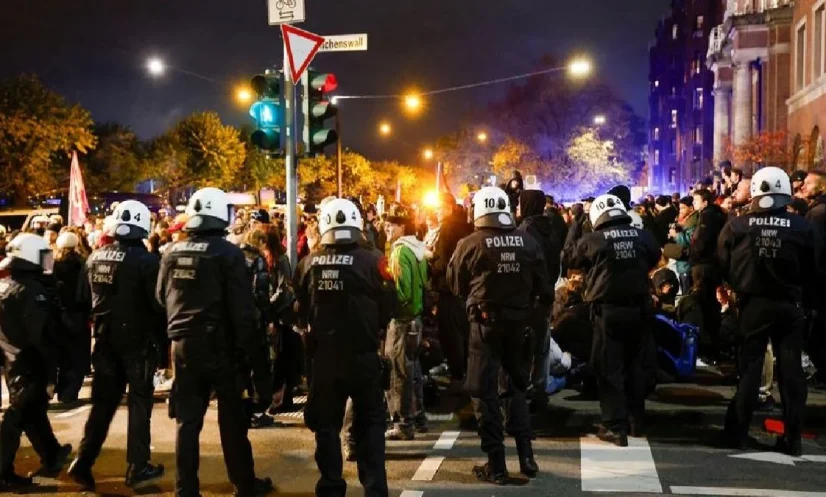
Thousands of people took to the streets in more than 30 cities across Germany on Saturday (October 31), as a wave of Gen Z-led protests spread across the country, driven by rising living costs, education budget cuts and opposition to compulsory military service.
According to German broadcaster Deutsche Welle (DW), protesters gathered near the historic Brandenburg Gate in Berlin, with students and people from different age groups and professions joining the demonstrations.
The protests were organised by an alliance called ‘Gen Z Regelt’. By Saturday morning, around 180,000 people had expressed interest in joining demonstrations in 34 cities. Frankfurt, Cologne, Munich and Berlin were among the main centres of protest.
Berlin police estimated that around 5,000 people took part in the demonstration in the capital, while organisers put the figure at approximately 10,000. The organising alliance claimed that more than 100,000 people participated nationwide.
According to German news agency DPA, the protesters had six key demands, including reducing the cost of living, increasing education spending and opposing mandatory military recruitment.
Students accused the government of cutting expenditure on essential sectors such as education and social services while investing billions of euros in the military.
Veronika Dinter, a 23-year-old political science student who travelled from Hanover to Berlin to join the protest, said rising living costs had forced her to take a part-time job to finance her studies.
She alleged that universities were facing financial difficulties, educational institutions were closing and teachers were losing their jobs, while Chancellor Friedrich Merz’s government was spending heavily on the military instead of addressing these problems.
Emma Heymann, a 24-year-old student from Berlin, also criticised the government’s spending priorities. She alleged that Germany was spending heavily on the military while also funding what she described as genocide in Gaza.
Protests have been taking place across several European countries, including France, Belgium, Italy, Spain and Serbia, over the past few weeks. The demonstrations in Germany are part of the wider wave of youth-led movements across the continent.
Kilian Hampel, a senior researcher at the Future of Work Lab at the University of Konstanz, said frustration had been building among young people for a long time. Demonstrations in other European countries had encouraged them to take to the streets to press their own demands.
He also stressed that students’ concerns over deteriorating infrastructure at educational institutions needed to be taken seriously.
While the demonstrations in Berlin ended peacefully, clashes broke out between protesters and police in the western city of Cologne. Berlin police said that although some isolated incidents occurred during the day, most of the demonstrations remained peaceful.