Play store

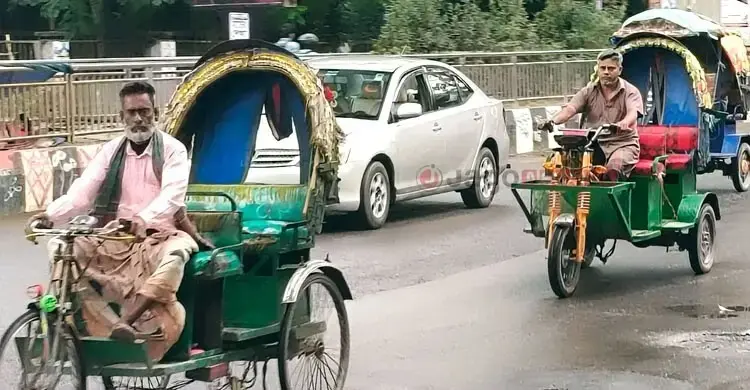
Registration of battery-powered three-wheeled electric rickshaws will begin in 13 city corporations across Bangladesh on Monday (November 2), with drivers to be gradually brought under a licensing system.
State Minister for Local Government, Rural Development and Cooperatives Mir Shah-e-Alam announced the decision at a press conference at the Secretariat on Sunday, outlining the new regulations governing the operation of low-speed e-rickshaws in city corporation areas.
He said the registration provision had been incorporated into the amended City Corporation Act, 2009, in 2026, and the relevant rules had been published in the official gazette following vetting by the Law Ministry. There are now no legal barriers to starting the registration process.
Under the new rules, the registration fee for a two-passenger e-rickshaw has been set at Tk 8,000, while a four-passenger vehicle will require Tk 10,000. After one year, owners will have to pay Tk 4,000 and Tk 5,000 respectively for renewal following fitness inspections.
Registered e-rickshaws will be allowed to operate for a maximum of 12 years. City corporations will also issue QR code-based fitness certificates for a fee of Tk 1,000.
The state minister said a seven-member committee comprising representatives from the Local Government Division, Bangladesh University of Engineering and Technology (BUET), city corporations, traffic police and district administrations had been formed to oversee e-rickshaw production and recommend approval of manufacturers.
All e-rickshaws must follow designs approved by BUET. Existing vehicles will also have to be modified to comply with the approved designs, with manufacturers carrying out the work after obtaining permission from city corporations.
Drivers to receive identity cards initially
Although the regulations include provisions for driving licences, the government will not introduce them immediately. Vehicle registration will take priority, while drivers will initially carry identity cards issued by vehicle owners.
The minister said a separate notification would be issued later to bring drivers under the licensing system gradually, as processing applications from a large number of drivers at once could overwhelm city corporations.
Dhaka to have eight e-rickshaw zones
The government plans to divide Dhaka into eight zones — four under Dhaka North City Corporation and four under Dhaka South City Corporation.
Each zone will have a distinct colour for its e-rickshaws, preventing vehicles registered in one zone from operating in another.
The number of e-rickshaws allowed in each zone will be determined through discussions between traffic police and city corporations. No numerical limit has been set for now.
QR codes will contain registration numbers, ownership details and information about the relevant city corporation and operating zone.
Rules to regulate operations
The regulations identify several offences, including operating without registration, exceeding speed limits, carrying additional passengers, using unauthorised batteries, modifying motors or vehicle structures, entering restricted areas and reckless driving.
Transporting goods without passengers, violating traffic signals and fleeing after accidents will also be treated as offences, subject to legal action.
The minister urged existing e-rickshaw drivers in Dhaka not to panic, saying the registration process would be implemented gradually and illegal battery-powered vehicles would eventually be phased out.
He added that the government would review progress with journalists one month after registration begins.
Charging stations and fares to be regulated
The government also plans to bring e-rickshaw charging stations under regulation. Charging facilities will require approval, with priority given to establishments capable of providing solar-powered charging services.
Legal action will be taken against those using electricity illegally to charge e-rickshaws, while city corporation magistrates will regularly monitor charging stations.
Fares will be determined on a per-kilometre basis through joint discussions involving vehicle owners, traffic authorities and city corporations. The minister said the rates would be reasonable and affordable for ordinary passengers.
The new regulations will initially apply to the country’s 13 city corporations. Separate amendments to municipal laws will be required before similar rules can be introduced in municipality areas.