


 Play store

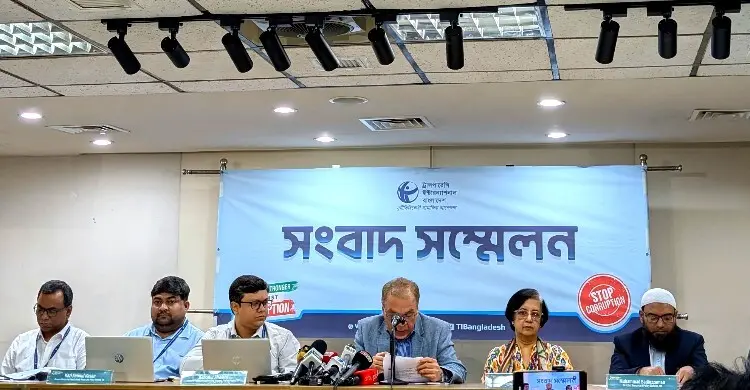
Political parties in Bangladesh suffer from serious shortcomings in internal democracy, financial transparency and accountability, while the influence of money and muscle power in party operations is increasing, according to a new study by Transparency International Bangladesh (TIB).
The study, titled Institutional Governance of Political Parties in Bangladesh, also found a lack of effective mechanisms to prevent individuals involved in criminal activities from joining political parties or securing influential positions.
The findings were unveiled at a press conference in Dhaka’s Dhanmondi on Sunday (November 1).
According to the report, party constitutions lack clear guidelines on financial management, income and expenditure records, auditing and accountability. Sixteen political parties do not regularly hold national councils, with the BNP not having held one for more than 10 years.
The study also found that political parties generally do not prepare annual budgets. Much of their financial activities are conducted through informal and programme-based arrangements.
The constitutions of 18 political parties do not include minimum integrity or ethical standards as membership requirements. Nor do they have effective provisions to prevent individuals with criminal backgrounds from becoming members or holding key positions.
The report observed that political parties often favour wealthy individuals and those with muscle power to finance party activities, meet expenses, establish dominance and control polling centres during elections.
At the same time, individuals involved in illegal financial activities and possessing muscle power seek political influence to secure protection and social status.
The study identified the presence of individuals allegedly involved in extortion, human trafficking, smuggling, arms and drug trading in relatively influential political parties.
It also found that between 18 and 32 per cent of candidates who contested the past five parliamentary elections faced one or more criminal cases.
TIB found that political parties lack clear financial policies and procedures. Their constitutions provide inadequate guidelines on income and expenditure, membership fees, donations, financial transactions, auditing and accountability.
The report also highlighted weaknesses in monitoring election spending and ensuring compliance with electoral rules.
Candidates nominated by ruling or influential parties were found to have violated electoral codes of conduct and other state regulations without facing effective accountability within their parties.
Some candidates allegedly concealed or provided incorrect and incomplete information in their election affidavits regarding assets, loans, business interests and foreign citizenship.
The study further noted that candidates in the 13th parliamentary election spent an average of 169.5 per cent more than the prescribed expenditure limit, without effective action from their respective parties.
According to the report, political parties rarely take visible action against leaders and activists accused of accumulating wealth through criminal activities, irregularities and corruption. In some cases, minor disciplinary measures are imposed.
The study also found shortcomings in information disclosure. Of the 32 political parties covered by the research, 24 had websites, but only 16 were active.
TIB said the existing legal framework governing political parties was inadequate to ensure internal democracy, transparency and accountability in political financing. It also noted that the framework was not fully consistent with international best practices.
The report warned that dependence on informal funding sources and individual financial contributions was encouraging personality-based and family-centred politics.
It also pointed to growing concerns over abuse of power, black money, political criminalisation and internal conflicts, particularly within influential political parties.
Limited Women’s Participation
The study found limited progress in ensuring women’s participation in political activities despite legal obligations and party commitments.
Some parties reportedly include women only symbolically, while inadequate grassroots participation and the limited inclusion of female activists are reinforcing single-person leadership, dynastic politics, authoritarianism, elitism and patriarchy.
Speaking at the press conference, TIB Executive Director Dr Iftekharuzzaman said political parties were among the most important institutions in a democratic system and had played a significant role in Bangladesh’s history and achievements.
However, he said, they also bore responsibility for many of the challenges facing democratic progress and good governance.
“Democracy cannot function properly unless good governance is ensured within political parties, one of the central institutions of the democratic system,” he said.
He noted that discussions on institutional reforms often overlooked the need for internal reforms within political parties, despite their importance in establishing democracy.
Iftekharuzzaman said the research was undertaken to assess political parties’ roles and public expectations of them. Although the study began in June 2023, changes in the country’s political landscape and difficulties in collecting information from parties delayed its completion.