Play store

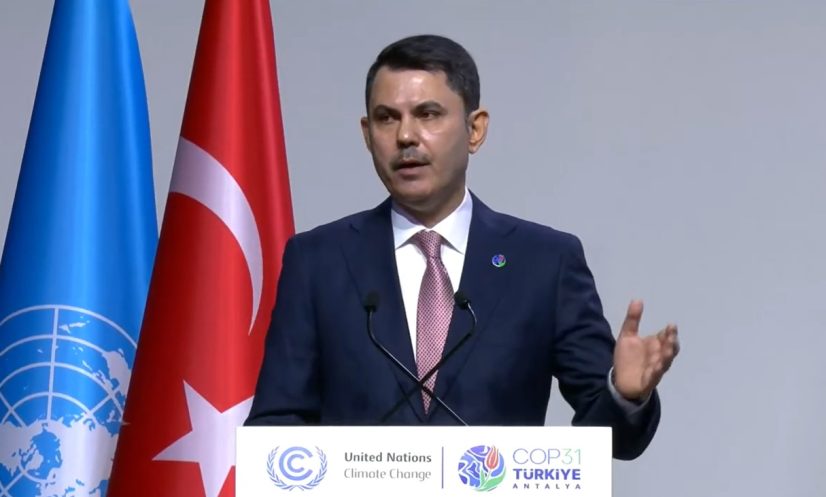
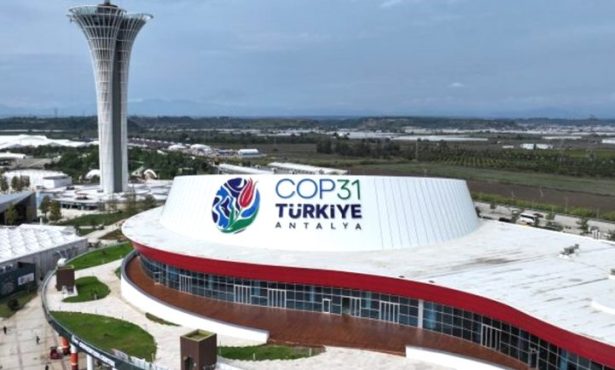
The United Nations Climate Change Conference, COP31, opened in Antalya, Türkiye, on Monday with a call to translate international climate commitments into concrete action, as its president declared that the world could no longer afford to rely on pledges alone.
COP31 President Murat Kurum said the conference would be pursued as an “Implementation COP”, focusing on delivering tangible results rather than making further promises.
Addressing the opening session on Monday (November 9), Kurum said the climate crisis was increasingly intertwined with other global challenges, including armed conflicts, geopolitical tensions, economic uncertainty, debt burdens, food insecurity and technological changes.
He said these crises were interconnected, with one often intensifying another.
Climate change could no longer be treated as an isolated issue, he said, noting that droughts, floods, water shortages and extreme heat were disrupting food production, supply chains, economies, migration, urban life and public health.
“The drought in one part of the world affects the food on the table in another,” he said.
Kurum said the Paris Agreement’s goal of limiting global temperature rise to 1.5 degrees Celsius above pre-industrial levels remained the central guiding principle of international climate action.
He added that COP31 would clearly reflect the scientific evidence and urgency surrounding the climate crisis.
A World Meteorological Organisation (WMO) update on the state of the global climate in 2026, released on the opening day, said the past 12 years had been the warmest on record, with the four hottest years occurring in the most recent four-year period.
The COP31 president stressed that decisions taken at international negotiations must deliver benefits in people’s everyday lives. Energy-efficient buildings, environmentally friendly public transport, affordable energy and new employment opportunities should be among the tangible outcomes of climate action, he said.
Highlighting electrification in the energy sector, Kurum referred to Türkiye’s global “35 by 35” electrification commitment, which aims to increase electricity’s share of final energy consumption to 35 per cent by 2035.
He called for greater investment in renewable energy, electricity transmission networks, energy storage, efficiency improvements, clean transport and green industrialisation to achieve the target.
On climate finance, Kurum called for the implementation of the Baku agreement’s target of providing at least $300 billion annually to developing countries by 2035.
He also urged the international community to scale up climate finance from all sources to at least $1.3 trillion a year.
“Commitments must be linked to finance. That money must be used for investment, and investment must deliver visible results,” he said.
COP31 President of Negotiations Chris Bowen said the conference offered an opportunity to demonstrate what international cooperation could achieve at a critical moment for climate action and global energy security.
He identified unlocking climate finance and investment, accelerating electrification, and strengthening the protection of oceans and nature as key priorities.
Bowen said the focus should be on narrowing the gap between commitments and implementation through investment, infrastructure development, job creation, energy security and building disaster-resilient communities.
UN Climate Change Executive Secretary Simon Stiell said volatility in fossil fuel prices had delivered a major shock to the global economy, putting pressure on households and fuelling inflation.
Renewable energy, however, was already generating significant economic benefits. The world saved $265 billion in the first six months of this year through the use of renewable energy, he said.
Stiell stressed that vulnerable communities were bearing the heaviest costs of climate change and called for COP31 discussions and action plans to translate climate targets into tangible benefits.
Food, agriculture and health dominate opening-day agenda
Food, agriculture and health featured prominently in the special programme on the opening day of COP31, with discussions focusing on practical measures to address growing threats to food security, agricultural production and public health caused by climate change.
The conference highlighted concerns that an ongoing super El Niño could push nearly 50 million additional people into severe food insecurity.
Against this backdrop, participants stressed the need to make food production, water management and healthcare systems more resilient to climate impacts.
The COP31 presidency, in collaboration with Türkiye’s Ministry of Health, the World Health Organisation (WHO) and international climate and health partners, launched the “Antalya Initiative for Resilient Health Systems”.
The initiative aims to strengthen countries’ healthcare systems to better respond to climate-related health risks.
In agriculture, discussions focused on ensuring climate finance and expanding the participation of women and young people.
A high-level dialogue on women farmers is scheduled to examine barriers to accessing climate finance, alongside the release of a joint report titled “The Unfunded Half”.
A separate dialogue on young farmers will explore their role in transforming agriculture, water management and food systems. A dedicated pavilion has also been established to ensure the participation of children and young people.
On Tuesday, Türkiye’s Ministry of Agriculture and Forestry is scheduled to launch the “Turquoise Nexus Initiative”, aimed at integrating food system transformation, sustainable water management and climate adaptation.
The two-week COP31 conference will host official UN climate negotiations and high-level meetings in the Blue Zone. The Green Zone will provide a platform for government agencies, businesses, academics, civil society organisations and young people to showcase initiatives and solutions to climate challenges.
With the conference setting out to move from pledges to implementation, the international community will closely watch over the next two weeks for concrete decisions on climate finance, energy transition, food security, agriculture and adaptation.