Play store

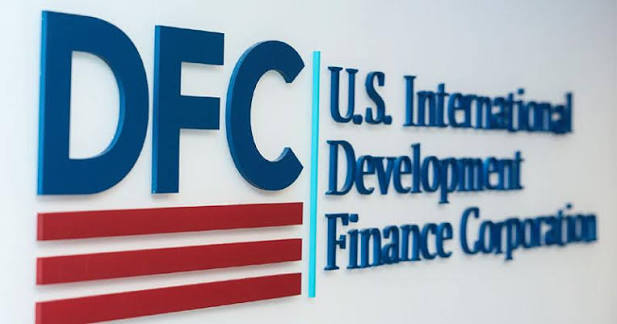
The United States has reaffirmed its commitment to strengthening economic ties with Bangladesh, saying the restoration of the country’s eligibility for US Development Finance Corporation (DFC) financing will open new opportunities for investment and bilateral cooperation.
A senior US official told BSS that the decision reflected Washington’s willingness to turn its commitment to a stronger economic partnership into concrete action by attracting private investment, supporting infrastructure development and accelerating Bangladesh’s economic growth.
“These are all signs that the US wants that better economic relationship and is taking those steps,” the official said, referring to the bilateral Agreement on Reciprocal Trade (ART), an energy memorandum of understanding and the latest DFC decision.
The official described Bangladesh’s restored eligibility as a significant milestone, noting that the country was the first to regain access to DFC financing since the institution was established in its modern form in 2018.
The decision followed years of engagement between Washington and successive governments in Dhaka over labour standards and reforms that had previously restricted Bangladesh’s access to the facility.
Bangladesh lost its eligibility for the US Generalized System of Preferences (GSP) following the Rana Plaza disaster in 2013, while labour-related concerns also affected its eligibility for DFC support.
The official said initial labour reforms undertaken by the interim government and Bangladesh’s accession to relevant International Labour Organization (ILO) conventions helped create conditions for reconsidering the country’s eligibility.
The passage of new labour legislation by the BNP government in February, followed by sustained progress in its implementation, was also instrumental in securing the decision.
“Passing the law was not enough. We had to see concrete steps towards implementing that law over a sustained period,” the official said.
Following an inter-agency assessment, DFC Chief Executive Officer Ben Black approved Bangladesh’s eligibility earlier this month.
Explaining the institution’s role, the official said DFC was fundamentally different from a conventional development bank.
“DFC is the investment arm of the United States. It is not a development bank,” the official said.
The institution provides financing, loan guarantees, political risk insurance and equity investments for commercially viable projects that also advance US strategic interests.
Such support can help attract private investors to projects where political or commercial risks might otherwise discourage financing.
However, the official stressed that DFC support would remain competitive, with individual proposals assessed on their financial viability, development potential and alignment with US strategic priorities.
The agency focuses on seven priority sectors: critical minerals, healthcare, energy, financial services, agriculture and food security, infrastructure and logistics, and technology and telecommunications.
Energy, technology and telecommunications were identified as particularly promising areas for potential investment in Bangladesh.
“I think energy’s got some very strong potential, and I think technology and telecom have some very strong potential,” the official said.
No specific projects have yet been approved or earmarked for Bangladesh under the restored eligibility. Interested companies and organisations can now begin exploring investment proposals.
A DFC delegation is expected to visit Bangladesh early next year to discuss and assess potential investment opportunities.
The projects would not necessarily have to originate from US companies, although they would need to meet the institution’s eligibility criteria and maintain relevant links with US interests.
The official cautioned that restored eligibility did not guarantee any particular amount of financing, as decisions would depend on the quality and commercial viability of individual proposals.
The official also described the Agreement on Reciprocal Trade as a blueprint for future economic cooperation between Washington and Dhaka.
Improving the investment climate, strengthening the business environment and ensuring regulatory predictability would be essential to developing projects capable of attracting DFC financing.
The DFC formally announced Bangladesh’s restored eligibility on November 16, saying access to its financing and risk-mitigation instruments would help mobilise private capital for commercially viable, development-oriented projects.
The agency said such investments could help bridge financing gaps, develop infrastructure, create jobs, expand essential services and strengthen local businesses.
DFC CEO Ben Black described the decision as an opportunity to deepen bilateral economic ties and mobilise private investment for sustainable growth.
US Ambassador to Bangladesh Brent T Christensen also welcomed the development, saying DFC financing could translate the two countries’ commitment to open economies and reciprocal trade into greater prosperity.
The Bangladesh government welcomed the announcement on November 17, describing it as a major outcome of sustained diplomatic engagement with Washington and an important milestone in bilateral economic relations.
In a statement, the Ministry of Foreign Affairs said the decision would create opportunities to attract US investment, mobilise private capital, strengthen investor confidence and encourage greater participation by American businesses in Bangladesh.
The ministry added that the development reflected growing international confidence in Bangladesh’s economic prospects and its ongoing reforms to improve the investment climate and labour standards.