


 Play store

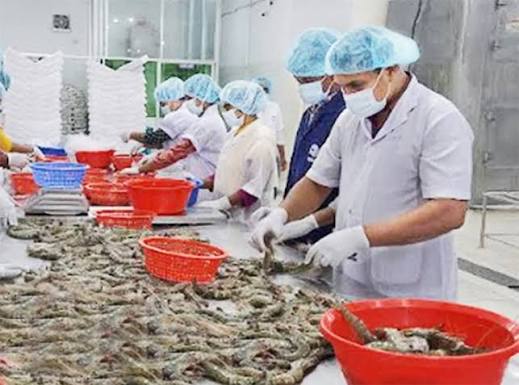
DHAKA: Bangladesh is looking to modernise its shrimp farming industry to reverse a decline in export earnings and strengthen its position in the global market, as low productivity, disease outbreaks and inadequate supplies of quality shrimp fry continue to undermine the sector’s competitiveness.
The government has rolled out a series of initiatives, including improved farming techniques, disease-free shrimp fry production, infrastructure development, farmers’ training and financial assistance, to raise output and attract investment in the industry.
Under the programme, the Department of Fisheries (DoF) is providing free soil and water quality testing services, along with technical advice to shrimp farmers, to encourage improved management of shrimp enclosures, locally known as ghers.
Farmers are receiving training in Good Aquaculture Practices (GAP) and semi-intensive farming technologies at the field level. Demonstration farms are also being operated to promote sustainable and environmentally friendly shrimp cultivation.
To bring greater discipline to the sector, the department is registering and licensing shrimp farms. It is also raising awareness among farmers about deepening water bodies and enclosures and stocking juvenile shrimp in ghers after nursing post-larvae (PL) to improve productivity and profitability while reducing environmental impacts.
In Cox’s Bazar, 587 plots of the 7,000-acre shrimp estate in Matamuhuri upazila have been leased out or renewed among farmers to increase production through improved management.
Infrastructure development is also under way in shrimp estates, including the reconstruction of embankments, re-excavation and renovation of water supply and drainage canals, and repair and reconstruction of sluice gates.
A master plan has been prepared to establish a shrimp-based multifunctional economic growth centre.
In coastal areas, 350 shrimp clusters have been established, each comprising 25 farmers. Of these, 297 clusters have received competitive matching grants to introduce improved traditional farming methods. In addition, 34 canals covering 262 hectares in cluster areas have been renovated and re-excavated.
To minimise post-harvest losses and maintain product quality, six post-harvest service centres have been established in shrimp cluster areas, according to an official document.
The government is also focusing on ensuring a reliable supply of pathogen-free post-larvae. To this end, 19 tiger shrimp (bagda) hatcheries and nurseries have been converted into Specific Pathogen Free (SPF) facilities.
A monitoring protocol for operating SPF tiger shrimp hatcheries has been prepared, alongside a standard operating procedure (SOP) for hatchery management to ensure the production of quality post-larvae.
The DoF is also implementing the National Residue Control Plan (NRCP) 2018 to detect harmful chemicals, antibiotics and other contaminants in farmed shrimp and fish. Initiatives have been taken to update the National Shrimp Policy 2014.
Meanwhile, a modern freshwater prawn (golda) hatchery is being established at Char Kachhapia in Char Fasson upazila of Bhola district.
To expand mono and mixed cultivation of golda and bagda across the country, post-larvae are being produced for stocking at 32 golda and 46 bagda hatcheries in the public and private sectors in different districts.
Bangladesh’s shrimp industry remains an important source of export earnings, foreign exchange and rural employment. The southwestern coastal districts of Khulna, Satkhira and Bagerhat, along with the southeastern districts of Cox’s Bazar and Chattogram, are the country’s major shrimp-producing areas.
According to the Department of Fisheries, Bangladesh produced around 299,000 tonnes of shrimp in fiscal year 2024-25, while average productivity remained relatively low at approximately 400 kg per hectare.
Traditional farming methods, inadequate supplies of quality shrimp fry, disease outbreaks, climate change and limited access to modern technologies continue to constrain production. Black tiger shrimp, locally known as bagda, and freshwater prawn, known as golda, are the country’s two major commercially cultivated varieties.
The DoF’s Yearbook of Fisheries Statistics 2023-24 recorded 147,824 tonnes of shrimp and prawn production from farms, including 75,990 tonnes of bagda and 57,583 tonnes of golda.
The sector made a significant contribution to export earnings in FY2024-25, when Bangladesh exported 23,238 tonnes of frozen shrimp and prawn worth US$296.29 million. This accounted for around 76 per cent of the country’s total frozen fish and shrimp export earnings of US$388.7 million.
Despite the recovery in FY2024-25, shrimp export earnings remain significantly below their historical peak of around US$550 million in FY2013-14.
Export earnings declined to US$285 million in FY2025-26, while export receipts fell by a further 20 per cent year-on-year during July-August of the current fiscal year, according to Export Promotion Bureau (EPB) data.
The government is now considering measures to expand commercial production, improve productivity and attract investment, including a proposal to establish a dedicated shrimp economic zone.
However, Bangladesh faces stiff competition from major producers such as India, Vietnam and Ecuador, where modern farming systems and improved technologies have helped achieve substantially higher yields.
The industry also faces challenges in meeting international quality standards, ensuring adequate supplies of disease-free post-larvae and diversifying export markets.
Upgrading hatchery facilities, introducing modern farming techniques, strengthening disease management and expanding value-added processing could help Bangladesh increase production and regain its competitiveness in the global shrimp market.
The shrimp value chain encompasses hatcheries, feed suppliers, ice plants, transport operators, processing factories and traders, connecting small-scale farmers with international buyers in major export markets.