Play store

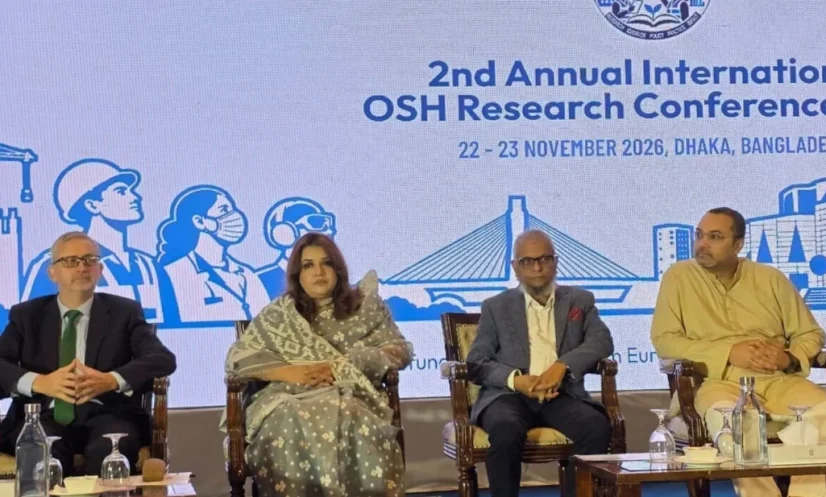
State Minister for Foreign Affairs Shama Obaed Islam has described the ongoing unrest in Bangladesh’s ready-made garment (RMG) sector as entirely politically motivated.
She made the remarks at a conference on occupational safety and health (OSH) in the workplace at Pan Pacific Sonargaon Hotel in Dhaka on Sunday (November 22).
She said the unrest on the streets was being instigated with malicious intentions to damage the country’s economy, future and garment industry.
Shama Obaed said the government was fully committed to addressing workers’ legitimate demands and ensuring the growth of the RMG sector.
Referring to the worker-friendly and garment industry-friendly budget for the current fiscal year, she said the continued unrest indicated that certain groups wanted to destroy Bangladesh’s economy and garment sector. She also alleged that these groups sought to undermine women’s empowerment achieved through the garment industry and turn Bangladesh into a dysfunctional state.
She stressed that protecting the country’s vital export sector was a collective responsibility of the government, workers and garment factory owners. She called on all stakeholders, including the international community, to work together to prevent disorder and instability on the streets.
Highlighting the industry’s development, she said garments produced in Gazipur were now reaching markets in Stockholm, Amsterdam, Copenhagen and Toronto.
She recalled that former president Ziaur Rahman had envisioned making Bangladesh proud of its ‘Made in Bangladesh’ products in the early 1980s, while former prime minister Khaleda Zia’s policy support helped advance that vision. She said BNP governments had consistently worked to expand the industry and ensure workers’ safety and labour rights.
Citing export and migration figures, Shama Obaed said more than 15 million Bangladeshis were currently working in 176 countries worldwide. In the last fiscal year, the European Union imported garments worth around $19 billion from Bangladesh, while US imports stood at approximately $7.7 billion.
She said the Foreign Ministry was working through diplomatic missions and multilateral forums to protect migrant workers’ rights and promote safe, orderly and skilled migration.
She also welcomed the United Nations General Assembly’s approval in October to extend Bangladesh’s preparatory period for graduation from the Least Developed Country (LDC) category by another three years, describing it as a reflection of international confidence in the country. She thanked development partners, including the EU, Denmark, the Netherlands, Sweden, Canada and the International Labour Organization (ILO).
Emphasising the importance of research, she said policies provided direction, but research formed the foundation for effective decision-making. Reliable national data, she added, would strengthen Bangladesh’s position in international negotiations, trade preferences, market access and investment discussions.
She expressed hope that the Foreign Ministry, the Ministry of Labour and Employment and the Ministry of Health and Family Welfare would continue working together with development partners.
Concluding her remarks, she said a nation’s true wealth should be measured not by its towering buildings but by the health, safety and dignity of the people who build them.
She called for research- and evidence-based initiatives to build a safe and just Bangladesh where no worker would have to risk their life or health simply to earn a living.