


 Play store

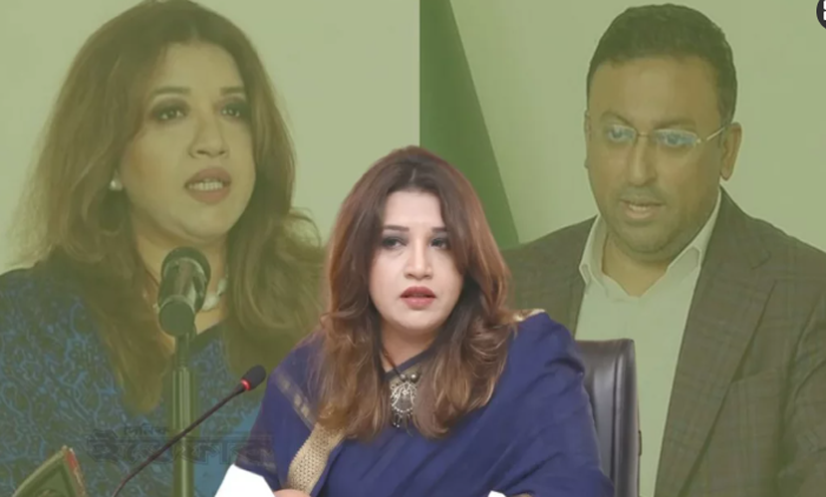
The government has appointed two state ministers to the Ministry of Foreign Affairs to cope with its expanding workload and accelerate decision-making and diplomatic activities, State Minister for Foreign Affairs Shama Obaed Islam said on Saturday.
“The scope, workload and pace of activities at the Foreign Ministry have increased significantly compared with any previous period,” she said, explaining the government’s decision to have two state ministers at the ministry.
She was speaking to reporters after attending a public dialogue titled “Politics Lab: Empowering Young Women for Political Leadership in Bangladesh”, organised by the Centre for Governance Studies (CGS) at a hotel in Dhaka.
Asked about the appointment of two state ministers, Shama said the Foreign Ministry had handled considerably more work over the past six months than at any point during the previous 17 years.
“We have opened around three new wings. We are working on migration and preventing irregular migration,” she said.
She added that inter-ministerial focal point committees had also been formed with the ministries of expatriates’ welfare, culture, labour and commerce to coordinate issues that previously lacked such mechanisms.
The foreign ministry’s workload is also expected to rise further as Foreign Minister Khalilur Rahman has been elected president of the United Nations General Assembly, she said.
“He will remain extremely busy over the next year. So, to facilitate the work and accelerate its pace, we will work as a team in accordance with whatever decision the government takes,” Shama said.
The government on Friday appointed Prime Minister’s Foreign Affairs Adviser Humayun Kabir as a state minister for foreign affairs, meaning the ministry will now have two state ministers working alongside Foreign Minister Khalilur Rahman and the ministry’s senior officials.
On the issue of the Makkah Pact, Shama said Bangladesh’s national interests and the interests of its people would remain the primary considerations in deciding whether to join any multilateral organisation or initiative.
“Whether Bangladesh will join any multilateral organisation or alliance will be decided by the government itself,” she said.
She also said that if any such decision is taken, Bangladesh’s media would be informed first.
“We have no scope to be influenced by what is being reported in the media of any foreign country,” she said.
The government’s decision to appoint a second state minister comes at a time when Bangladesh’s foreign policy agenda is expanding, with increasing engagement on migration, trade, labour, expatriate welfare, multilateral diplomacy and regional affairs.