


 Play store

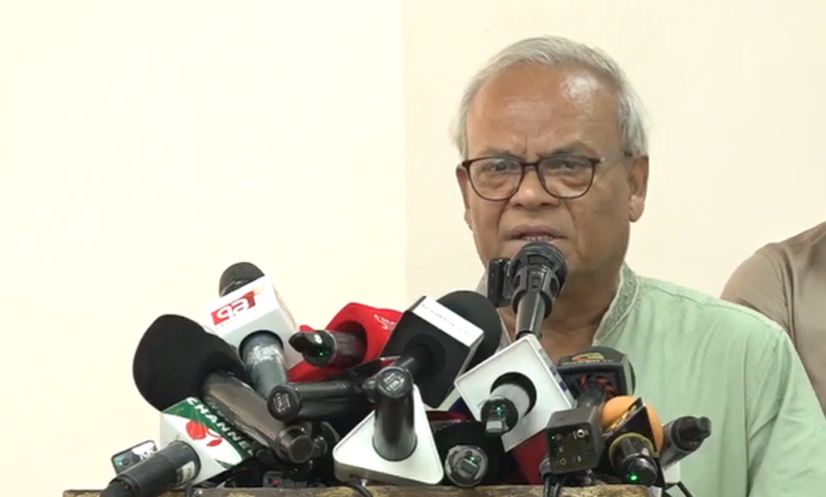
Dhaka: BNP Acting Secretary General Advocate Ruhul Kabir Rizvi has said the ousted Awami League government and its leader Sheikh Hasina tried to confine the country’s history to a one-party and one-dimensional perspective.
He made the remarks while addressing a programme as the chief guest at the Abdus Salam Hall of the National Press Club on Friday morning. The event was organised by the 1990 DUCSU and All-Party Students’ Unity.
“Bangladesh’s history does not belong to any single party or individual. The Great Liberation War, November 7, the anti-autocracy movement of 1990 and the July mass uprising are all important chapters in the country’s history. It is impossible to write a complete history of the country by excluding any one of these chapters,” he said.
Rizvi said attempts had been made to write the history of 1971 by excluding Shaheed President Ziaur Rahman. However, Zia’s declaration of independence had inspired people to participate in the Liberation War.
“Attempts were made to erase him from history, but they failed because historical truth can never be erased,” he said.
He further said Bangladesh’s history could not be complete without November 7 or the pro-democracy movement of 1990 against autocratic rule.
The sacrifices of Dr Shamsul Alam Khan Milon and the contributions of student leaders, including Amanullah Aman, Khairul Kabir Khokon, Nazimuddin Alam, Habib, Mustafizur Rahman Babul and Lutfur Rahman, would remain important parts of the country’s history, he said.
According to Rizvi, the spirit of the 1990 democratic movement later influenced the July mass uprising. The aspiration to end autocratic rule and establish people’s governance continued to inspire subsequent movements.
Speaking about consolidating democracy, Rizvi said the July uprising had led to the formation of an elected government, but merely having a government was not enough.
“To strengthen democracy, we must consolidate the country’s key institutions,” he said.
He stressed the need to ensure the independence, effectiveness and strength of the Election Commission, judiciary and media, adding that the stronger these institutions became, the firmer the country’s democratic foundations would be.
Recalling his participation in the 1990 movement, Rizvi said he had actively taken part in street protests and was shot during a 48-hour nationwide strike.
He recounted how a .33-calibre bullet entered through his abdomen and exited through his back, saying his personal life and memories were deeply connected with the democratic movement of 1990.
The democratic victory achieved through the fall of HM Ershad had inspired him during subsequent movements and struggles, he said. He added that the prolonged struggle eventually led to the fall of Sheikh Hasina’s government.
Former DUCSU General Secretary Khairul Kabir Khokon, Pabna district BNP leader Habibur Rahman Habib and Bangladesh Jatiyatabadi Chhatra Dal President Rakib, among others, attended the programme.
The event was chaired by former DUCSU vice-president and lawmaker Amanullah Aman.