Play store


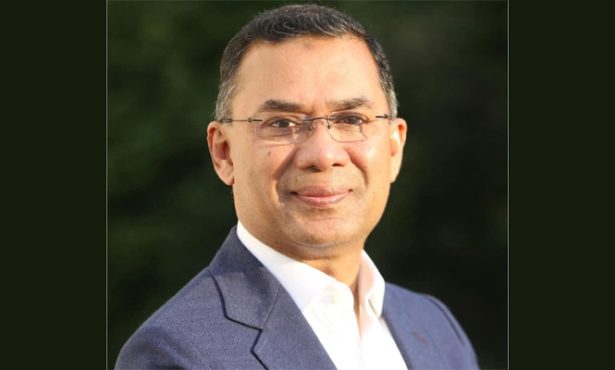
Türkiye expects its relations with Bangladesh to enter a new phase of strategic cooperation under the government of Prime Minister Tarique Rahman, with stronger political engagement, expanded trade and investment, deeper defence collaboration and broader people-to-people exchanges, Türkiye’s Ambassador to Brunei Darussalam Prof Dr Hamit Ersoy has said.
In an exclusive interview with a group of journalists, Prof Ersoy expressed optimism that the new political chapter in Bangladesh would also mark a new beginning in Bangladesh-Türkiye relations.
“I sincerely hope that the coming years will see Dhaka and Ankara working even more closely, not only for the benefit of our two peoples, but also in support of peace, stability, development and a more representative international order,” he said.
The ambassador said the relationship between the two countries was built on deep-rooted friendship, historical ties, people-to-people connections and growing strategic cooperation, making it resilient regardless of political changes.
“Our relationship is not dependent on a single government, political party or temporary development. The task before us is not to begin a new relationship but to build a more ambitious structure upon the strong foundations that already exist,” he said.
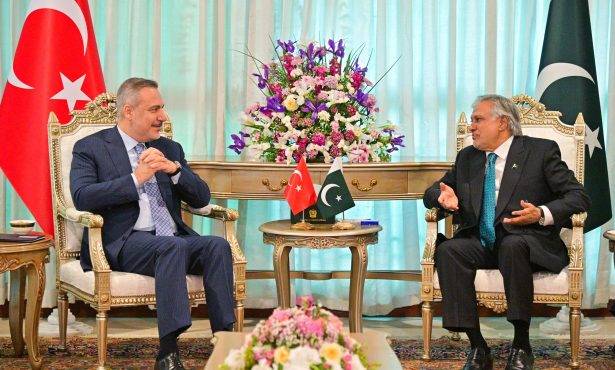
Prof Ersoy said Türkiye’s Foreign Minister Hakan Fidan’s visit to Dhaka in June this year had already demonstrated the importance both governments attach to the bilateral relationship.
According to him, discussions during the visit covered political and economic cooperation, defence, regional affairs and the Rohingya crisis, creating favourable momentum for stronger engagement.
He said high-level visits should not be viewed as ceremonial events but as opportunities to provide political direction, accelerate agreements and encourage cooperation among government institutions and businesses.
The ambassador expects more exchanges between senior leaders of the two countries in the coming months.
Trade target should go beyond $2 billion
Calling economic cooperation one of the strongest pillars of future relations, Prof Ersoy said Bangladesh and Türkiye possess complementary economies and vibrant private sectors capable of achieving far greater economic integration.
While both governments have set a target of raising bilateral trade from around US$1.3 billion to US$2 billion, he said this should only be viewed as an intermediate milestone.
“The real objective should be to create a deeper economic partnership based not only on trade in goods, but also on joint investment, industrial cooperation, technology transfer and partnerships between Turkish and Bangladeshi companies,” he said.
He identified textiles, infrastructure, renewable energy, logistics, pharmaceuticals, ICT, healthcare, food processing, shipbuilding and defence industries as sectors offering strong investment potential.
The ambassador said defence cooperation between the two countries should evolve beyond the simple sale of military equipment.
Instead, he proposed a comprehensive partnership focusing on technology transfer, joint production, research and development, maintenance facilities, officer training and defence-industrial cooperation.
Drawing on Türkiye’s experience of developing its own defence industry, Prof Ersoy said Bangladesh could benefit from cooperation in areas including licensed production, engineering training and industrial capacity building.
He also highlighted opportunities in naval cooperation, cybersecurity, artificial intelligence, unmanned systems, disaster management and peacekeeping.
“Türkiye can offer Bangladesh much more than military hardware. It can offer partnership, experience, technological cooperation and capacity building,” he said.
Energy cooperation offers new opportunities
The ambassador said the recent Middle East conflicts had once again demonstrated that energy security had become a strategic issue affecting national resilience.
He said Bangladesh and Türkiye could expand cooperation in renewable energy, energy efficiency, LNG infrastructure, power transmission, clean energy financing and climate-resilient technologies.
Türkiye’s experience in diversifying energy sources and developing renewable energy, he said, could provide valuable lessons for Bangladesh as it seeks to strengthen its long-term energy security.
Asked about foreign direct investment, Prof Ersoy acknowledged that declining FDI inflows into Bangladesh during 2024 and 2025 had prompted investors to adopt a cautious approach.
However, he said Turkish companies continued to view Bangladesh as an attractive long-term destination because of its large domestic market, young workforce and growing economy.
He noted that investors seek policy consistency, macroeconomic stability, reliable infrastructure, efficient regulations and access to foreign currency before making long-term commitments.
“If Bangladesh continues to strengthen macroeconomic stability, improve regulatory predictability and facilitate investment procedures, I believe more Turkish investment will follow,” he said.
He added that Türkiye would continue encouraging business forums, investment missions and closer cooperation between chambers of commerce and investment promotion agencies.
Prof Ersoy reaffirmed Türkiye’s continued support for Bangladesh over the Rohingya crisis, describing it as an example of genuine humanitarian solidarity.
He recalled that Foreign Minister Hakan Fidan visited Cox’s Bazar during his June trip to observe humanitarian activities carried out by Turkish organisations, including the Türkiye-Bangladesh Friendship Hospital.
The ambassador emphasised that lasting bilateral relations ultimately depend on stronger links between ordinary people.
He called for increased exchanges among universities, students, researchers, journalists, think tanks, businesses and cultural institutions.
“Governments can sign agreements, but lasting friendship is sustained by people. Transforming our mutual goodwill into regular institutional and human contact should be one of our priorities,” he said.
Prof Ersoy noted that both countries possess the political will, economic potential and mutual trust necessary to transform their traditionally warm friendship into a comprehensive, multidimensional and long-term strategic partnership.