


 Play store

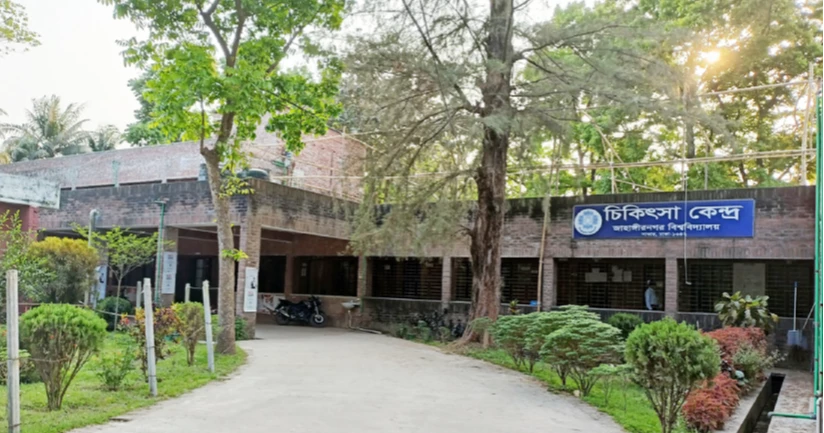
A surprise audit has found medicines worth around Tk 73,100 missing from the Medical Centre of Jahangirnagar University (JU) within just 21 days, raising serious concerns over the centre’s inventory management and medicine distribution system.
The audit, conducted by the university’s Medicine Purchase Committee following repeated complaints from students about the unavailability of medicines, found discrepancies involving 19,567 units of various medicines.
According to Assistant Comptroller Md Fakhrul Islam, member secretary of the Medicine Purchase Committee, the university purchased a fresh stock of medicines on July 1, including 9,000 Alatrol tablets. However, committee members became suspicious after learning that the stock had reportedly been exhausted within a short period.
Following instructions from Pro Vice-Chancellor (Administration) Prof Muhammad Nazrul Islam, who also chairs the committee, an unannounced inspection was conducted at the Medical Centre’s medicine store.
The inspection team included committee member Prof Md Salekul Islam, Assistant Comptroller Md Fakhrul Islam and JU Central Students’ Union (JUCSU) Health and Food Safety Secretary Hosne Mobarak.
The audit found 4,645 Alatrol tablets, 912 Azithromycin tablets, 420 Ciprocin tablets, 5,000 Paracetamol tablets, 700 Tiemonium tablets, 2,500 Famotidine tablets, 990 Napron tablets, 200 Antanil tablets and 4,200 Domperidone tablets missing.
The total market value of the medicines was estimated at Tk 73,101.
Sources familiar with the matter said irregularities in the medicine inventory system may have continued for a long time, although the issue had not previously been publicly investigated.
Deputy Registrar (Store) Nur-e-Kamal acknowledged the discrepancy. He said he keeps the store keys and personally distributes medicines but could not explain how the shortage occurred. He suggested reviewing CCTV footage to determine what happened.
Chief Medical Officer Dr Shamsur Rahman said the medicine store remains under the control of the Deputy Registrar and that he is not responsible for maintaining the inventory.
Prof Md Salekul Islam said he had previously received complaints that medicine distribution records did not match the actual supply.
“We found significant discrepancies during the inspection. We will submit a report to the university administration, which will take the necessary action,” he said.
Prof Muhammad Nazrul Islam said he had repeatedly received complaints about medicine shortages despite adequate procurement.
“That is why I ordered the audit. We found major irregularities, and an emergency meeting will be held on Sunday to decide on legal and disciplinary action against those responsible in accordance with university regulations,” he said.