Play store

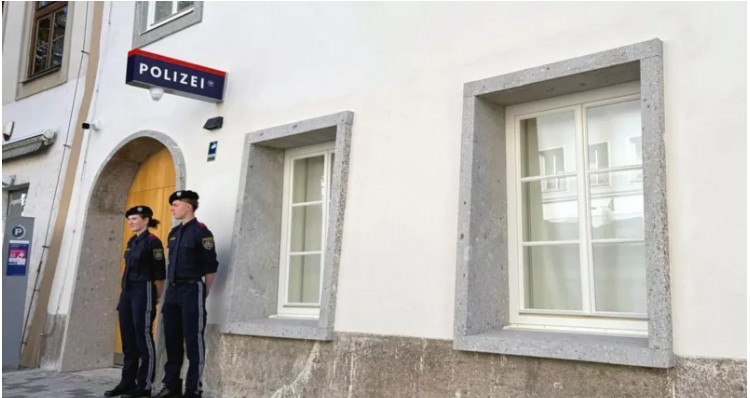
Austria has officially opened a police station in the house where Adolf Hitler was born, completing a years-long effort to prevent the historic property from becoming a destination for neo-Nazi sympathisers while confronting one of the country’s most sensitive historical legacies.
The building, located in the town of Braunau am Inn near the German border, underwent extensive renovation before reopening in its new role. Authorities hope the transformation will permanently sever its association with Nazi extremism and reinforce Austria’s commitment to rejecting fascism.
Hitler was born in the 17th-century building on April 20, 1889, but lived there only for a few weeks before his family moved elsewhere in Braunau. They left the town permanently when he was three years old.
He returned only once briefly in 1938 after annexing Austria into Nazi Germany, stopping in Braunau while travelling to Vienna.
For decades, the property posed a challenge for successive Austrian governments, which sought to prevent it from becoming a shrine for far-right extremists.
The Interior Ministry rented the building for many years from its former owner, Gerlinde Pommer, paying substantial rent to ensure it was not used for extremist activities. During that period, the house served as a day centre and workshop operated by the charity Lebenshilfe for people with disabilities.
The arrangement ended in 2011 after disputes over renovation plans forced the charity to relocate. The building remained vacant for several years as negotiations between the government and the owner failed to produce an agreement.
In 2016, Austria’s parliament passed special legislation allowing the state to compulsorily acquire the property. The government paid compensation of €812,000 to the owner, who later challenged the amount in court but was unsuccessful.
The future of the building sparked intense public debate.
Some politicians proposed demolishing the house entirely, arguing that doing so would eliminate its symbolic value for extremist groups. However, historians, survivors’ groups and many members of the public opposed demolition, warning that destroying the site could be interpreted as an attempt to erase or deny Austria’s Nazi past.
In 2019, the government instead decided to convert the property into a police station, launching a Europe-wide architectural competition to redesign the building.
The renovated structure now bears little resemblance to its previous appearance. Security cameras monitor the site to discourage any attempts by neo-Nazi visitors to use it as a place of pilgrimage.
There is no sign identifying the building as Hitler’s birthplace.
The only public reference to its history is a memorial stone placed outside in 1989, marking the 100th anniversary of Hitler’s birth. The monument, made from stone taken from the former Mauthausen concentration camp, bears the inscription: “Never again Fascism; In memory of millions of dead.” Hitler’s name is deliberately omitted.
Local historian Florian Kotanko said the building’s history could never be erased but believed Austria must continue to address it openly and responsibly.
“You have to deal with it,” he said. “It’s not a matter of being proud, but a matter of dealing with the fact.”
The opening of the police station marks the latest chapter in Austria’s long effort to balance historical remembrance with preventing the glorification of one of history’s most notorious dictators.