


 Play store

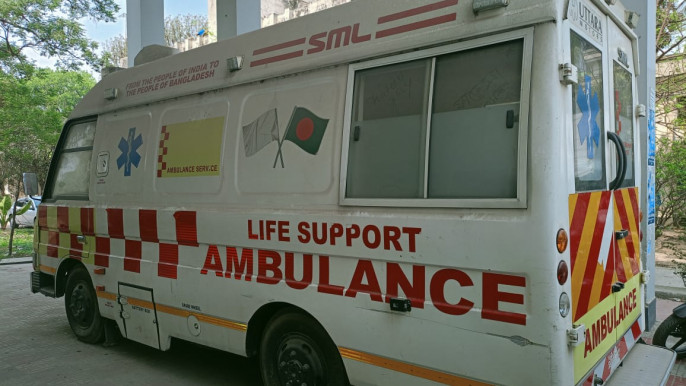
The Roads and Highways Department (RHD) is set to introduce 60 modern Basic Life Support (BLS) ambulances on key highway corridors to provide rapid emergency care to road accident victims and help save lives during the critical “golden hour.”
RHD Chief Engineer Md Moniruzzaman said the service will initially be launched on a pilot basis along selected highway corridors, with plans to expand it nationwide if the pilot proves successful.
The ambulances will be strategically stationed at roughly 10-kilometre intervals so that the nearest vehicle can quickly reach an accident site. The pilot corridors include Chandra-Elenga-Rangpur, Hatikumrul-Natore-Katakhali in Rajshahi and selected sections of the Dhaka-Mymensingh highway.
A central 24-hour call centre is being established to coordinate the service. Once an accident is reported through a designated hotline, call centre officials will collect information about the caller, accident location and number of injured people before dispatching the nearest ambulance.
The ambulances will be staffed by trained health technicians working in shifts to ensure round-the-clock emergency support. The technicians will have relevant professional qualifications, including the required registration with the Bangladesh Medical and Dental Council.
Moniruzzaman clarified that the vehicles will not function as ICU ambulances but will be equipped with essential medical supplies, including oxygen, to provide basic life support while transporting patients to hospital.
The service is planned to be provided free of charge. Accident victims will initially be taken to the nearest appropriate facility, such as an upazila health complex, district hospital or medical college hospital. If doctors later recommend treatment in Dhaka, arrangements will be made for further transfer.
The RHD is also introducing a “bystander care” system to provide first aid before ambulances arrive. Under the initiative, local residents living along designated highway sections will receive first-aid training.
Two volunteers will be trained for every 200 to 300 metres of the selected highway stretches. They will work voluntarily and receive first-aid kits along with designated clothing or identification.
According to the chief engineer, the pilot project is intended to identify operational challenges and improve the system before nationwide expansion.
“If trained local people can provide proper first aid before the ambulance arrives, while the nearest ambulance is dispatched immediately through the central call centre, the rescue operation can be completed much faster,” he said.
Moniruzzaman said the RHD plans to gradually bring major highway corridors across the country under the emergency ambulance network if the 60-ambulance pilot proves effective.