Play store

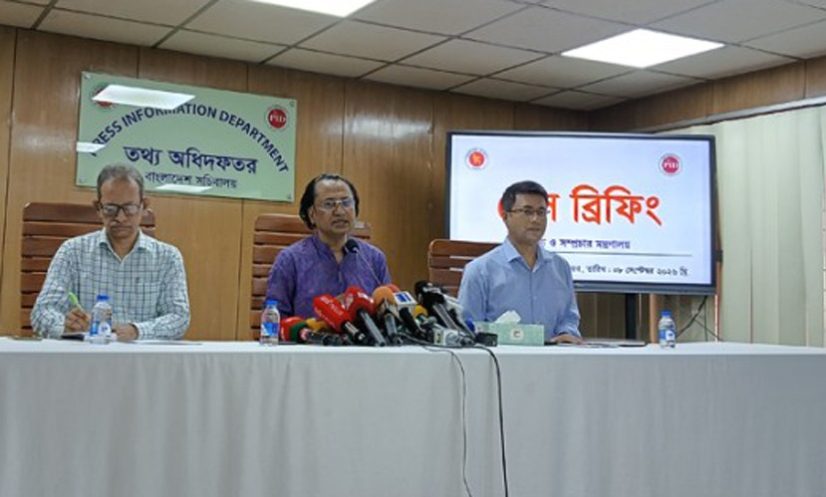
Average load-shedding in Bangladesh declined in June and July this year compared with the same months in 2023, although the situation worsened sharply in August due largely to a gas shortage, Prime Minister’s Information Adviser Dr Zahed Ur Rahman said on Tuesday.
Speaking at a press conference at the Information Department conference room at the Secretariat, he said the average daily load-shedding was 969 megawatts in June 2023, compared with 741MW in June this year.
Similarly, average load-shedding fell from 613MW in July 2023 to 460MW in July 2026, he said.
However, the situation deteriorated significantly in August. Average load-shedding increased from 360MW in August 2023 to 1,565MW in August this year, according to the adviser.
He attributed the sharp rise to the crisis that emerged in August, particularly the shortage of gas needed for power generation.
“The power ministry has informed us, and the relevant ministers have also said that once the gas shortage is resolved, the power situation will return to normal,” Dr Zahed said, expressing hope that the current crisis would not persist for long.
He said Dhaka would also have to accept some degree of load-shedding, although the capital could receive some priority because of its importance to the country’s economic activities.
“But we need to move away from the idea that Dhaka should remain completely free from load-shedding,” he said.
The adviser also sought to put the country’s load-shedding situation in perspective, saying that Dhaka had historically experienced less load-shedding than other parts of the country.
“At one point, there was load-shedding in the country, but Dhaka was largely spared. As a result, a perception developed that there was no load-shedding in Bangladesh because people in Dhaka did not experience it,” he said.
He said Dhaka residents’ greater social influence, or “social capital”, had helped reinforce that perception.
Dr Zahed stressed that electricity demand naturally rises alongside economic growth. Despite higher electricity demand in June this year than in June 2023, the amount of load-shedding was lower, he said. The same trend was observed in July.
He urged journalists to compare not only the absolute amount of load-shedding but also its percentage relative to total electricity demand, saying such a comparison would provide a clearer picture of the country’s power situation.