


 Play store

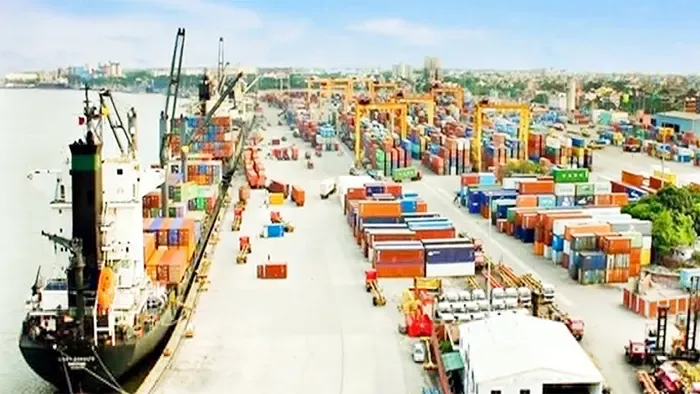
Bangladesh’s trade deficit widened sharply to $23.98 billion during the first 11 months (July–May) of the 2025-26 fiscal year as import growth outpaced exports, despite a strong rise in remittance inflows.
According to the latest Balance of Payments (BoP) data released by the Bangladesh Bank, the country’s trade gap increased by 24.77 percent from $19.37 billion recorded during the same period of the previous fiscal year.
The central bank data showed that export earnings declined by 2 percent year-on-year during the July-May period.
Merchandise exports stood at $40.87 billion, down from $41.70 billion in the corresponding period a year earlier.
Figures from the Export Promotion Bureau (EPB) also showed that exports fell 7 percent in May to $4.40 billion compared with the same month of the previous year.
In contrast, import payments rose 6.3 percent to $64.02 billion during the first 11 months of FY2025-26, up from $60.25 billion in the same period of FY2024-25, contributing to the widening trade imbalance.
Despite weaker export performance, remittance inflows posted robust growth. Expatriate Bangladeshis sent home $32.77 billion during the July-May period, marking a 19.1 percent increase from $27.51 billion received a year earlier.
However, the surge in remittances was not enough to offset the impact of declining exports.
As a result, the country’s current account remained in deficit, with a shortfall of $300 million, compared with a $70 million deficit in the corresponding period of the previous fiscal year.
On a positive note, Bangladesh recorded an overall Balance of Payments (BoP) surplus of $4.01 billion during the first 11 months of FY2025-26, a significant turnaround from the $1.15 billion deficit reported a year earlier.
The financial account also improved markedly, posting a $4.16 billion surplus, compared with a $570 million deficit in the same period of the previous fiscal year.
The improvement was largely driven by higher foreign direct investment (FDI), foreign grants and external loans.