Play store

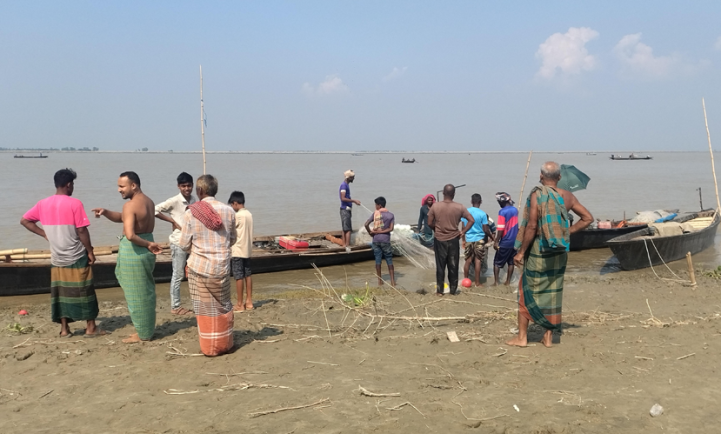
Illegal fishing of mother hilsa continues at several points along the Padma River in Rajbari, with fishermen openly using banned current nets and selling their catches at makeshift markets, amid allegations of weak enforcement of the government’s 22-day conservation ban.
During a field visit, fishermen were seen catching mother hilsa from morning until noon at Mechhoghat, Godar Bazar, Sonakandor, Urakanda, Antarmore and Noyonsukh in Barat under Mizanpur Union of Rajbari Sadar upazila.
The fish were being sold along the riverbank, attracting buyers from nearby areas and Rajbari town. Local residents alleged that officials from the administration, the Department of Fisheries and the river police were not conducting regular visible patrols to prevent the illegal fishing and trading.
According to local sources, mother hilsa was selling for Tk 1,500 to Tk 1,700 per kilogram at the illegal markets. Fish weighing around half a kilogram were priced at Tk 1,000 to Tk 1,200, while small hilsa, known as jatka, were selling for Tk 500 to Tk 700 per kilogram.
Some fishermen said they were continuing to fish despite the ban because they had no alternative means of supporting their families. Others claimed they had been fishing for years but had not received official fishermen’s identity cards, leaving them ineligible for government assistance.
“I have two fishing boats but have not received a fishermen’s card. Yet van drivers and farmers who have never caught fish receive assistance. How can I comply with the ban when I have a family to feed?” a local fisherman said, requesting anonymity.
He said he was willing to stop fishing during the ban if the government provided adequate support to his family.
Several other fishermen said they had been fishing in the river for six to seven years without receiving identity cards. They said the prolonged suspension of fishing made it difficult to maintain their livelihoods, forcing some to evade patrols and return to the river.
Fishermen said they hurried back to the riverbank whenever they received warnings about the presence of enforcement teams. Nevertheless, they sometimes faced arrest, imprisonment, fines and the loss or damage of their nets and boats.
They also claimed that smaller fish were more abundant than larger hilsa this season. Buyers from different areas reportedly gathered along the riverbank to purchase the catches.
Siddiq Khan, a resident of Noyonsukh, said the scale of fishing suggested that the conservation drive was not being enforced effectively.
“Hundreds of boats are openly catching fish and selling them along the riverbank. Hilsa is also being sold online,” he alleged.
He called for tougher enforcement, saying he visited the river daily but rarely saw officials conducting operations.
According to the district fisheries office, Rajbari has 14,102 registered fishermen, including 6,304 cardholders involved in hilsa fishing.
However, under the Vulnerable Group Feeding (VGF) programme during this year’s mother hilsa conservation drive, rice assistance was allocated for only 5,592 fishermen.
As a result, 712 cardholding fishermen have been left out of the government assistance programme because of the limited allocation, according to the fisheries office.
Fisheries official says daily drives are under way
Rajbari District Fisheries Officer Md Mahbub Ul Haque said the authorities lacked the capacity to maintain round-the-clock surveillance along the river but were conducting operations every day.
“When our teams are not present on the river, fishermen may take the opportunity to go fishing. Nevertheless, we are making every effort within our capacity to make the drive successful,” he said.
Asked about reports of open fishing and sales, he said he had heard about the activities, which were taking place in char areas along the riverbank.
He added that the administration and river police were conducting regular operations and would continue the enforcement drive.
Locals demand stronger monitoring
Local residents have called for increased surveillance at key points along the Padma River, strict action against the use of banned current nets and the removal of illegal hilsa markets.
They have also demanded adequate government assistance for genuine fishermen to help them comply with the fishing ban. Some residents called for an investigation into allegations concerning the distribution of seized fish.
The government’s 22-day ban on catching, transporting, storing, buying, selling and exchanging hilsa began on October 8 and will remain in force until October 29.