Play store

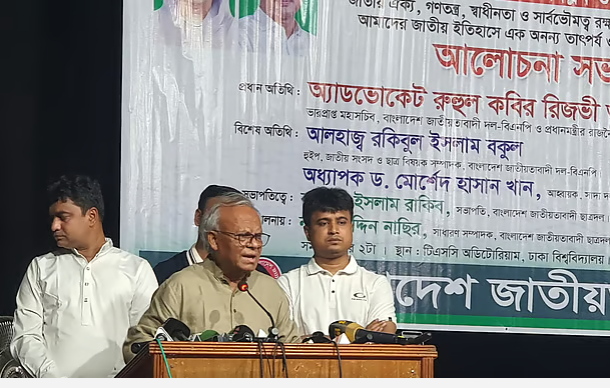
BNP Acting Secretary General and Prime Minister’s Political Adviser Ruhul Kabir Rizvi has said that Sheikh Hasina will never receive a public welcome if she returns to Bangladesh, describing such an expectation as a “daydream.”
“Hasina is now making statements from India, saying, ‘I will come back, I will do this and that.’ She seems to believe that she will return to the country and people will welcome her with drums and applause. She is living in a daydream,” Rizvi said.
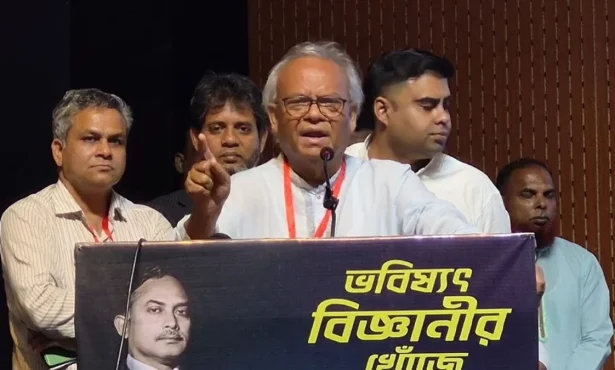
He made the remarks as the chief guest at a discussion organised by Bangladesh Jatiyatabadi Chhatra Dal at the Teacher-Student Centre (TSC) auditorium of Dhaka University on Sunday, marking the National Revolution and Solidarity Day.
Rizvi said the people of Bangladesh would never accept the return of someone who had fled the country.
“No fugitive or coward who fled like a jackal from this land of brave people, and who did not hesitate to shed the blood of the country’s own children, can return and impose themselves on the people. The people will never accept that,” he said.
Criticising Hasina’s rule, the BNP leader said her father, Sheikh Mujibur Rahman, had established Baksal, while Hasina had created an even more formidable version of it in a different form.
He alleged that Hasina had brought every institution of the state under her personal control to cling to power.
Rizvi said law enforcement agencies and various state institutions had been used to maintain her rule. With the support of the Indian government and control over state forces, she had established a fascist regime, he alleged.
He added that years of protests and resistance against the government culminated in the mass uprising of July 2024.
November 7 marked beginning of multiparty democracy
Highlighting the significance of National Revolution and Solidarity Day, Rizvi said the observance of November 7 had been prohibited during the 17-year fascist rule.
However, various social and political organisations continued to observe the day in different ways, ensuring that its significance and underlying spirit were never erased, he said.
Rizvi said multiparty democracy began its journey in Bangladesh through the events of November 7, paving the way for the establishment of democratic rights.
He also said the day marked the beginning of independent decision-making in Bangladesh’s foreign and domestic policymaking, free from foreign influence.
“Who Bangladesh will befriend and with whom it will build alliances is entirely a matter for the country’s government and people. Bangladesh’s foreign policy will not be dictated by anyone or conducted at anyone’s finger signal,” he said.