Play store

Bangladesh’s banking-sector reform drive has reached an early milestone, with Sammilito Islami Bank PLC beginning to repay depositors six months after the merger of five troubled Islamic banks, while continuing regular operations and attracting fresh deposits.
The development comes as Bangladesh Bank and the government have taken a series of measures since April to address financially weak banks, strengthen depositor protection, improve supervision, recover defaulted loans and establish a formal framework for restructuring, merging or resolving troubled financial institutions.
Between April and September 2026, the authorities moved towards a structured bank-resolution system rather than relying primarily on emergency liquidity support for troubled institutions.
The latest figures from Sammilito Islami Bank indicate continued customer transactions and fresh deposit inflows.
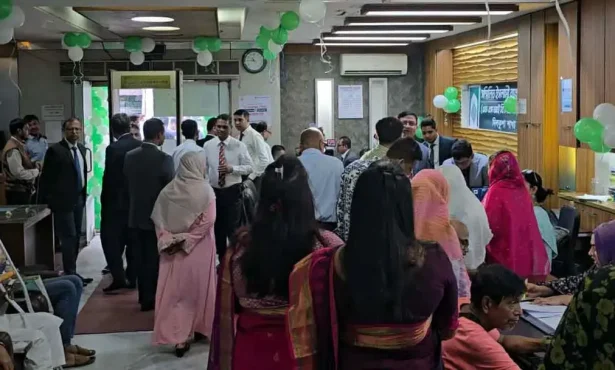
Between September 1 and 15, the bank received 154,289 customer applications involving Tk6,342 crore and disbursed Tk2,438 crore to 60,752 customers, according to its mid-month update.
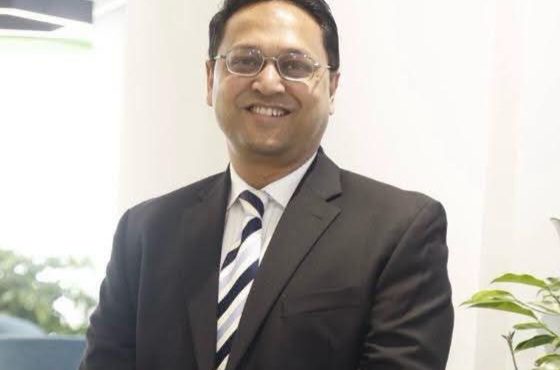
Managing Director and Chief Executive Officer Md Abedur Rahman Sikder said the bank received deposits and other receipts amounting to Tk2,020 crore between September 7 and 15, indicating a gradual return of customer confidence in the newly formed institution.
He said regular deposits, withdrawals and scheme transactions also continued during the period, with payments totalling Tk1,330 crore involving around 90,000 customers.
Some customers whose withdrawal requests had been approved did not collect the funds immediately and informed the bank that they would withdraw them later, he added.
Between September 7 and 15, total cash withdrawals from the bank stood at Tk3,568 crore, including the Tk2,438 crore paid against customer applications.
During the same period, 127,281 customers deposited Tk762 crore in cash, while 60,233 customers transferred Tk1,258 crore through the Bangladesh Electronic Funds Transfer Network (BEFTN) and Real-Time Gross Settlement (RTGS) channels.
The bank also opened 24,965 new accounts during the period, with new account holders depositing Tk303 crore.
Bangladesh Bank Executive Director and spokesperson Arif Hossain Khan said restoring depositor confidence was a key objective of the resolution process.
He said Bangladesh Bank had provided Tk5,000 crore to Sammilito Islami Bank to support its liquidity position and enable it to continue normal banking operations.
Khan said the central bank was closely monitoring the bank’s operations and the repayment process, adding that the gradual normalisation of transactions was important for rebuilding confidence among depositors and customers.
Sammilito Islami Bank was created through the merger of First Security Islami Bank, Social Islami Bank, Union Bank, Global Islami Bank and EXIM Bank, five institutions that had faced severe financial and governance problems.
The latest deposit and account-opening figures indicate continued customer engagement with the new institution. Bankers say the bank’s ability to meet withdrawal requests while attracting fresh deposits is an important element in restoring confidence.
Economists, however, say repayment is only one part of the broader restructuring process. Sustainable recovery, they argue, will depend on recovering bad loans, rebuilding capital and strengthening corporate governance.
During the six-month period, the authorities also strengthened the legal framework for dealing with distressed banks.
The Bank Resolution Act, 2026, enacted in April, gave Bangladesh Bank a formal mechanism to restructure, merge or resolve financially non-viable institutions. Parliament subsequently passed amendments to the law in September to further strengthen the resolution framework.
Depositor protection was also expanded during the period. Under the Deposit Protection Act, 2026, the maximum protected deposit amount was raised from Tk1 lakh to Tk2 lakh, providing greater protection for small depositors in the event of a bank failure.
Another major initiative was the establishment of the Bank Restructuring and Resolution Fund, designed to provide resources for resolving troubled institutions and reduce dependence on repeated government-funded bailouts.
Bangladesh Bank also accelerated Asset Quality Reviews (AQRs) to determine the actual financial condition of weak institutions.
Comprehensive reviews of six Shariah-based financial institutions contributed to the decision to restructure five troubled Islamic banks through the formation of Sammilito Islami Bank.
The capital structure of the new bank was also arranged as part of the resolution process. Sammilito Islami Bank has Tk35,000 crore in paid-up capital, including Tk20,000 crore in government capital support, while the remaining Tk15,000 crore is being raised through the conversion of certain deposits into shares.
The reform drive has also extended beyond commercial banks to non-bank financial institutions.
Bangladesh Bank identified nine financially distressed NBFIs for winding-up proceedings. These institutions held approximately Tk15,370 crore in deposits, including Tk3,525 crore belonging to individual depositors. The authorities have indicated around Tk5,000 crore for repayment to NBFI depositors.
At the same time, Bangladesh Bank has intensified efforts to determine the actual scale of non-performing loans.
Classified loans in the banking sector were reported at around Tk6,06,555 crore in June 2026, accounting for 32.78% of total outstanding loans. The figures underscore the scale of the challenge facing the reform programme.
Bankers say the authorities’ decision to recognise the actual condition of troubled institutions marks a shift from the previous approach. They argue that restoring confidence requires banks to become financially transparent and capable of recovering loans rather than relying indefinitely on regulatory concessions or liquidity assistance.
Economists have similarly stressed that the banking-sector crisis in many institutions is fundamentally a solvency and governance problem, rather than merely a shortage of liquidity. They have called for stronger action to recover defaulted loans, prevent politically influenced lending and hold those responsible for financial irregularities accountable.
Distinguished Fellow of the Centre for Policy Dialogue (CPD) Professor Mustafizur Rahman said officially reported NPL figures during the Awami League government did not fully reflect the banking sector’s actual condition.
“When the Awami League came to power in 2008, NPL stood at around Tk22,000 crore. By 2024, the officially reported figure had risen to nearly Tk2 lakh crore. However, while preparing the White Paper, we found that the actual amount was around Tk6.5 lakh crore,” he said.
The authorities have also moved towards risk-based supervision and preparations for implementing the Expected Credit Loss (ECL) framework under IFRS 9.
The objective is to identify credit risks earlier and ensure that banks make adequate provisions against potential losses.
The government has also ordered forensic audits of the five banks merged into Sammilito Islami Bank to identify loan irregularities, fund diversion and other financial misconduct. The new bank has reportedly initiated around 10,000 legal cases to recover defaulted loans.
The progress made between April and September should not, however, be viewed as a complete resolution of the banking crisis. The sector continues to face a large stock of bad loans, capital shortages and governance weaknesses.
The significance of the past six months lies in the authorities’ efforts to put institutional mechanisms in place to address those problems.
The cumulative figures on withdrawals, deposits, fund transfers and new account openings up to September 15 provide an early indication of how the Sammilito Islami Bank resolution process is functioning in practice.
The next phase will test whether the approach can be sustained through loan recovery, recapitalisation, stronger governance and the orderly resolution of other weak banks and NBFIs.
The past six months have therefore marked a shift towards a more structured approach to banking-sector resolution, with Sammilito Islami Bank emerging as the first major practical test of that framework.