Play store

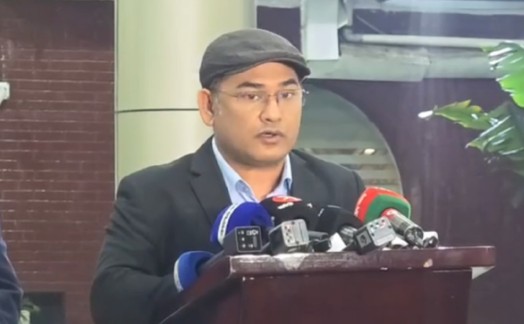
Dhaka: Bangladesh has secured climate grants worth around Tk784 crore at the COP31 climate summit, with the entire amount being non-refundable, said Dr Saimum Parvez, Special Assistant to the Prime Minister for Forests, Environment and Climate Change.
He disclosed the information at a press conference at Hazrat Shahjalal International Airport on Sunday (November 22), following his return from the UN climate conference.
Dr Parvez said the achievement was particularly significant at a time when global climate finance was increasingly shifting away from grants towards loans and investment.
“Every bit of the funding secured for Bangladesh is in the form of grants. The country will not have to repay a single taka,” he said.
The funding has been secured from two international climate finance mechanisms following prolonged efforts by Bangladesh.
Of the total amount, the Climate Investment Funds (CIF) will provide $30 million, equivalent to around Tk374 crore, while the Global Shield will contribute €30 million, worth approximately Tk410 crore.
Together, the commitments amount to around Tk784 crore, or $62.9 million.
Dr Parvez said the funding could increase further if Bangladesh successfully implements the first phase of the Global Shield programme.
Upon successful implementation, the country could receive an additional €20 million, equivalent to approximately Tk273 crore, in grants from the fund.
With this additional amount, Bangladesh’s total grants from the CIF and Global Shield would rise to $30 million and €50 million respectively, amounting to approximately Tk1,058 crore.
He said the CIF grant would be channelled through the government for implementation of various projects, while Global Shield assistance would be used by public and private organisations to address climate risks.
Institutions interested in developing and implementing climate insurance programmes would also be eligible for support under the Global Shield initiative. The Economic Relations Division (ERD) will oversee the overall implementation process.
Highlighting Bangladesh’s diplomatic and policy achievements at COP31, Dr Parvez said Prime Minister Tarique Rahman had presented the country’s five-point demands on the global stage, marking one of the major achievements of the summit.
Despite a brief and busy 48-hour visit, the Prime Minister delivered Bangladesh’s national statement and held several bilateral meetings, demonstrating his personal commitment to protecting lives and nature, he said.
Building on the Prime Minister’s demands, the Bangladesh delegation engaged in negotiations alongside other Global South countries.
Bangladesh strongly called for at least 50 per cent of global climate finance to be allocated to adaptation measures and urged increased financing to reduce greenhouse gas emissions.
The country also emphasised the need for concessional lending wherever loans were unavoidable, Dr Parvez said.
He added that Bangladesh was continuing efforts to secure further grants from the Green Climate Fund, the Global Environment Facility and the fund for addressing climate-related loss and damage, beyond the commitments already secured from the CIF and Global Shield.
Referring to Bangladesh’s participation in the ministerial meeting of the Mangrove Alliance, he said positive discussions had been held with the alliance’s secretariat on securing international partnerships and grants for restoring and expanding mangrove forests.
The discussions also focused on involving local communities in mangrove conservation and improving the livelihoods of people dependent on these forests.
Responding to questions about the size and effectiveness of Bangladesh’s delegation, Dr Parvez said lessons from previous climate conferences had prompted the government to broaden participation this year.
Alongside government representatives, the delegation included representatives of non-governmental organisations, international partners, young climate activists and journalists. Some participants’ expenses were covered by international partner organisations.
As a result, more than 40 side events were organised at the Bangladesh Pavilion, making it one of the most vibrant pavilions at the conference in terms of participation and the quality of discussions, he said.
However, he noted that the selection of delegates for future climate conferences would place greater emphasis on each participant’s specific contribution.
Dr Parvez also provided an update on Bangladesh’s prospects for earning revenue from carbon credit sales.
He said preparations of the necessary documentation had been under way for the past seven to eight months, while productive discussions were held at COP31 with representatives of Gold Standard and the Global Carbon Council.
The process of selling Bangladesh’s carbon credits was progressing, and he expressed hope that significant developments could be announced within the next few months.