Play store

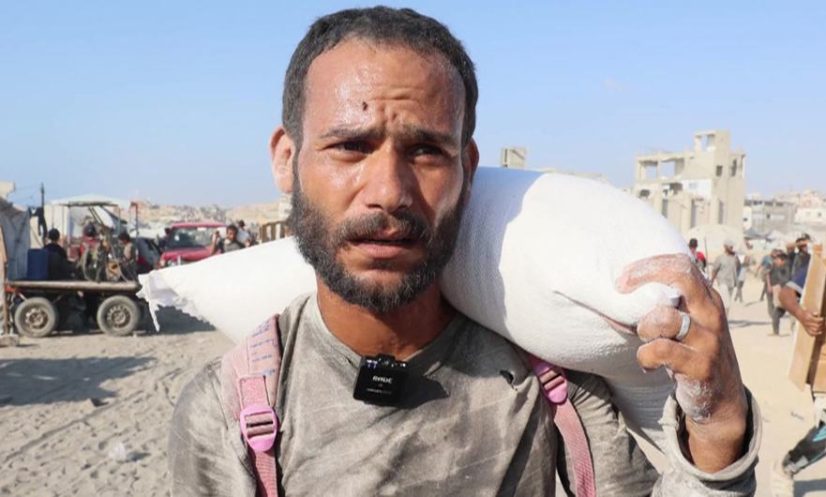
Six UN workers and civilians were killed in an Israeli strike on a school sheltering displaced families in Gaza, as humanitarian needs continue to grow, according to the UN agency for Palestine refugees (UNRWA).
At least 220 UNRWA staff members have been killed in Gaza since the war between Israel and Hamas began in October 2023.
UNRWA Acting Commissioner-General Christian Saunders said the safety of humanitarian workers, premises and operations had been “blatantly disregarded” since the beginning of the war.
“The longer impunity prevails, the more international humanitarian law and the Geneva Conventions will become irrelevant,” he said.
Since the fragile ceasefire agreement of 10 October 2025, local authorities have reported 1,334 deaths and 4,429 injuries in Gaza, according to the UN Office for the Coordination of Humanitarian Affairs (OCHA).
The UN’s safety and security partners reported that military operations, including airstrikes, shelling, gunfire and naval fire, continued across Gaza over the weekend, particularly west of the so-called “yellow line” established by Israel at the start of the ceasefire agreement.
Israeli airstrikes and other attacks continued to hit populated areas, causing casualties and property damage and triggering further displacement, OCHA said in its latest humanitarian update.
Currently, nine out of 10 people in Gaza are internally displaced, including many who have been displaced repeatedly.
Overcrowding, inadequate shelter and limited access to safe water and sanitation are increasing the risk of communicable diseases, particularly respiratory infections, acute watery diarrhoea and acute jaundice syndrome, OCHA said.
Winter preparedness efforts at overcrowded displacement sites also remain severely constrained by funding shortages and restrictions on the entry of essential materials.
OCHA said Israeli denials and delays in approving the entry of engine oil and spare parts are threatening generator-dependent water, sanitation, health and waste-management services.
Meanwhile, about one in four people in Gaza are likely to have acute and ongoing healthcare needs, including patients with severe injuries, amputations, head and spinal cord injuries and burns, according to the World Health Organization (WHO).
The UN Children’s Fund (UNICEF) said multiple children had been killed in attacks across the Gaza Strip over the past seven days.
Among those killed were sisters Bana, 6, and Lana, 12, who died alongside their parents in an airstrike in Beit Lahia while they were sleeping.
Wafaa, 8, was killed in Gaza City, while a pregnant woman and her unborn baby were killed by gunfire in Khan Younis.
Saadi, 3, and Obaida, 9, were also killed by gunfire in Deir Al Balah and Khan Younis, respectively.
Hilal, 14, was injured in an airstrike in Khan Younis on Thursday and died from his injuries the following day.
Another three children died from earlier injuries, while at least 13 children were injured, UNICEF said.
“Every child must be protected,” the UN agency said. “The killing must stop.”
Meanwhile, UN peacekeepers in Lebanon continue to observe Israeli military activity inside Lebanese territory, on land, in the air and at sea, according to UN Secretary-General’s Deputy Spokesperson Farhan Haq.
Of particular concern is the continued use of explosive-filled jerrycans. Between Thursday and Sunday, peacekeepers with the UN Interim Force in Lebanon (UNIFIL) observed Israeli drones dropping the devices near Al Mansuri. All the devices later detonated, including at least nine explosions on Saturday alone.
UNIFIL also recorded numerous violations of Lebanese airspace, mostly involving drones but also fighter jets and, on one occasion, a helicopter. At least 32 airstrikes were logged within its area of operations during the same period.
Peacekeepers reported extensive artillery activity, troop deployments, engineering work and vehicle movements across both sectors, while Israeli patrol boats were observed daily in Lebanese waters off Naqoura.
Freedom of movement also remains a concern. On Sunday, Israeli personnel held a UNIFIL patrol for two hours northeast of Kafer Chouba.
Haq reiterated that UN peacekeepers must be able to carry out their mandated work without obstruction.
Despite the security situation, UNIFIL continues to support humanitarian efforts, facilitating 16 missions in coordination with OCHA on Thursday and Friday.