


 Play store

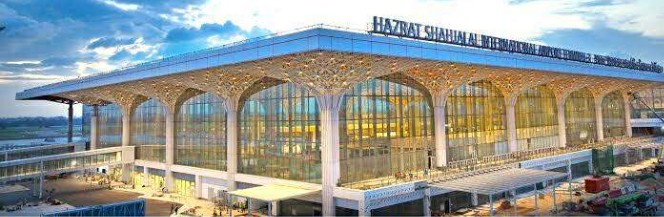
Staff Correspondent: Bangladesh is likely to sign an agreement with a Japanese consortium by the end of August or early September to operate the long-awaited Third Terminal of Hazrat Shahjalal International Airport (HSIA), paving the way for its planned inauguration on December 16, Civil Aviation Authority of Bangladesh (CAAB) Chairman Air Vice Marshal Md Mostafa Mahmood Siddiq said on Monday.
“We are trying to inaugurate the terminal on December 16. The Japanese consortium is scheduled to submit its proposal on July 31, after which we will take a decision,” Siddiq told reporters following a workshop at the CAAB headquarters in Dhaka.
“The agreement is likely to be signed either at the end of August or in early September. Once that is done, the next course of action will become clear,” he added.
The government has been negotiating with a consortium comprising Japan Airport Terminal Company, Sumitomo Corporation, Sojitz Corporation and Narita International Airport Corporation to manage and operate the country’s largest airport terminal.
Talks gathered fresh momentum earlier this year after the Japanese side submitted a revised proposal, narrowing differences over operational control, service charges and revenue-sharing arrangements.
The Third Terminal, which is now more than 99 percent complete, has remained idle because of unresolved issues relating to its operation and management.
Built at an estimated cost of Tk 21,398 crore, the mega project has been financed largely through assistance from the Japan International Cooperation Agency (JICA).
Spanning around 542,000 square metres, the state-of-the-art terminal will be capable of handling an additional 12 to 16 million passengers annually and processing nearly 900,000 tonnes of cargo, significantly expanding the country’s aviation capacity.
Aviation experts have long stressed that bringing the terminal into operation is essential for easing congestion at Hazrat Shahjalal International Airport, improving passenger services and strengthening Bangladesh’s ambition to emerge as a regional aviation and logistics hub.
Siddiq made the remarks after attending a workshop titled “Civil Aviation & Air Traffic Operation”, organised by CAAB for journalists.
The workshop covered key aspects of airport management, aviation security, passenger services, airside and landside operations, air traffic management and compliance with standards set by the International Civil Aviation Organization (ICAO).
Addressing the participants, the CAAB chairman said aviation is a highly specialised sector where responsible and accurate reporting plays an important role in serving the public interest.
“There is no alternative to subject-specific knowledge and accurate information for ensuring balanced and responsible reporting on aviation,” he said, adding that CAAB would continue organising similar training programmes to enhance journalists’ understanding of aviation operations and safety issues.
On drone operations, Siddiq said CAAB has adopted a tougher stance against unauthorised drone flights, particularly in sensitive areas surrounding airports.
He urged drone operators to familiarise themselves with existing regulations and obtain the necessary permissions before operating drones near aviation facilities.
During the technical sessions, CAAB Member (Operations and Planning) Air Commodore Abu Sayeed Mehboob Khan outlined the authority’s responsibilities in airport management, passenger services, aviation security and compliance with ICAO Standards and Recommended Practices (SARPs).
He also highlighted a series of measures introduced to improve services for Hajj pilgrims, including waivers of embarkation and passenger security fees, distribution of Zamzam water, dedicated prayer areas, improved washroom facilities, safe drinking water, hand sanitisers, trolleys, queue management systems and enhanced airport infrastructure.
In a separate presentation, CAAB Member (Air Traffic Management) Air Commodore Md Noor-e-Alam discussed modern air traffic control systems, aircraft movement management, communication and navigation technologies, Instrument Landing Systems (ILS), aeronautical lighting, obstacle management and emergency response procedures aimed at ensuring safe and efficient flight operations.