


 Play store

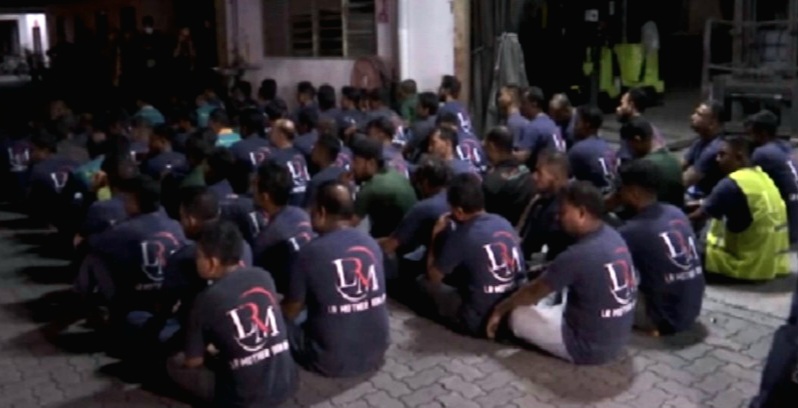
Ahmadul Kobir, Malaysia: Malaysian immigration authorities have detained 175 foreign nationals, including a majority of Bangladeshis, during an operation in Ipoh after finding workers allegedly employed without valid documents and others working for companies different from those named on their work permits.
The operation also uncovered suspected fake Temporary Employment Visit Passes (PLKS), prompting the Immigration Department to investigate whether an organised syndicate was involved in producing and supplying the documents.
The Immigration Department’s Op Mahir operation was conducted in Bercham, Ipoh, Perak, on Friday night. Officers inspected the documents and employment records of 305 foreign workers at three locations before detaining 175 for further investigation.
Besides Bangladeshis, those detained included nationals of Myanmar and Vietnam.
Immigration Department director-general Datuk Zakaria Shaaban said the detainees were suspected of committing various offences under the Immigration Act 1959/63.
Among the alleged violations were working without valid documents or permits and working for companies other than those specified in their work permits.
Zakaria said employing or working without the required permit constituted an offence under Malaysian immigration law. Foreign workers holding valid permits could also face action if they worked for employers other than those named in their approved employment documents without the necessary authorisation.
The operation began at about 7pm and targeted three workplaces in Bercham: a timber factory, a glove manufacturing factory and a food court.
Immigration officers checked workers’ travel and employment documents and verified whether they were working at the locations authorised under their permits before taking 175 foreign nationals into custody.
The operation also uncovered several suspected cases involving fake PLKS documents, leading the Immigration Department to launch an investigation into their source and possible links to an organised network.
Zakaria said investigators were examining where the documents originated, how they were produced and who was responsible for supplying them.
The possible involvement of agents, brokers or other intermediaries is also being investigated.
Authorities are expected to examine whether any employers knowingly used suspected fake documents to employ foreign workers. Employers found to have been involved in the use of fraudulent immigration documents could also face legal action, depending on the outcome of the investigation.
The case has raised wider questions about how the suspected documents reached foreign workers and employers and whether workers were recruited or transferred through unauthorised intermediaries.
Investigators may also examine whether the workers paid money to agents or brokers to obtain employment outside the companies specified in their permits.
The fact that Bangladeshis constituted the majority of those detained has caused fresh concern among Bangladeshi migrant workers in Malaysia.
The case highlights an important issue facing foreign workers: possession of a valid work permit does not automatically authorise employment with any company. A worker may face immigration action if employed by a company other than the employer named in the permit without the required approval to change employers or workplaces.
However, the investigation may also need to determine how workers holding valid permits for one company ended up working elsewhere and whether employers, recruitment agents or intermediaries facilitated the arrangements.
That question is particularly important because workers may not always have direct control over workplace transfers arranged by employers or intermediaries.
Authorities could also investigate whether workers were charged money to change employers or whether an illegal network was supplying workers to companies outside Malaysia’s authorised foreign-worker recruitment system.
The Ipoh operation, therefore, goes beyond the detention of 175 foreign nationals. The suspected misuse of valid work permits, unauthorised changes of workplace and the alleged circulation of fake PLKS documents have put the spotlight on possible weaknesses and illegal practices within the foreign-worker employment system.
The outcome of the Immigration Department’s investigation could determine whether the cases involve isolated violations or point to a wider organised network involving document suppliers, intermediaries, workers and employers.