Play store

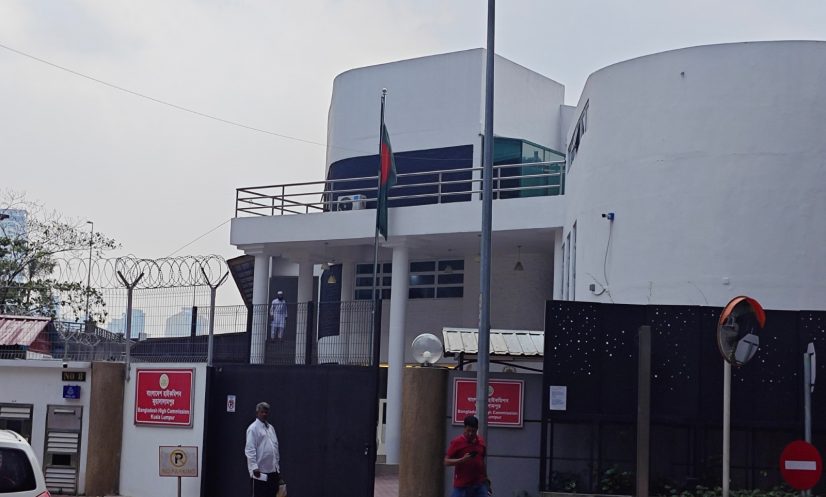
For hundreds of Bangladeshi migrant workers in Malaysia, waiting for a new passport has become a months-long ordeal. Some have been waiting for three months, others six months or even longer. What was expected to be a routine administrative process has instead become a crisis that threatens their jobs, legal immigration status, income and the future of their families.
An investigation has found that even minor discrepancies between an applicant’s old Machine Readable Passport (MRP), National Identity Card (NID), birth registration records and Bangladesh’s central database can cause an e-passport application to be suspended. Such applications are referred to the Department of Passports and Immigration in Agargaon, Dhaka, for re-verification, leaving many applicants waiting for months.
The most alarming consequence is that many workers are unable to renew their work permits and visas because they do not have valid passports. As a result, they face the risk of becoming undocumented migrants through no fault of their own.
Bangladesh began phasing out Machine Readable Passports (MRPs) and introducing e-passports in December 2025. At the Bangladesh High Commission in Malaysia, approximately 15,000 to 16,000 expatriates apply for e-passports every month. Those without National Identity Cards are allowed to apply using their birth registration certificates.
However, sources at the High Commission said a significant number of applications are being delayed due to inconsistencies in applicants’ personal information. Some applications are also flagged as “multiple active”, requiring additional verification before they can be processed.
The investigation found that even minor differences in age, the spelling of names, parents’ names, dates of birth or permanent addresses are enough to halt an application. Errors that went unnoticed when MRPs were issued years ago have now become major obstacles under the stricter verification process of the e-passport system.
In many cases, applicants have attempted to correct mistakes contained in their previous passports. However, once the new information no longer matches the old passport records, the application must be referred to Bangladesh for further verification.
Multiple sources at the High Commission said applications requiring correction often take between three and six months to be resolved, while some remain pending even longer. By contrast, applicants whose records are fully consistent are receiving their passports within about 20 days.
A Bangladeshi factory worker in Kuala Lumpur said he submitted his application four months ago. “Whenever I visit the High Commission, I’m told the application has been sent to Bangladesh. When I contact the authorities there, they simply say it is still under process. We are left helpless in the middle,” he said.
He added that his employer has been unable to renew his work permit because he has not yet received his new passport.
Another worker from Selangor said the spelling of his father’s name had been incorrect in his previous passport. “This time I corrected it according to my National ID. Ironically, that old mistake has now delayed my passport for five months.”
A construction worker in Johor Bahru said he was unable to travel home despite learning that his mother was seriously ill.
“I even bought a flight ticket, but I couldn’t travel because I still hadn’t received my new passport.”
Not all applicants have experienced delays. A migrant worker in Seremban said he received his passport within 25 days because all his documents and personal information matched perfectly.
A senior official from the Consular Wing of the Bangladesh High Commission said that applications with discrepancies are verified and promptly forwarded to the Department of Passports in Agargaon. However, the final decision and correction of personal information are handled centrally in Bangladesh, which can significantly extend processing times.
The official advised applicants to carefully cross-check the information on their National ID, birth registration certificate and previous passport before submitting a new application in order to avoid unnecessary complications. Under Malaysian immigration regulations, foreign workers must possess a valid passport, visa and work permit in order to remain legally employed.
Several migrant workers said that because their new passports have not been issued, employers are unable to complete work permit renewal procedures. This has placed many workers at risk of legal complications and, in some cases, losing their jobs due to prolonged administrative delays.
“We have committed no offence. We followed every government procedure,” one worker said. “Yet we have been waiting for months for a passport. For a migrant worker, a passport is not just a travel document; it is our identity, legal status and the key to our livelihood.”
Leaders of the Bangladeshi community in Malaysia said that while the introduction of e-passports is an important step towards improving document security, the system requires a faster mechanism for resolving cases involving overseas applicants.
One community leader called for the establishment of a dedicated fast-track verification unit for Bangladeshis living abroad.
“When a passport is delayed, it affects far more than international travel. It threatens a worker’s job, income and the financial security of an entire family,” he said.
Another community organiser argued that migrant workers are bearing the full burden of administrative delays occurring in Bangladesh.
“Many employers cannot afford to wait indefinitely. The longer these delays continue, the greater the risk of workers losing their jobs,” he said.
Stakeholders believe that while maintaining the integrity and security of the e-passport system is essential, the government should introduce a dedicated and expedited verification process for overseas applicants.
They also called for real-time digital coordination between the Bangladesh High Commission in Kuala Lumpur and the Department of Passports and Immigration in Agargaon to speed up processing.
Every day, large numbers of Bangladeshi migrant workers crowd the Consular Section of the Bangladesh High Commission in Kuala Lumpur, asking the same question:
“When will my passport be ready?”
Some have been waiting for two months, others for four or six months or even longer. For them, the delay is not simply an administrative inconvenience. It is a harsh reality that directly affects their legal status, employment, financial security and the wellbeing of their families.
Migrant workers hope the authorities will prioritise resolving data discrepancies and introduce a special fast-track service for overseas applicants. For the thousands of remittance earners who make significant contributions to Bangladesh’s economy, a passport is far more than a travel document. It is the foundation of their livelihood, legal identity, dignity and their families’ future.