


 Play store

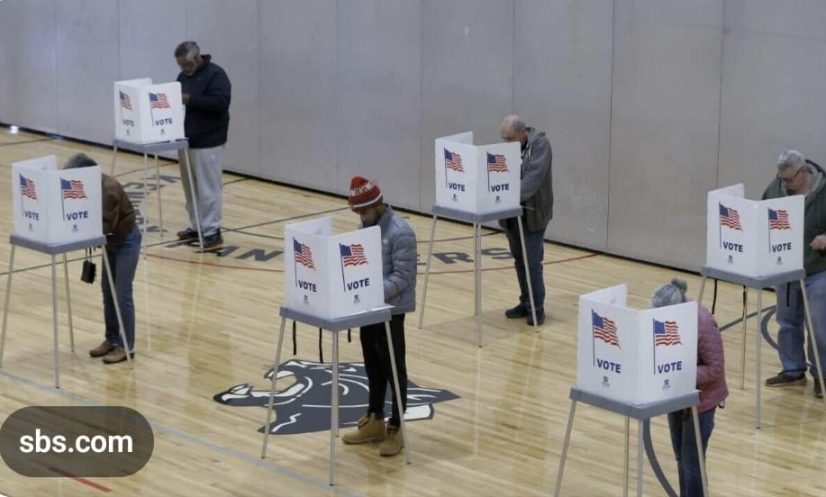
HM Akhtar, from the United States: The US midterm elections taking place today will determine the political balance of power for President Donald Trump. If Republicans lose their majorities in both chambers of Congress, the Senate and the House of Representatives, Trump will face a major challenge to his political agenda.
Although the president will retain his executive powers, securing congressional support for legislation, budget approval, government spending and key policy decisions will become increasingly difficult. If Democrats take control of the House, they will be able to intensify investigations and oversight of various decisions taken by the Trump administration and hold senior officials accountable.
Losing control of the Senate would also make it harder for Trump to secure confirmation of his nominees for judicial and key government positions. A stronger Democratic presence in Congress would create further obstacles to implementing his political agenda and could trigger fresh debates within the Republican Party over its leadership and strategy ahead of the 2028 presidential election.
However, losing control of Congress would not mean that Trump would lose the presidency or his executive powers. Rather, he would have to govern for the next two years by negotiating with a Congress controlled by the opposition. The election is therefore not merely a battle over congressional seats, but also a major test of Trump’s political influence, the limits of his power and the future of his administration’s agenda.
Republicans are facing the possibility of losing control of the Senate, while Democrats are also seen as having a strong chance of making significant gains in the House.
A party needs 218 of the 435 seats in the House to secure a majority. Various opinion polls have projected that Democrats could win as many as 237 seats. Against this backdrop, Republicans are concerned about the possibility of losing control of both chambers of Congress.
The changing political landscape has prompted fresh calculations within the Trump administration. Political observers believe Republican policymakers are also discussing how to manage government and political affairs over the next two years if the opposition takes control of Congress.
However, the situation is not entirely risk-free for Democrats. A significant number of voters remain undecided. Polls have found that among voters who made up their minds during the final month before the election, support for Republicans was nine percentage points higher. The voting decisions made in the final hours could therefore have a significant impact on the outcome.

In the Texas Senate race, polls have also shown encouraging signs for Democrats. Democratic state legislator James Talarico is reportedly leading Republican candidate and state Attorney General Ken Paxton by seven percentage points. Talarico has the support of 50 per cent of likely voters, compared with 43 per cent for Paxton.
Paxton has the most unfavourable image among the candidates included in the poll, a factor that could further complicate his electoral prospects.
Democrats are also showing strength in the Maine Senate race. Republican Senator Susan Collins, the last Republican senator from the New England region, is seeking re-election against former Democratic state senator Troy Jackson.
According to polls, Jackson has the support of 51 per cent of likely voters, compared with 45 per cent for Collins. However, Maine’s electoral history offers little room for complacency among Democrats. Six years ago, nearly all opinion polls published before the election showed Collins trailing, but she eventually won re-election by a significant margin. The latest polling figures should therefore not be treated as a definitive prediction of the outcome.
Apart from Maine, polls suggest that Democratic Senate candidates enjoy more favourable voter sentiment than their Republican rivals in several other key states. The economy, cost of living and candidates’ personal image have emerged as major issues in the election campaign.
Overall, the midterm elections are not just a contest for control of Congress but also a crucial test of public confidence in the Trump administration. If public dissatisfaction over economic pressures, inflation and the cost of living is reflected in the ballot, the balance of power could shift in both the House and the Senate. In that event, Trump would face strong opposition from Democrats in Congress for the next two years.
In Michigan, Democratic Senate candidate Abdul El-Sayed was also leading in opinion polls on the eve of the election. However, his campaign faced a major political setback at the last moment.
Former Congresswoman Haley Stevens, who lost to El-Sayed in the Democratic primary, publicly endorsed Republican candidate Mike Rogers on November 1. The move triggered a backlash within the Democratic Party. Michigan Democratic Party officials said Stevens was no longer a member of the party.
At an election rally at Eastern Michigan University on November 2, El-Sayed urged supporters to turn out and vote. Senator Elizabeth Warren also attended the rally.
El-Sayed’s campaign said it had raised $2.4 million in a single day following Stevens’ endorsement of Rogers.
Several recently published polls showed El-Sayed receiving between 49 and 51 per cent support, while Republican Mike Rogers was polling between 42 and 45 per cent. However, questions remain over whether Stevens’ unexpected move will affect Democratic unity among voters.
More than 2.3 million voters have already cast their ballots early in Michigan. The turnout among the remaining voters on Election Day will therefore be crucial in determining the final outcome.