Play store

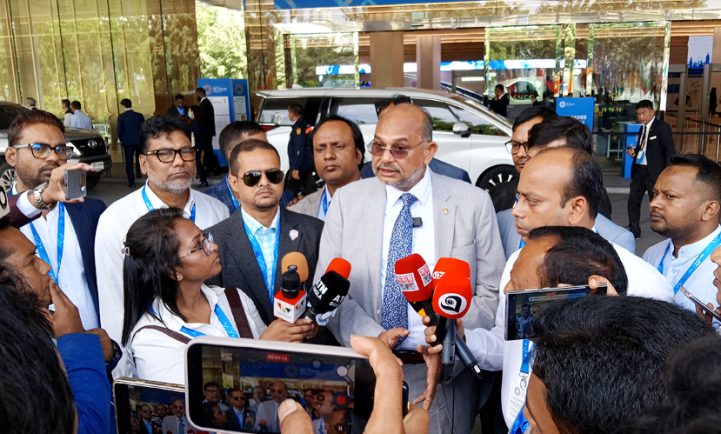
Mohsin Hossain, Bangkok: Bangladesh and Thailand are exploring opportunities to expand bilateral trade and investment, reduce the trade imbalance and develop joint ventures in agro-processing, fisheries and maritime connectivity, Prime Minister’s Adviser on Finance and Planning Rashed Al Mahmud Titumir has said.
Speaking to journalists on Monday at the Queen Sirikit National Convention Centre in Bangkok, where he is attending the annual meetings of the International Monetary Fund (IMF) and the World Bank Group, Titumir also said Bangladesh had reached a policy-level understanding with the World Bank on economic reforms, job creation and economic reconstruction.
He said Bangladesh had scope to align its reform agenda with the priorities of the IMF and the World Bank while ensuring that reforms reflected the country’s economic realities and public expectations.
“Bangladesh’s economic and social realities are different from those reflected in the World Bank’s reform proposals. Our reform roadmap has been designed by taking the country’s own circumstances into account,” he said.
Titumir said the government’s five-year economic strategy was based on commitments made in its election manifesto and the mandate received from the people. The strategy envisages three stages: economic recovery, economic restoration and accelerated economic reconstruction to put the country on a path to prosperity.
He said people expected reforms to restore discipline in the financial sector, increase tax revenue as a share of gross domestic product (GDP), expand social protection, accelerate industrialisation, create jobs and reopen closed factories.
As the IMF and the World Bank also prioritise financial discipline and employment generation, there is scope to align Bangladesh’s reform agenda with the objectives of the multilateral institutions, he said.
“This creates scope for policy alignment between Bangladesh’s own reform agenda and the goals and objectives of multilateral development institutions,” Titumir said, adding that reforms would be more sustainable when an elected government took ownership of them.
Referring to discussions with the World Bank, he said both sides shared common objectives on economic recovery, reconstruction and job creation. Bangladesh, however, had to pursue these goals while managing additional spending pressures in the energy sector.
Titumir said the Middle East conflict, which he said began on February 28, had increased pressure on energy expenditure. The government had to adjust to market prices while taking effective measures to protect low-income people from the impact of higher costs.
He also highlighted the Family Card programme as part of the government’s poverty-reduction efforts. According to the adviser, assessments by independent research institutions suggest that such programmes could reduce the poverty rate by around five percentage points over five years.
Climate resilience, renewable energy and essential infrastructure development are also among the government’s priorities and featured in discussions with international development partners, he added.
Turning to bilateral relations, Titumir said Bangladesh and Thailand had discussed ways to increase trade, address the existing trade imbalance and attract investment in sectors with strong potential for cooperation.
During discussions with the Thai Chamber of Commerce, Bangladesh highlighted opportunities for joint ventures in agro-processing, particularly in fruits, dairy products and halal food processing.
Bangladesh produces large quantities of mangoes, jackfruit, lychees and other agricultural products during their respective seasons. However, inadequate cold-storage, refrigeration and processing facilities lead to post-harvest losses, often preventing farmers from obtaining fair prices for their produce, he said.
Joint ventures with Thai investors could help address these gaps by developing processing facilities, adding value to agricultural products and opening up export opportunities, Titumir said.
Exporting processed agricultural products that meet international market requirements could raise farmers’ incomes while creating new industries and employment, he added.
The adviser also proposed developing integrated production networks between the two countries. Under such arrangements, Bangladeshi agricultural products could be processed in Thailand, while intermediate goods from Thailand could be brought to Bangladesh for further processing and manufacturing before being exported to third-country markets.
Such cooperation could strengthen industrial linkages, diversify exports and integrate businesses from both countries into regional and global supply chains, he said.
Titumir also identified free trade agreements, regional trade cooperation and tariff concessions as potential instruments for expanding bilateral commerce.
He said Bangladesh’s objective was not simply to reduce the trade deficit with Thailand but to expand overall trade by strengthening production capacity and supply-chain connections.
Bangladesh and Thailand have also discussed strengthening maritime connectivity and expanding cooperation in fisheries, Titumir said.
He pointed to the potential for stronger maritime links between Thailand’s Ranong Port and Chattogram Port to facilitate trade and reinforce commercial ties between the two countries.
The discussions also covered opportunities to harness the economic potential of the Bay of Bengal and the Andaman Sea, promote the sustainable use of marine resources and deepen cooperation in fisheries.
Titumir said stronger partnerships in agro-processing, industrial production, trade facilitation and maritime connectivity could create fresh opportunities for Bangladeshi exports and investment.
He added that expanding trade and investment with international partners would be important for advancing Bangladesh’s broader goals of economic reform, reconstruction, job creation and sustainable prosperity.