


 Play store

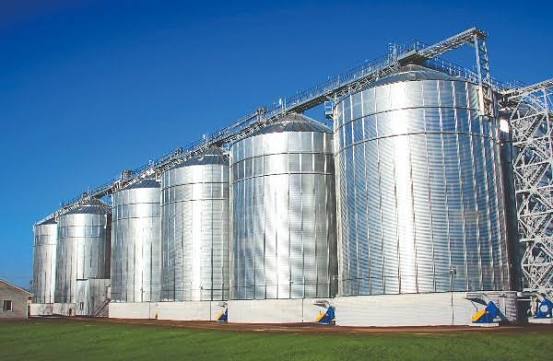
The government has launched a plan to increase the country’s food grain reserve capacity from the current 2.4 million metric tons to 3.4 million metric tons over the next five years to strengthen national food security.
Bangladesh’s total food grain stock stood at 2,374,763 metric tons, including floating reserves, as of July 23, according to the Ministry of Food, according to a agency report.
The current stock is about 1.02 million metric tons above the country’s existing safe reserve benchmark of 1.35 million metric tons.
To meet rising demand, the BNP government has also decided to raise the minimum safe food reserve target to 1.6 million metric tons, considering population growth and the expansion of social safety net programmes.
The Ministry of Food has already begun implementing measures to achieve the expanded storage target.
According to the Directorate General of Food, public warehouses currently hold 1,960,746 metric tons of rice and 295,689 metric tons of wheat. Another 168,605 metric tons of paddy has been converted into rice equivalent and included in the total rice stock, while floating rice reserves stand at 8,735 metric tons.
Under the ongoing 2025-26 Boro procurement programme, the government collected 1,365,431 metric tons of paddy and rice by July 23. The total includes 459,498 metric tons of paddy, 989,420 metric tons of parboiled rice, 76,814 metric tons of Atap rice and 523 metric tons of wheat.
During the first 23 days of the 2026-27 fiscal year, Bangladesh imported 320,800 metric tons of food grains. Public sector imports accounted for 116,500 metric tons, including 78,300 metric tons of rice and 38,200 metric tons of wheat, while private sector imports reached 309,150 metric tons, comprising 294,000 metric tons of rice and 15,150 metric tons of wheat. No food assistance imports were required during the period.
Officials said procurement operations and grain reserves are being closely monitored to ensure adequate market supply, stabilize prices and maintain uninterrupted public distribution.
Mohammad Kamrul Islam Chowdhury, Joint Secretary of the Procurement Branch at the Ministry of Food, said this year’s domestic food grain procurement campaign had been implemented successfully.
“Our domestic food grain procurement drive for the current season is progressing successfully and satisfactorily,” he said, adding that public warehouses currently hold sufficient stocks of rice and wheat to respond to any emergency and ensure national food security.
He also said the government is fully prepared to stabilize rice prices and continue food distribution under social safety net programmes.
Firoz Al Mahmud, Research Director of the Food Planning and Monitoring Unit (FPMU), said the government is continuously expanding food reserves and storage capacity to meet growing national demand.
Md Jamal Hossain, Additional Director General of the Directorate General of Food, described the country’s current food security situation as highly satisfactory. He said the government is emphasizing both adequate grain stocks and proper storage to preserve quality.
He added that Boro procurement from marginal farmers is being carried out transparently to ensure fair prices, while supply chains remain active for programmes such as Open Market Sale (OMS) and the Food-Friendly Programme.
Jamal Hossain noted that public storage capacity has already increased from about 2.4 million metric tons to 2.7 million metric tons, with work underway to achieve the government’s target of 3.4 million metric tons within the next five years. He also said the safe reserve target has been raised from 1.35 million metric tons to 1.6 million metric tons to reflect population growth and the expansion of social protection programmes.