


 Play store

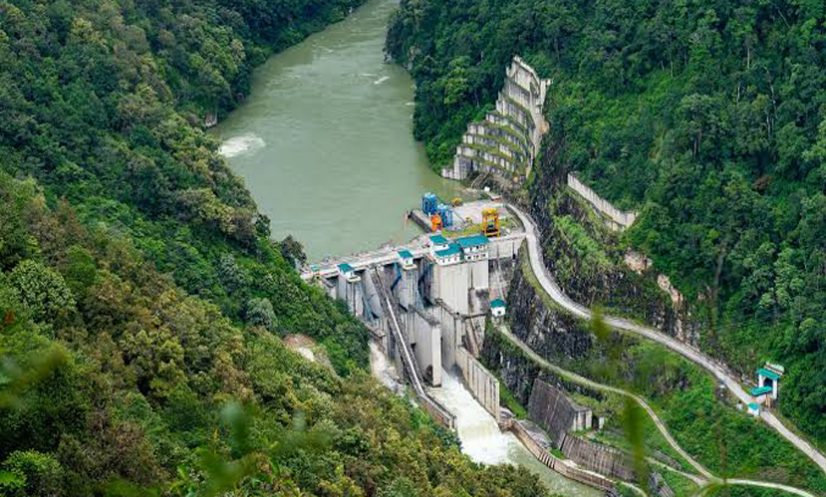
The economy of Bhutan grew by 8.52 percent in 2025, one of the strongest growth rates in recent years, driven mainly by increased electricity generation following the commissioning of the Punatsangchhu-II Hydroelectric Power Plant (PHPA-II).
However, the economy still faces a familiar challenge. It relies heavily on hydropower, and imports are rising as investment increases.
According to the National Accounts Statistics 2026 released by the National Statistics Bureau, real GDP growth accelerated from 7.84 percent in 2024 to 8.52 percent in 2025. The country’s nominal GDP reached Nu 318.48 billion, while per capita GDP rose to Nu 406,204, equivalent to USD 4,660.
The electricity sector was the biggest contributor to growth, expanding by 27.16 percent, as electricity generation increased by nearly 29 percent after PHPA-II began operations.
The commissioning of the 1,020MW hydropower project increased power production capacity and boosted electricity exports.
The secondary sector, which includes industry, electricity, and construction, grew by 16.10 percent and increased its contribution to GDP to 35.39 percent, up 3.01 percentage points from the previous year. The expansion was largely driven by electricity generation and construction activities.
Financial and insurance activities grew by 14.29 percent, supported by increased economic activity and investment demand. The information and communication sector expanded by 14.18 percent, while construction grew by 13.21 percent, reflecting higher infrastructure and investment activities.
The growth momentum was also supported by stronger domestic demand. Gross capital formation increased by 42.57 percent in real terms, driven by investment in machinery, equipment, and construction. Household consumption, which had contracted in 2024, recovered with 9.52 percent growth last year.
However, the benefits of stronger economic activity came with increased external pressures. Imports surged by 60.56 percent, significantly outpacing export growth of 35.46 percent. As a result, the trade deficit widened to Nu 97.18 billion, equivalent to 30.51 percent of GDP.
The rise in imports was partly linked to increased investment and economic activity, as businesses and projects brought in more machinery, equipment, and construction materials. While this indicates expanding economic activity, it also highlights the country’s continued reliance on imported goods to support growth.
The primary sector, which includes agriculture, livestock, and forestry, remained a weaker area of the economy. Growth slowed to 1.85 percent, while mining and quarrying contracted for the second consecutive year, declining by 5.77 percent. The slower performance highlights ongoing challenges in diversifying growth beyond hydropower and urban-driven sectors.
The services sector maintained steady growth, with hotels and restaurants expanding by 9.89 percent, transport and storage by 7.81 percent, and wholesale and retail trade by 2.76 percent.
Tourism-related sectors benefited from the continued recovery in visitor arrivals, although their contribution remains smaller compared with energy and investment-driven activities.
Inflation remained manageable during the year. Prices across the economy increased by 4.52 percent in 2025. Consumer prices also rose moderately, with inflation reaching 3.50 percent, compared with 2.82 percent in 2024.