Play store


Bangladesh Bank has made it mandatory for banks to disburse at least 4 percent of their total loans to the agricultural sector to increase the flow of credit to agriculture.
Previously, banks were required to allocate at least 2.5 percent of their total loans to agriculture.
Under the new policy, Bangladesh Bank has raised the agricultural and rural credit disbursement target by nearly 54 percent to Tk 60,000 crore for the 2026-27 fiscal year, up from Tk 39,000 crore in the previous fiscal year.
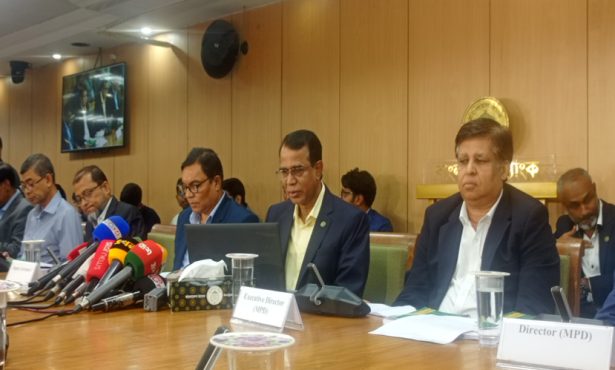
Bangladesh Bank Deputy Governor Dr Md Habibur Rahman announced the new Agricultural and Rural Credit Policy and Programme at a press conference on Monday (August 17).
Of the new target, Tk 20,495 crore has been set for state-owned commercial and specialised banks, while private and foreign banks will have to disburse Tk 39,505 crore.
Bangladesh Bank said the main objective of the new policy is to ensure adequate credit flow to agriculture, boost production and help contain inflation.
The central bank also launched a Web-Based Agri-Credit MIS Software to strengthen monitoring of agricultural credit programmes.
The new policy introduces several measures to simplify access to agricultural loans. For loans of up to Tk 5 lakh in the fisheries and livestock sectors, banks can accept personal, social or group guarantees instead of collateral in the form of immovable property.
The policy places particular emphasis on facilitating financing for women and marginal farmers. It also allows group-based lending for various income-generating activities in rural areas while relaxing limits on the number of members in borrower groups.
Fish and poultry hatcheries and camel rearing have also been brought under the agricultural credit programme.
The policy further allows financing for emerging activities such as blueberry cultivation, shimul root and ashwagandha production, and the manufacture of organic fertiliser using eggshells.
To identify genuine farmers, banks may use certification from local agriculture, fisheries or livestock officials or government-issued farmer cards. The mandatory requirement for borrowers to maintain passbooks has also been removed.
To address climate change risks, the policy allows farmers to be brought under insurance coverage based on mutual agreement between banks and customers.
Bangladesh Bank expects the new policy to increase financing to the agricultural sector and contribute to higher production, rural employment, poverty reduction and inflation control.