Play store

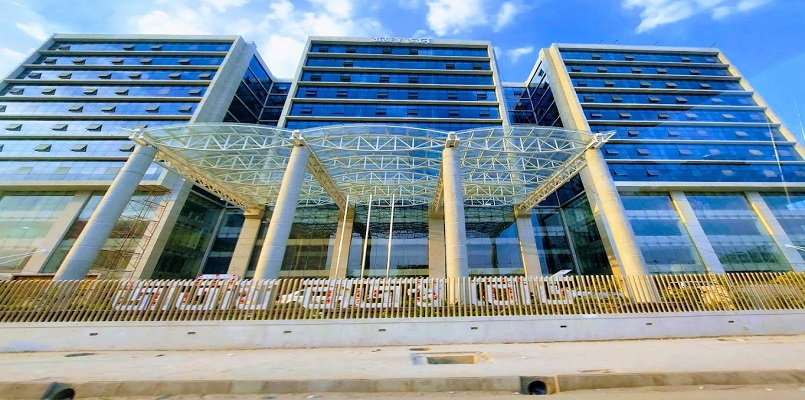
The government has finalised a decision to split the existing National Board of Revenue (NBR) into two separate and independent institutions as part of a major reform of the country’s revenue administration, Finance and Planning Minister Amir Khosru Mahmud Chowdhury said.
Under the new structure, one institution will be called the Revenue Policy Division and the other the Revenue Management Division.
He made the remarks while speaking at the Revenue Conference 2026 at the Bangladesh-China Friendship Conference Centre in Dhaka on Tuesday (August 18).
Prime Minister Tarique Rahman attended the event as the chief guest.
The finance minister said the Revenue Policy Division would serve as the government’s “think tank”. Comprising experts, it would formulate a balanced, competitive and development-friendly tax framework.
The Revenue Management Division, meanwhile, would act as an “action team”, primarily responsible for revenue collection and management.
He said the government’s objective is to simplify the tax payment process and ensure proper enforcement of the law. The views of economists, private-sector representatives, researchers, and experts from trade and business organisations would be given importance in formulating tax policies.
Amir Khosru said the country’s revenue collection capacity has not increased in line with the growth of the economy. To bridge the gap, the government would focus on expanding the tax base, rationalising tax exemptions, preventing tax evasion and avoidance, and increasing taxpayer compliance through automation rather than imposing an additional burden on existing taxpayers.
Regarding the revenue target for fiscal year 2026-27, he said the government has set a target of Tk604,000 crore, 46% higher than the previous year. Although ambitious, the target was deliberately set at that level, he said.
The finance minister said the government, under Prime Minister Tarique Rahman’s leadership, wants to move from a debt-dependent economy towards an investment-driven economy. Development financing, he said, must increasingly come from the country’s own domestic resources.
He said the revenue reform initiative is prioritising three areas: modernisation, expansion and partnership. End-to-end automation has been given the highest priority. The government plans to establish a fully “contact-free” and “faceless” revenue administration so taxpayers will no longer need to visit tax officials unless absolutely necessary.
He also highlighted business-friendly initiatives such as e-Tax Management, ASYCUDA World, the National Single Window and modern scanning systems.
Amir Khosru said the Revenue Conference was not merely about revenue collection figures but also an important platform for building national consensus. The conference, he added, would play a significant role in determining how Bangladesh could achieve development and prosperity through its own financing.
The finance minister further said one of the major structural weaknesses of Bangladesh’s revenue system is its low tax-to-GDP ratio. The ratio fell from 6.8% to 6.7% in fiscal year 2024-25, making it one of the lowest in the world. In 2023, the average tax-to-GDP ratio in the Asia-Pacific region was 19.5%, while Bangladesh’s stood at only 7.2%.
Against this backdrop, he stressed expanding the tax base, rationalising tax exemptions, curbing tax evasion and avoidance, and improving taxpayer compliance through technology-driven revenue management.