Play store

Rafiqul Islam Azad:
The government’s long-awaited ninth national pay scale is likely to be significantly revised as mounting fiscal pressure forces policymakers to reconsider earlier proposals for generous salary and allowance increases, according to officials.
The secretaries’ committee reviewing the new pay structure is now reassessing several key benefits, including basic salaries, house rent, medical and transport allowances, amid concerns over declining revenue growth, a widening budget deficit, rising debt-servicing obligations and persistent inflation.
The recommendations made earlier by the Pay Commission are unlikely to be implemented in full because of the country’s current financial constraints, said a senior official at the Ministry of Finance.
He said the committee is expected to submit its final recommendations to the Cabinet Division by the end of July. “Subject to approval by the Chief Adviser, legal vetting by the Ministry of Law and publication in an official gazette, the new pay scale could come into effect later this month or early August.”
Another official said the government is considering a more targeted approach to salary adjustments.
Employees in Grades 11 to 20, who receive comparatively lower salaries, are likely to receive relatively larger increases in basic pay and allowances, while the proposed increases for officers in Grades 1 to 10 may be moderated, he added.
Earlier proposals had suggested salary and allowance increases ranging from 100 to 142 percent across different grades. However, officials said the government now considers such increases financially difficult to sustain.
“The financial reality has changed considerably since the initial recommendations were prepared,” said the official, who spoke on condition of anonymity, adding that the government wants to improve employees’ purchasing power but also has to maintain fiscal discipline.
The officials said the committee is also reviewing the future structure of house rent, medical and transport allowances to determine whether they should be increased uniformly or revised according to employee grades.
Apart from financial considerations, the government also faces administrative challenges in implementing the new pay structure. Software upgrades, payroll adjustments, pension recalculations and accounting changes will require considerable preparation if the new scale is introduced.
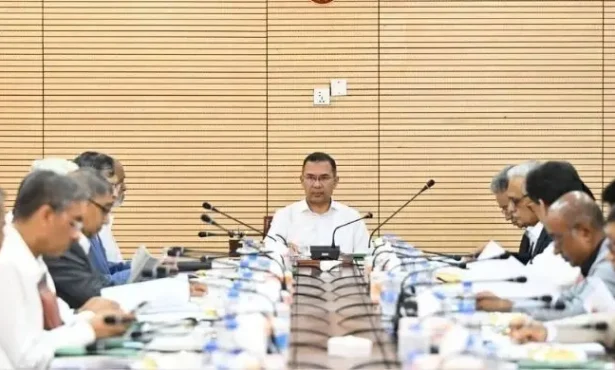
These issues were discussed at the fifth meeting of the reconstituted secretaries’ committee, held at the Secretariat on Monday with Cabinet Secretary Nasimul Ghani in the chair, according to sources.
According to officials present at the meeting, the committee decided not to rush the process and instead proceed through all the required administrative and legal procedures before implementation.
Bangladesh Secretariat Officers and Employees Confederation leader Badiul Kabir declined to comment on the reconsideration of the earlier proposals for salary and allowance increases.
He said the association’s leaders, including himself, had been jailed for leading a movement demanding the new pay scale. “We do appreciate the government’s initiative to announce the new pay scale and expect that it will come into effect as soon as possible,” he added.
Another leader, who requested anonymity, however, said the new pay scale has already been delayed and should adequately reflect the sharp rise in living costs.
“We understand the government’s financial limitations, but inflation has severely eroded the purchasing power of public servants,” he said, adding that the revised pay scale must provide meaningful relief, particularly for lower-grade employees.
He also urged the government to retain improvements in housing and medical allowances, arguing that these expenses have increased substantially over the past few years.
Economists say the government faces a difficult balancing act between protecting fiscal stability and ensuring decent compensation for public servants.
Policy analyst and economist Dr Zahid Hussain said salary revisions should remain fiscally sustainable while protecting lower-income employees from inflationary pressure.
“The government should prioritise lower-grade employees whose real incomes have declined the most due to inflation,” he said. “Any pay revision should be accompanied by measures to improve revenue mobilisation and expenditure efficiency so that it does not create additional fiscal stress.”
Public finance experts also caution that an overly generous pay hike could increase recurrent expenditure, widen the budget deficit and place further pressure on inflation unless supported by stronger revenue collection.
The ninth pay scale will replace the eighth pay scale introduced in 2015 and is expected to benefit several lakh government employees and pensioners across the country. The final decision will depend on the recommendations of the secretaries’ committee and subsequent government approval.