


 Play store

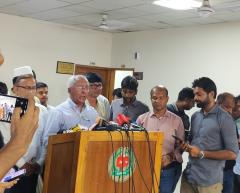
The Election Commission (EC) has finalised a series of proposals to reform local government elections and overhaul key National Identity (NID) services, including new candidate eligibility rules and simplified voter registration procedures for expatriate Bangladeshis.
The decisions were announced by EC Senior Secretary Akhtar Ahmed while briefing reporters after the commission’s 12th meeting on Tuesday.
He said the commission has proposed declaring MPO-enlisted teachers ineligible to contest local government elections. It has also recommended treating loan guarantors as loan defaulters for electoral purposes and disqualifying individuals and institutions that have defaulted on electricity, land tax or WASA utility bills from contesting local polls.
The EC has also given policy-level approval to proposals barring dual citizens and individuals holding offices of profit from participating in local government elections.
In another proposed amendment, the commission recommended including the armed forces within the legal definition of law enforcement agencies in the relevant election laws.
Akhtar Ahmed said the recommendations would soon be forwarded to the Local Government Division, after which the government and Parliament would take the necessary legislative decisions.
The commission also approved several administrative reforms to modernise the National Identity (NID) system and make services more accessible.
Under the proposed changes, applications for transferring a voter’s electoral area will be processed online, with a prescribed service fee to be introduced.
The EC has also proposed requiring citizens to update their family information or family tree when renewing their NID cards every 15 years.
To simplify public services, the commission has decided to delegate the authority to correct dates of birth based on PSC, JSC and SSC examination certificates to field-level election offices, reducing the need for approvals from higher authorities.
The commission also decided to simplify voter registration for Bangladeshis living abroad.
Under the new system, the existing two-stage approval process will be reduced to a single approval stage, enabling expatriates to register as voters more quickly and with fewer administrative hurdles.
Akhtar Ahmed said the move is expected to make voter registration significantly easier for overseas Bangladeshis and improve access to NID-related services.
The proposed electoral reforms and administrative changes are part of the commission’s broader initiative to modernise election management, strengthen candidate eligibility requirements and improve public access to voter services.