Play store

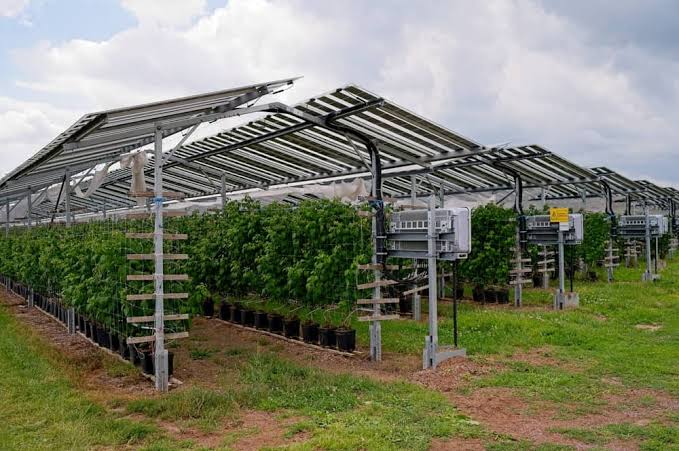
Agrivoltaics, which combines agricultural production with solar power generation on the same land, could provide Bangladesh with a new way to strengthen food and energy security, experts said at a seminar in Dhaka.
The observations were made at a seminar titled “The Role of Agrivoltaics in Sustainable Solutions for Food, Energy and Water Security”, organised by the Agricultural Engineering Division of the Institution of Engineers, Bangladesh (IEB) in Ramna on Thursday.
Speakers said the technology, although still relatively new in Bangladesh, has been successfully implemented in several countries, particularly China, where large-scale projects generate solar electricity while allowing agricultural activities to continue.
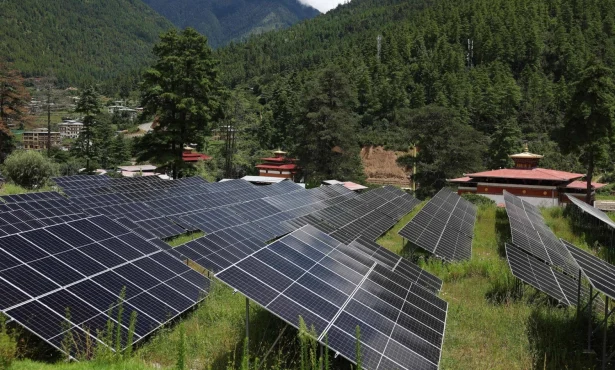
Under agrivoltaic systems, solar panels are installed above or alongside crops, enabling the same land to be used for both farming and electricity generation. The approach could also reduce irrigation-related electricity costs, water consumption and agricultural expenses.
The keynote paper was presented by Engineer Md Shamim Ahmed, PhD, associate professor at the Department of Biological and Agricultural Engineering at the University of California, Davis, USA.
The seminar was chaired by Engineer Golam Mawla, chairman of the Agricultural Engineering Division, while Engineer Md Belal Siddiqui, secretary of the division, moderated the event. Engineer Shahrin Islam Tuhin, former parliament member and convener of the Association of Engineers Bangladesh, attended as chief guest.
Speakers proposed launching pilot agrivoltaic projects in areas covered by the Barind Multipurpose Development Authority’s irrigation schemes and under other relevant agricultural and energy institutions.
They said such projects would help assess crop yields, solar power generation, irrigation costs, water consumption and the economic and environmental benefits of the technology under local conditions.
Bangladesh faces the challenge of expanding renewable energy while protecting productive agricultural land. Speakers said agrivoltaics could help address both concerns by generating electricity without completely removing farmland from agricultural use.
They urged the government to launch pilot projects without delay and develop long-term policies for renewable and alternative energy. The results could help determine the feasibility of expanding agrivoltaics nationwide and encourage wider participation by farmers, entrepreneurs and the private sector.