Play store

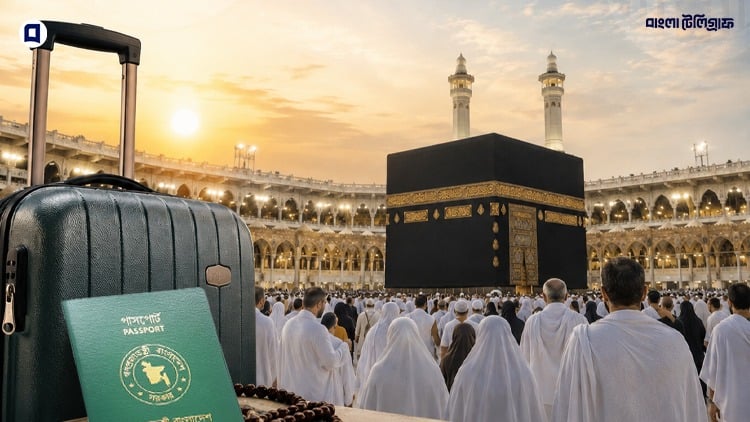
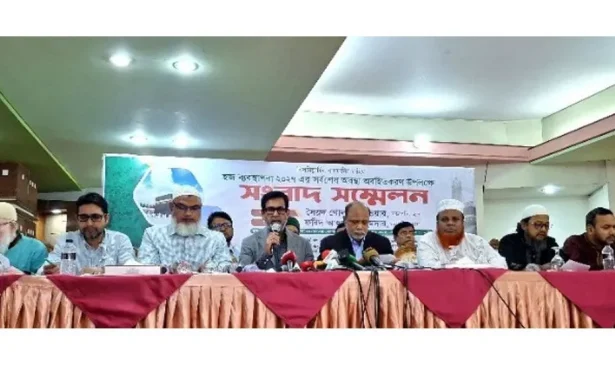
Preliminary registration for Bangladeshis intending to perform Hajj 2027 officially began on Monday and will continue until 24 September, the Ministry of Religious Affairs announced.
The registration schedule has been set in line with the roadmap announced by Saudi Arabia’s Ministry of Hajj and Umrah. Pilgrims under both the government and private management schemes can complete the process through the e-Hajj system.
According to the ministry, intending pilgrims must complete preliminary registration within the stipulated period. Before that, applicants are required to make a pre-registration deposit of Tk 30,000. After completing the pre-registration, they must deposit Tk 350,000 to complete the preliminary registration.
Those who complete the preliminary registration will have to pay the remaining amount of their selected Hajj package and complete final registration by 10 December.
Pilgrims under the government scheme can register by creating a user ID in the e-Hajj system. Registration services will also be available through Union Digital Centres, offices of the Islamic Foundation, district and upazila model mosques, and the Dhaka Hajj Office.
Payments under the government scheme must be made at any branch of Sonali Bank, while pilgrims under the private scheme must deposit the required amount into the designated bank accounts of their respective Hajj agencies.
Applicants must hold passports valid until at least 31 December 2027. During preliminary registration, pilgrims will also be required to select their training and vaccination district, Hajj category and preferred Hajj package.
The ministry has also imposed health and age-related eligibility requirements. Children under the age of 15 will not be allowed to perform Hajj.
People suffering from serious heart, lung, liver or kidney diseases, severe mental or neurological disorders, or dementia will be considered ineligible.
Cancer patients currently undergoing chemotherapy or radiotherapy, individuals with active infectious diseases posing public health risks—such as tuberculosis or haemorrhagic fever—and women in the final two months of pregnancy or with high-risk pregnancies will not receive the required medical fitness certificate for Hajj.