


 Play store

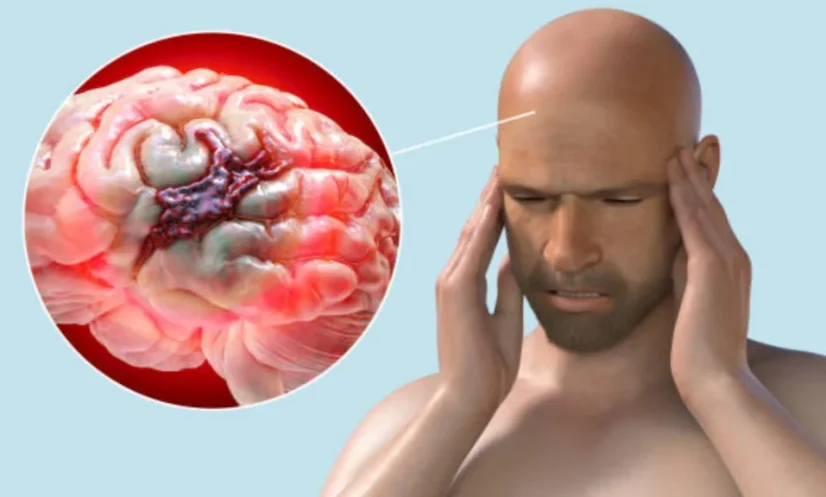
Doctors at the National Hospital for Neurology and Neurosurgery in London have removed a brain tumour with the direct assistance of artificial intelligence (AI) during surgery for the first time in the world. The AI system analysed live video from the operation and helped surgeons identify critical nerves and blood vessels, helping preserve the patient’s eyesight.
The patient, 48-year-old Rees Hibbert from Bedfordshire, works as a customer service manager. He suddenly lost consciousness and suffered a seizure while walking in December 2024. Tests later detected an 11mm tumour in his pituitary gland. As the tumour gradually began putting pressure on his eyesight, doctors decided that surgery was necessary to prevent potential vision loss.
Although the operation was performed in May, details of the procedure were released recently. During surgery, the AI system analysed live endoscopic video and identified important brain structures, particularly blood vessels and nerves linked to vision that were located close to the tumour. This helped surgeons avoid potentially dangerous areas, where even a one-millimetre error could have serious consequences.
Unlike conventional systems that rely mainly on preoperative scans, the technology provided information by analysing live images during the operation. It can also distinguish important structures using different colours. Researchers trained the AI using videos from hundreds of previous pituitary tumour surgeries, enabling it to recognise critical structures despite anatomical differences between patients.
The AI did not control the operation. Surgeons remained fully responsible for all decisions, while the system acted as an additional assistant—effectively a “second pair of eyes” for the medical team. It can also track surgical instruments and assess their position relative to tissue, potentially making it useful in more complex procedures in the future.
Hibbert’s eyesight improved rapidly after the surgery. Within a week, he was able to walk without glasses or a walking stick and later returned to work. He said his vision was much clearer when he woke up after the operation. He has since returned home and is gradually resuming normal life.
Further large-scale research is being planned on the AI technology developed by the Hawkes Institute at University College London. The system is being tested through research funded by the National Institute for Health and Care Research and Google. Researchers hope to develop AI that can provide surgeons with expert-like information and guidance during operations while maintaining patient safety as the highest priority.