Play store

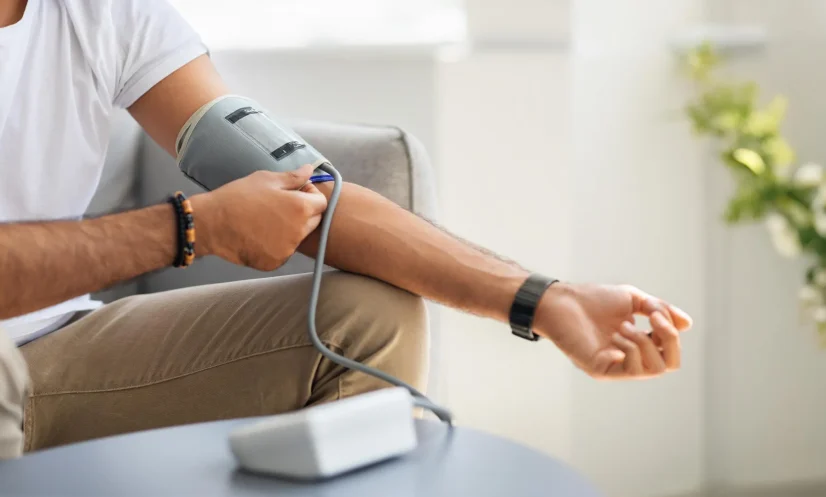
The position of a patient’s arm during a blood pressure check can significantly affect the reading and may sometimes make blood pressure appear higher than it actually is, according to a Johns Hopkins Medicine-led study.
The study, published in JAMA Internal Medicine, compared blood pressure readings taken with the arm supported on a desk, resting on the patient’s lap, or hanging unsupported at the side.
Researchers found that resting the arm on the lap increased systolic blood pressure by an average of 3.9 millimetres of mercury (mmHg), while leaving the arm unsupported at the side raised systolic pressure by nearly 7 mmHg compared with the recommended desk-supported position.
The findings highlight the importance of proper arm positioning when measuring blood pressure, said Tammy Brady, M.D., Ph.D., senior author of the study and vice chair for clinical research at the Johns Hopkins University School of Medicine.
The researchers said the results support clinical recommendations that a patient’s arm should be firmly supported on a desk or another surface during a blood pressure measurement.
Current American Heart Association recommendations also call for an appropriately sized cuff, a supported back, feet flat on the floor and legs uncrossed. The middle of the cuff should be positioned at heart level while the arm rests on a desk or table.
Despite these recommendations, blood pressure is often measured while patients are seated on an examination table without adequate arm support. In some cases, patients rest their arms on their laps or a clinician holds the arm.
For the study, researchers enrolled 133 adults aged 18 to 80 between August 9, 2022, and June 1, 2023. About 78% of participants were Black and 52% were women.
Participants were randomly assigned to groups that differed in the order in which the three arm positions were tested. Before measurements, they emptied their bladders, walked for two minutes and then rested for five minutes with their backs and feet supported.
Researchers used appropriately sized upper-arm cuffs and a digital blood pressure device to take three sets of three measurements, with 30 seconds between readings. After each set, participants walked for another two minutes and rested for five minutes before the next measurements.
The researchers also took an additional set of three readings with the arm supported on a desk to account for normal variation between blood pressure measurements.
All measurements were taken in a quiet, private setting, and participants were instructed not to talk or use their phones during the checks.
In addition to the nearly 4 mmHg increase in systolic pressure, resting the arm on the lap raised diastolic blood pressure by about 4 mmHg compared with the desk-supported position.
High blood pressure often has few or no obvious symptoms. Accurate measurement is therefore important because persistently elevated blood pressure is associated with an increased risk of heart attack, stroke and other cardiovascular problems.
The researchers said their findings suggest that even seemingly minor differences in how a patient’s arm is positioned could influence blood pressure readings and should be considered when screening for hypertension.