Play store

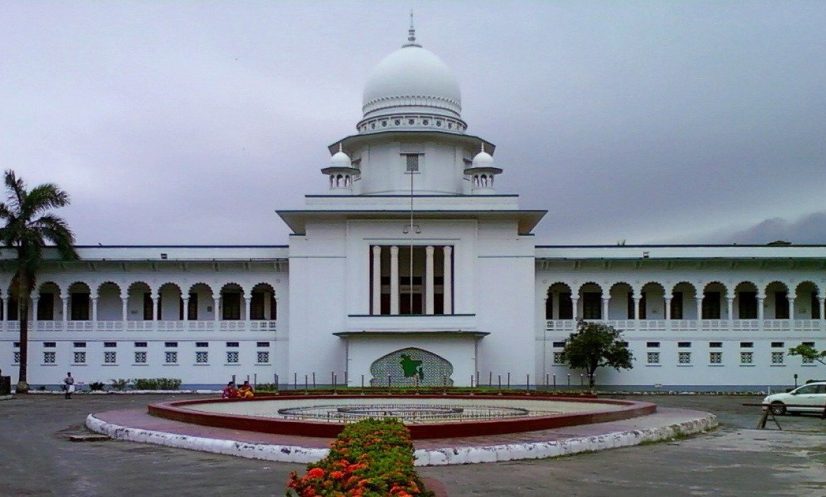
The second day of the appeal hearing against the High Court verdict that declared several provisions of Bangladesh’s 15th Constitutional Amendment unconstitutional began on Tuesday (July 7).
The hearing is being conducted by the Appellate Division of the Supreme Court, led by the Chief Justice.
Attorney General Md Ruhul Quddus Kajal is representing the state, while Advocate Mohammad Shishir Monir and Dr Sharif Bhuiyan are appearing for the writ petitioners.
The Supreme Court on November 13 last year granted leave to appeal against the High Court judgment that declared unconstitutional several provisions of the 15th Amendment, including the abolition of the caretaker government system.
The appeal, filed on November 3, seeks the annulment of the entire 15th Amendment. It was lodged by Dr Sharif Bhuiyan on behalf of Badiul Alam Majumdar, secretary of Shushashoner Jonno Nagorik (Shujan).
On December 17 last year, the High Court declared unconstitutional key provisions of the 15th Amendment, including those abolishing the caretaker government system. The court also reinstated the constitutional provision for holding referendums, although it stopped short of striking down the amendment in its entirety.
In its observations, the High Court said democracy forms part of the Constitution’s basic structure and can only flourish through free, fair, impartial and credible elections. It noted that the last three parliamentary elections held under partisan governments failed to reflect the will of the people and eroded public confidence in the electoral process, ultimately contributing to the July uprising.
The bench, comprising Justice Farah Mahbub and Justice Debashish Roy Chowdhury, ruled that the caretaker government system had become part of the Constitution’s basic structure after being incorporated in line with public aspirations.
The court declared Articles 20 and 21 of the 15th Amendment—through which the caretaker government system was abolished—to be inconsistent with the Constitution and therefore void, saying they undermined the Constitution’s basic structure of democracy.
It also struck down constitutional Articles 7A, 7B, and 44(2) introduced through the amendment. Article 7A criminalised the abrogation or suspension of the Constitution, while Article 7B declared certain constitutional provisions unamendable. Article 44(2) empowered Parliament to confer certain constitutional jurisdiction on courts other than the High Court.
The High Court further ruled that Section 47 of the 15th Amendment, which repealed the constitutional provision for referendums under Article 142, was inconsistent with the Constitution’s basic structure. As a result, the referendum provision under the 12th Amendment was restored.
The 15th Amendment, passed by Parliament on June 30, 2011, abolished the caretaker government system, recognised Sheikh Mujibur Rahman as the Father of the Nation, increased the number of reserved parliamentary seats for women from 45 to 50, and introduced several other constitutional changes.
While invalidating parts of the amendment, the High Court clarified that the remainder would remain in force. It said Parliament could amend, revise or repeal the remaining provisions in the future through the legislative process after considering the will of the people, including issues relating to the recognition of the Father of the Nation and the March 26 declaration.