Play store

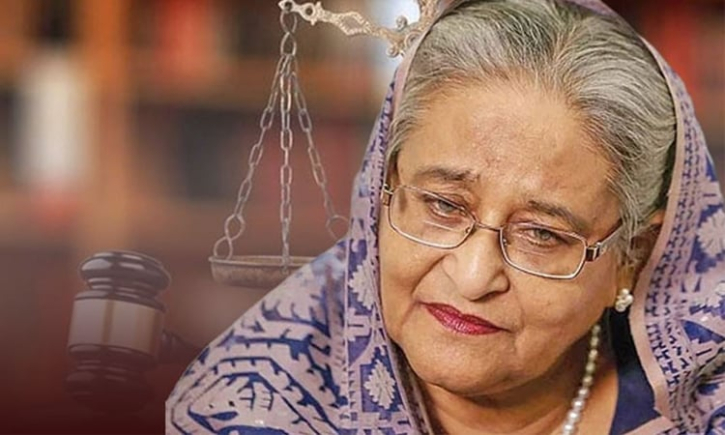
Home Minister Salahuddin Ahmed on Tuesday said the government wants former prime minister Sheikh Hasina extradited to Bangladesh under the existing bilateral extradition treaty and that she will be arrested immediately upon her return as she has already been convicted in several cases.
“We want her to be sent back under the extradition agreement so that she faces trial,” the minister told Parliament while taking part in a discussion on the July 2024 mass uprising.
He said Sheikh Hasina would have no opportunity to surrender voluntarily because she is already a convicted person.
“If she returns, she will be arrested immediately and the verdicts will be executed. If there is any scope for appeal, that will be decided by the court,” he said.
The discussion followed a notice under Rule 68 of the Rules of Procedure raised by National Citizen Party (NCP) lawmaker Akhter Hossen (Rangpur-4), seeking a debate on the July 2024 uprising and the trial of those responsible for alleged crimes against humanity committed during the movement. The notice was co-signed by five other NCP lawmakers.
Salahuddin said the Awami League would also face trial as a political party over its alleged involvement in crimes against humanity during the July uprising, adding that investigations are continuing.
To speed up the judicial process, he said the government is prepared to increase the number of tribunals, prosecutors, investigation teams and logistical support if necessary. “Our foremost objective is to establish justice in this country,” he said.
Referring to a United Nations report, the home minister said around 1,400 people were killed during the July uprising, although the government believes the actual death toll may have exceeded 2,000. Around 30,000 others were injured, he added, pledging justice for all victims.
He also announced that Prime Minister Tarique Rahman will inaugurate the July Memorial Museum on August 5.
The minister said victims requiring treatment abroad would receive priority support, while the July Foundation would continue expanding assistance for victims and their families.
Calling for national unity, Salahuddin urged political parties not to claim exclusive ownership of the July movement. “The July uprising belongs to all Bangladeshis. We should preserve its spirit without turning it into a political tool,” he said.
Responding to criticism of sections of the media, he said freedom of speech and press freedom must be protected. “We will respond to criticism in the media through facts and democratic means,” he added.
Salahuddin also said the government and the opposition remain united on issues relating to Bangladesh’s independence and sovereignty despite political differences inside Parliament.
Leader of the Opposition Dr Shafiqur Rahman expressed concern over delays in the trial process, saying the nation would not tolerate any procrastination in delivering justice for the July killings. “If anyone delays the trial process, I will be a complainant against them in the hereafter,” he said.
He stressed that while justice must be ensured, no one should suffer injustice in the name of justice. “The trial must be fair,” he said.
Shafiqur also criticised a section of the media, alleging that some outlets had helped prolong the previous government and were again spreading narratives harmful to the country.
He urged the government to implement the public mandate reflected in the referendum in favour of reforms.
Law Minister Md Asaduzzaman echoed the home minister’s remarks, saying there would be no legal scope for Sheikh Hasina or any other convicted person to surrender voluntarily upon returning to Bangladesh.
“They will be arrested the moment they enter Bangladesh,” he said, adding that those who uphold the spirit of the July uprising would never allow the rehabilitation of what he described as the “fascist Awami League.”
Opposition Chief Whip Nahid Islam, State Minister Nurul Haque and Jamaat-e-Islami lawmakers Mir Ahmad Bin Quasem and Rokeya Begum also took part in the discussion.
In his notice, Akhter Hossen said the July 2024 mass uprising had freed Bangladesh from what he described as prolonged authoritarian rule, with people from all walks of life participating in the movement.
He said Parliament should honour those who were killed, injured and permanently disabled during the uprising while ensuring the proper trial and punishment of those responsible for the alleged atrocities.