


 Play store

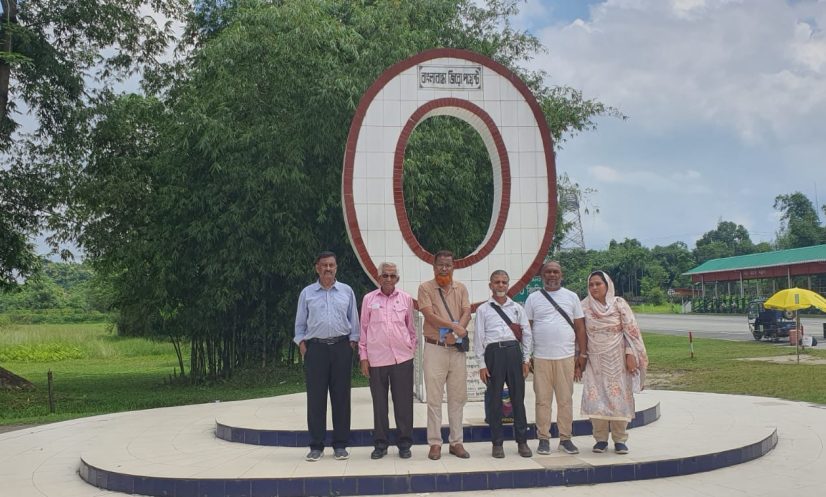
Eight Bangladeshi journalists have travelled to Kathmandu, Nepal, to participate in the 3rd International Indigenous Language Journalism Conference 2026, scheduled to be held from August 9 to 12.
The four-day international conference will bring together journalists, media professionals, researchers and academics from around 30 countries to discuss the role of indigenous and mother-language journalism in preserving cultural diversity, advancing climate justice and promoting inclusive democracy.
The conference will be held under the theme “Indigenous Language Journalism for Cultural Diversity, Climate Justice and Inclusive Democracy.”
The Bangladesh delegation will be led by Shihabur Rahman, General Secretary of the SAARC Journalist Forum (SJF) Bangladesh Chapter and Head of Online & Multimedia at The Financial Express.
Other members of the delegation are Mushtaq Ahmed Mubarki, Editor of The Daily Bongobani; Md Ziaur Rahman, Special Correspondent of The Daily Ajkal; Mohammad Moniruzzaman, Editor of Daily Bank Bima Arthoniti; Md Abu Bakar Siddique, Senior Correspondent of The Daily Ajker Probhat; Panna Zaman, Executive Editor of The Daily Amor Bangla; and Shahnaz Begum of S Television Online.
The delegation is also accompanied by Md Abdur Rahman, Secretary General of the Central Committee of the SAARC Journalist Forum.
Journalists from 30 countries
The conference is being organised by the Federation of Nepalese Indigenous Nationalities Journalists (FoNIJ) with support from the SAARC Journalist Forum (SJF). The Tamang, Tamu Gurung, Limbu, Tharu, Kirat Rai, Sherpa and Magar Journalists’ Associations are serving as co-organisers, while the National Forum of Newa Journalists is coordinating the event.
According to the organisers, representatives from approximately 30 countries will attend the conference, making it an important international platform for exchanging experiences and perspectives on indigenous and mother-language journalism.
The conference comes at a time when indigenous languages and cultures in many parts of the world face increasing pressure from globalisation, migration, digital transformation and the declining use of minority languages in mainstream public life.
Focus on challenges and opportunities
The four-day programme will feature panel discussions, research paper presentations and working sessions addressing the current state, challenges and future prospects of indigenous language journalism.
Media professionals, researchers, academics and other experts from participating countries will share their experiences and discuss ways to strengthen journalism in indigenous and minority languages.
The discussions are expected to focus on the professional development of journalists, greater recognition of indigenous-language media in public policy, digital opportunities, access to information and the role of journalism in protecting linguistic and cultural heritage.
The conference will also explore how indigenous-language journalism can contribute to climate justice and inclusive democracy by giving greater visibility to communities whose voices are often underrepresented in mainstream media.
Alongside the professional sessions, the conference will provide opportunities for cultural exchange among participating journalists.
Delegates will join a colourful cultural procession and visit historical and tourist attractions in Nepal. The programme will also offer participants an opportunity to experience Nepal’s traditional cuisine and cultural heritage.
The organisers hope the conference will help build an international network of journalists and media professionals working in indigenous and mother languages.
It also aims to strengthen the professionalism of indigenous-language journalism, increase its recognition in national and international policy discussions, and create new opportunities for preserving endangered languages, scripts, cultures and indigenous heritage.
For the Bangladeshi delegation, participation in the conference is expected to provide an opportunity to share the country’s experience in multilingual journalism while learning from media professionals working with indigenous communities in different parts of the world.
Six members of Bangladesh delegation are expected to reach Kathmandu this morning by road while the rest to will arrive in the evening by flights.
Six members of the Bangladesh delegation are expected to reach Kathmandu by road this morning, while the remaining members will arrive by air in the evening.