


 Play store

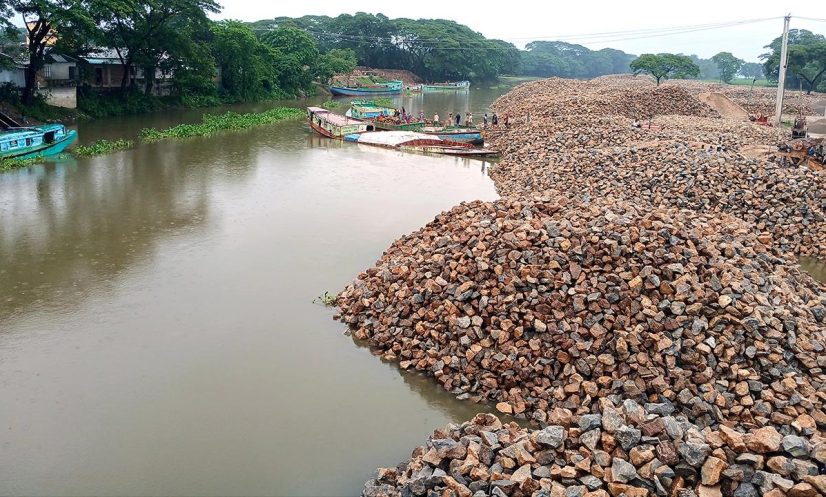
Government agencies are ramping up the use of domestically produced stone from the state-owned Maddhapara Granite Mining Company Limited, following a directive from Prime Minister Tarique Rahman to curb imports and revive the loss-making enterprise.
Several ministries and departments have already begun incorporating Maddhapara stone into development projects. The move aims to reduce reliance on imported stone—primarily from India—and utilise large volumes of unsold domestic stock.
The company has signed agreements with Bangladesh Railway’s eastern and western zones to supply more than 200,000 tonnes of ballast stone. By June, nearly 145,000 tonnes had been delivered, with further supply discussions ongoing.
The Bangladesh Water Development Board has also instructed its field offices to include Maddhapara stone in project planning, covering new schemes as well as repair and maintenance works. The stone is already being used in riverbank protection projects in Chapainawabganj, Kurigram, Thakurgaon, Pabna and Sirajganj, with plans to expand its application.
At a high-level meeting on 3 August, the prime minister directed officials to prioritise Maddhapara stone in public projects—even if it costs slightly more than imported alternatives. Authorities are now considering revising official rate schedules and making its use mandatory in government tenders.
Industry insiders say the mine has long struggled due to outdated production strategies, high costs and competition from cheaper imports. Although national demand for stone has surged alongside construction growth, Maddhapara supplies only 5–6% of the market.
In FY26, the company produced 1.3 million tonnes of stone but sold just over 1 million tonnes, posting a net loss of Tk124 crore. It currently holds about 1.38 million tonnes of unsold inventory.
Officials believe increased government procurement could help clear the backlog and stabilise the company’s finances. Experts have also called for policy support, including tax adjustments and price rationalisation, to improve competitiveness.
Despite its challenges, the renewed focus on Maddhapara stone signals a broader push for import substitution and stronger utilisation of domestic resources in infrastructure development.