Play store

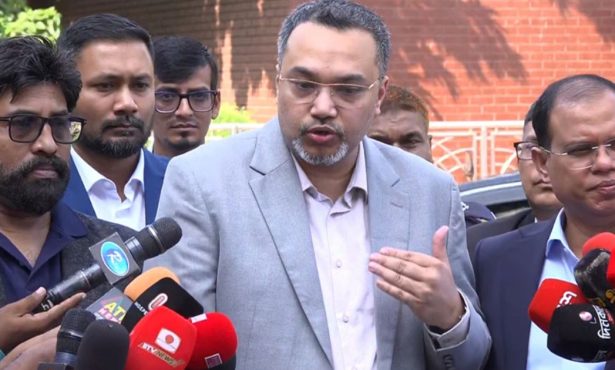
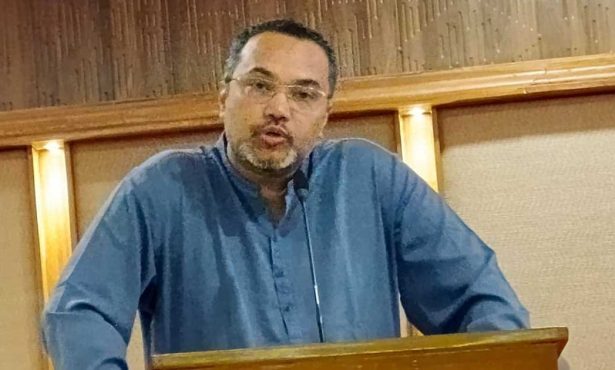
The government is planning a major overhaul of the country’s education curriculum from the 2028 academic year, aiming to build an education system that combines academic merit with ethics, skills and human values, said Mahdi Amin, adviser to the prime minister on education and primary and mass education and spokesperson for his office.
He said the government wants to move away from an education system focused excessively on GPA-5 results and instead promote genuine assessment, creativity, moral values and practical skills.
In an exclusive interview with Bangladesh Sangbad Sangstha (BSS), Mahdi Amin outlined the government’s plans for broad education reforms, including curriculum restructuring, teacher evaluation, support for students at risk of dropping out, stronger industry-academia collaboration and the introduction of employment exchanges.
“Prime Minister Tarique Rahman has made it clear that education is the top priority of his government,” Mahdi Amin said. “In line with the BNP’s election manifesto, the formation of an education reform commission is being given the highest consideration to restore discipline to the education system.”
He said the government was making necessary additions, removals and revisions to textbooks for the 2027 academic year as an interim measure, while a comprehensive reform would be introduced in 2028.
“Extensive reforms will be brought to the curriculum for the 2028 academic year. This will help develop a sustainable and forward-looking curriculum suited to the realities of the modern world,” he said.
Four new books and subjects will be introduced at the primary and secondary levels from the 2027 academic year, according to the adviser.
From Class Four, students will study Sports and Culture, focusing on sports and physical education. From Class Six, Learning with Happiness and Technical Education will be introduced.
The new curriculum will also expose students to robotics, artificial intelligence (AI) and technologies associated with the Fourth Industrial Revolution.
Regarding the recent SSC and equivalent examination results, Mahdi Amin said the government had ended what he described as artificially inflated results and ensured a more transparent assessment process.
“During the previous regime, GPA-5 results were artificially inflated to make the statistics look better. There was even a culture of passing students without examinations,” he said.
“We have stopped that self-destructive practice. No grace marks were awarded this time. Students received their GPA and genuine results through an impartial and transparent assessment process,” he added.
Mahdi Amin said students who failed the recently published SSC examinations, as well as those at risk of dropping out, would not be treated as a burden on the state.
He said the government was preparing a special policy to support them by enrolling them in technical training centres (TTCs) and short-term technical and vocational courses.
“Where necessary, we will provide financial assistance to help them become entrepreneurs,” he said.
To address unemployment, the government is also planning to establish Employment Exchanges at the divisional and district levels to directly connect job seekers with employers.
Discussions among relevant government agencies have already been completed, he said.
Under the initiative, young people will be able to register with details of their skills, allowing them to establish direct links with industries seeking workers.
The programme will initially be introduced at the divisional level and later expanded to every district, with private-sector participation as well as technical training and skills development.
Priority will be given to disadvantaged and marginalised people to help bring them into the mainstream economy and social protection system, he said.
To make teaching a more attractive profession and strengthen teachers’ digital capabilities, the government plans to gradually provide tablets to teachers at all levels under the “One Teacher, One Tablet” programme.
The initiative will support modern teacher training, skills development and improved economic opportunities for educators, Mahdi Amin said.
The government also plans to strengthen research at universities and improve Bangladesh’s performance in global rankings by encouraging joint research projects aimed at solving problems faced by local industries.
Mahdi Amin said efforts were also underway to bring Bangladeshi researchers and academics working abroad back to the country, transforming “brain drain” into “brain circulation.”
Government funding for research is also being increased significantly, he said.
To reduce disparities between rural and urban schools, the government has introduced nationwide initiatives such as the Primary School Gold Cup Football Tournament and Innovation and Startup Competition.
These programmes are intended to identify talent in remote areas and provide young people with opportunities to gain national recognition.
Mahdi Amin expressed optimism that the government’s reforms would help build a new generation equipped not only with academic qualifications but also with skills, employment opportunities, ethics and humanitarian values.
“Rather than certificate-based education alone, the government is committed to building a new Bangladesh by creating a generation equipped with skills, employment opportunities, morality and human values,” he said.