


 Play store

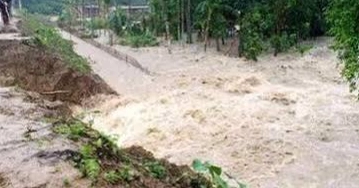
The Hindu Kush Himalaya (HKH) region, spanning 3,500 kilometres across eight countries, faces a complex monsoon outlook this year, with experts warning of simultaneous risks of drought and devastating flash floods.
The warning comes despite projections of below-normal seasonal rainfall across much of the region under the Hindu Kush Himalaya Monsoon Outlook 2026.
Recent cloudburst-triggered flooding in Pakistan’s Gilgit-Baltistan and intense rainfall-driven floods in India’s Arunachal Pradesh highlight the growing unpredictability of weather patterns across the HKH.
“The biggest misunderstanding is that less seasonal rainfall means lower flood risk,” said Saswata Sanyal, Disaster Risk Reduction Specialist at the International Centre for Integrated Mountain Development (ICIMOD).
He explained that seasonal forecasts reflect average conditions over several months, not short-term local events.
Under El Niño conditions, prolonged dry spells can be punctuated by intense local storms, triggering flash floods and landslides.
This contradiction lies at the core of the current monsoon pattern. While El Niño is expected to suppress overall rainfall across much of South Asia, short-lived weather systems can override the trend, producing sudden and extreme downpours.
As a result, the monsoon is becoming increasingly erratic, with extended dry periods straining agriculture and water resources, even as isolated extreme rainfall events threaten lives, infrastructure and livelihoods.
Rising temperatures are expected to further amplify risks in glacier-fed river basins such as the Indus, Ganga and Brahmaputra.
Warmer conditions accelerate glacier and snowmelt, increasing river flows while destabilising mountain slopes and moraine-dammed lakes, raising the likelihood of landslides and glacial lake outburst floods.
“The recent flooding in Pakistan’s Thore Valley shows that hazards in the HKH are no longer isolated events,” said Manish Shrestha, Hydrologist at ICIMOD. “Heavy rainfall, glacier melt, unstable slopes and rising rivers can interact to create cascading disasters.”
Scientists stress that governments must prepare for multiple risks at once — including drought, heat stress, flash floods, landslides and glacier-related hazards — rather than treating them as separate challenges.
Particular concern remains for communities living along riverbanks, on steep slopes and in rapidly expanding urban areas across Nepal, northern and northeastern India, Pakistan and other vulnerable mountain regions.
With weeks of the monsoon still ahead, experts warn that the greatest danger lies in complacency.
This year’s monsoon, they say, demands readiness for both water scarcity and extreme flooding at the same time.