


 Play store

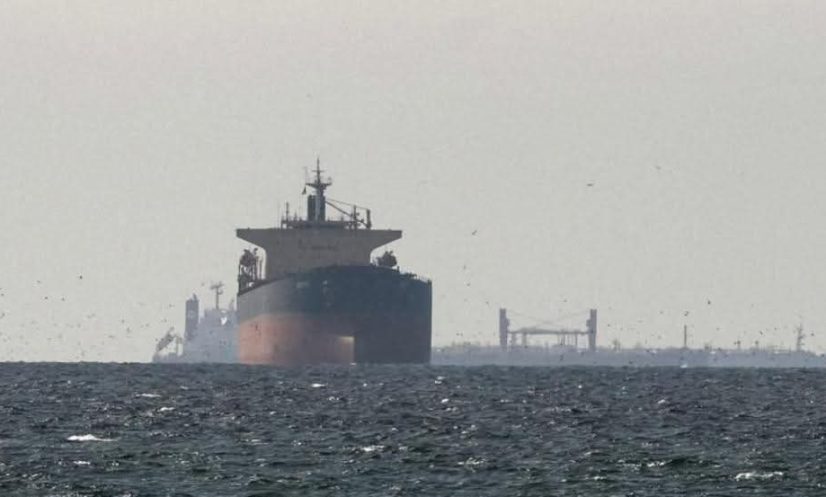
The United States launched a new wave of military strikes against Iranian targets on Tuesday, saying the action was in response to attacks on commercial vessels transiting the strategically vital Strait of Hormuz, further escalating tensions in the Gulf.
The announcement came after the United Kingdom Maritime Trade Operations (UKMTO) reported that two tankers had been struck by projectiles while passing through the Strait of Hormuz, one of the world’s busiest energy shipping routes.
In a statement posted on X, the US Central Command (CENTCOM) said its forces had begun carrying out “a series of powerful strikes” against Iranian targets to impose what it described as “heavy costs” for attacks on commercial shipping.
CENTCOM accused Iran of targeting three commercial vessels carrying civilian crews in international waters, calling the attacks “unwarranted, dangerous, and a clear violation of the ceasefire.” The command, however, provided no immediate details on the locations or extent of the military operation.
The strikes followed a decision by the US Treasury Department to revoke a temporary sanctions waiver that had allowed limited Iranian oil exports under a June 18 memorandum of understanding (MoU).
The waiver, originally set to remain in effect until August 21, was cancelled after Washington said Iran had failed to meet its commitments. Full sanctions are expected to resume on July 17.
Iran strongly condemned the US decision, accusing Washington of violating the memorandum. Iran’s Foreign Ministry described the move as a “clear breach” of the agreement and said it demonstrated “bad faith” by the US administration.
The ministry also alleged that Washington had repeatedly undermined the deal through its own actions and by supporting Israeli military operations in the region.
Meanwhile, Iranian state media reported multiple explosions around the southern port city of Bandar Abbas, as well as near Sirik Port and Qeshm Island—two strategically significant locations overlooking the Strait of Hormuz.
Iran’s Fars News Agency said several explosions were heard, although the exact targets and causes were not immediately confirmed.
Tehran neither confirmed nor denied responsibility for the reported attacks on commercial vessels. Instead, Iranian officials reiterated the country’s authority over the Strait of Hormuz, insisting that vessels using the waterway should coordinate their transit with Iranian authorities in accordance with existing maritime arrangements.
Iran’s Foreign Ministry also rejected accusations linking Tehran to the tanker attacks, calling them “questionable” and urging regional countries to avoid actions that could undermine the existing memorandum.
The latest confrontation rattled global energy markets. Brent crude oil rose more than 3 percent to around $76 a barrel after the US revoked the sanctions waiver and reports of tanker attacks emerged.
US crude prices also climbed more than 3 percent following news of the American strikes.
The developments mark a significant escalation in the already fragile security situation in the Gulf, raising concerns over the safety of one of the world’s most important maritime trade corridors and the risk of a broader regional conflict.