


 Play store

Tensions between the United States and Iran escalated sharply on Wednesday after Washington launched military strikes on Iranian targets and Tehran retaliated by targeting US military facilities in Bahrain and Kuwait.
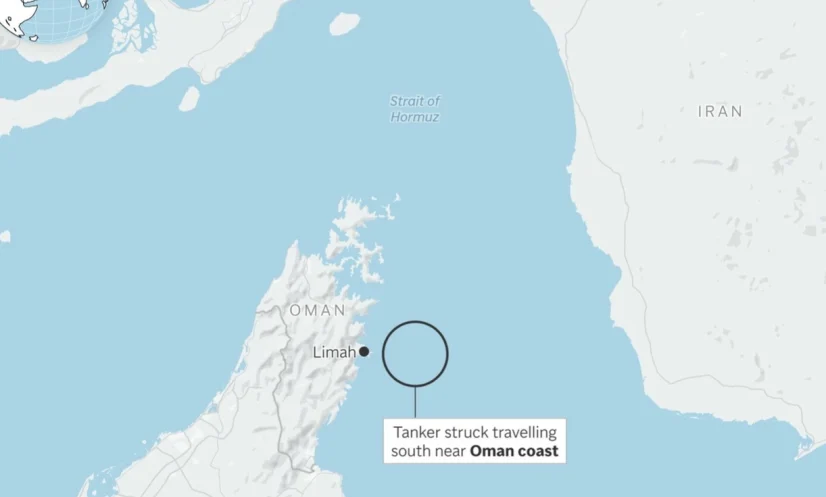
The US action followed accusations that Iran had attacked three commercial vessels in the Strait of Hormuz.
In a further move, Washington revoked Iran’s ability to openly sell crude oil on the global market, intensifying economic pressure on Tehran.
The latest exchange has raised fears that a fragile interim agreement could collapse, increasing the risk of a broader regional conflict.
US Central Command said the overnight strikes were aimed at imposing “heavy costs” for attacks on commercial shipping in international waters.
The operation targeted Iranian air defence systems, radar installations and more than 60 small boats linked to the Revolutionary Guard, often used to harass vessels in the strategic waterway.
Iranian state media reported explosions in Bandar Abbas, Qeshm and Sirik, though officials did not disclose details of casualties or damage.
Hours later, Bahrain and Kuwait—both hosting US military forces—issued missile alerts.
Iran’s Revolutionary Guard confirmed it had targeted US installations in both countries, accusing Washington of violating a ceasefire and breaching prior understandings.
“The era of bullying and extortion is over,” Iran’s Parliament Speaker Mohammad Bagher Qalibaf said, warning that Tehran would not back down.
The escalation comes at a sensitive moment, during the funeral period of Iran’s Supreme Leader Ayatollah Ali Khamenei, whose death earlier in the conflict had already heightened tensions.
Planned negotiations on a long-term agreement—focused on reopening the Strait of Hormuz and curbing Iran’s nuclear programme—now face uncertainty.
In parallel, the United States revoked a licence that had allowed Iran to sell oil openly under the interim deal.
The move followed renewed attacks on shipping in the Strait of Hormuz, a route that carries roughly one-fifth of global oil and gas supplies.
A UK maritime agency reported that one tanker caught fire after being struck off Oman’s coast, while two others sustained minor damage. No casualties were reported.
Iran has maintained tight control over the strait since the conflict began, insisting that only routes designated by Tehran are safe. Gulf states and Western powers have rejected such claims, warning that restrictions threaten global energy security.
Qatar condemned one of the reported attacks on a tanker, calling it “an unacceptable assault” on international navigation and holding Iran legally responsible.
With military exchanges intensifying and diplomacy faltering, concerns are mounting that the crisis could spiral into a wider war across the Middle East.