Play store

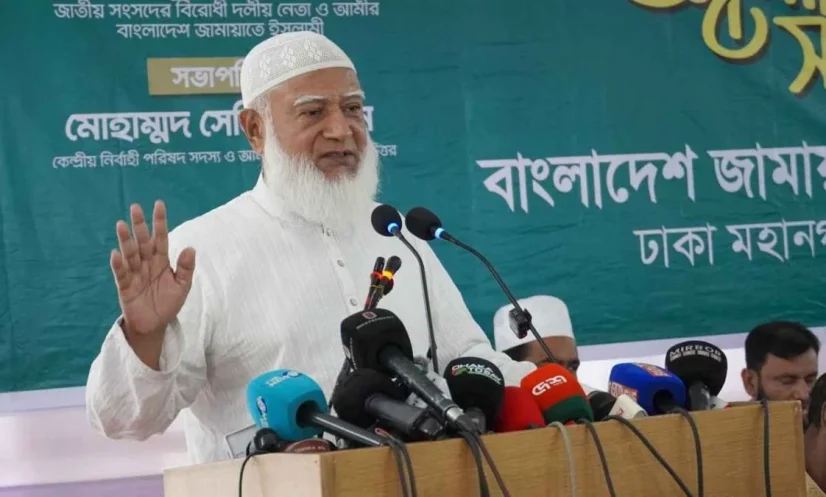
DHAKA: Jamaat-e-Islami Ameer Dr Shafiqur Rahman has described the August 15, 1975 events as an act of revenge by military officers over neglect and humiliation. He said ordinary people had no involvement in the incident.
Regarding November 7, he said it was a revolution led by soldiers, which received spontaneous support from the general public.
Shafiqur made the remarks while addressing a discussion meeting at Al-Falah auditorium in Dhaka on Friday morning.
Bangladesh Jamaat-e-Islami’s Dhaka North city unit organised the meeting marking National Revolution and Solidarity Day.
Shafiqur Rahman attended the programme as the chief guest, while Dhaka North city unit Ameer Mohammad Selim Uddin presided over it. The party’s Secretary General Mia Golam Parwar was present as a special guest.
In his speech, Shafiqur referred to the political situation after 1972.
He alleged that the then government had banned Islamic organisations that participated in the 1970 general election, thereby losing the people’s mandate.
He also said the Rakkhi Bahini had been given unlimited powers, leading to a culture of impunity. Repression and persecution were used to establish the one-party BAKSAL system, he added.
According to Shafiqur, members of the armed forces were humiliated during that period. He claimed that the wife of an army officer had been abducted and that the officer lost his job while seeking justice.
Such incidents of disorder led to the change of power on August 15, he said. The situation became more volatile following the counter-coup led by Brigadier Khaled Mosharraf on November 3.
Finally, on November 7, soldiers organised themselves and freed Ziaur Rahman from captivity.
According to Shafiqur, ordinary people welcomed them on the streets with chants of “Allahu Akbar”.
The day later came to be known as National Revolution and Solidarity Day.